Beyond the Podium: How Milan-Cortina 2026 Aims to Redefine Victory Through Global Respect
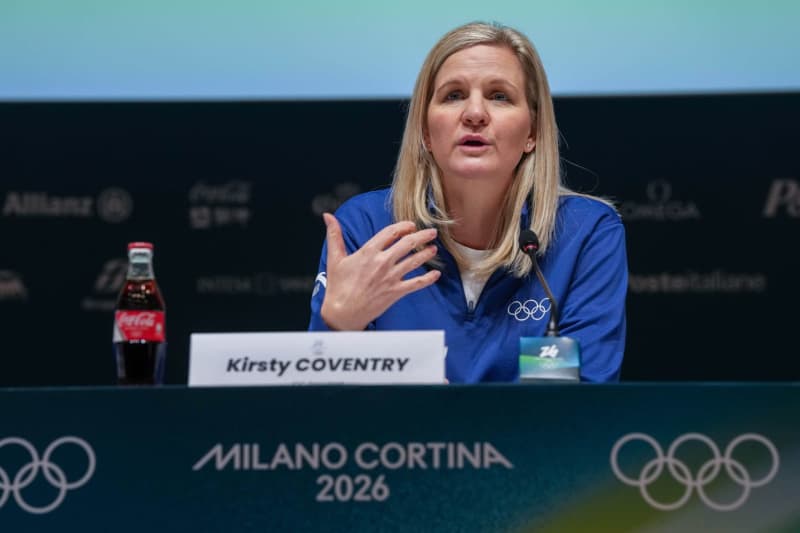
The world’s gaze is sharpening, focusing on the snow-dusted peaks of the Italian Alps. In less than two years, the Olympic flame will ignite in Milan and Cortina d’Ampezzo, heralding the start of the 2026 Winter Games. Yet, amidst the final preparations for downhill races and figure skating finals, a more profound ambition is being articulated from the very pinnacle of the Olympic movement. International Olympic Committee President Kirsty Coventry has issued a powerful vow: to transform the Games into a living testament that humanity can choose to live in a respectful manner. This is not merely an aspiration for sporting excellence; it is a deliberate, urgent mission to leverage the world’s greatest athletic stage as a blueprint for global unity.
A President’s Pledge: The Olympic Spirit as an Antidote to Division
Following a recent IOC executive board meeting in Milan, President Coventry’s words carried the weight of a manifesto. “It’s a time for us to remember why we believe in the Olympic spirit and why we want to continue to ensure that we can unite people,” she stated. “To remember that we can choose to live in a respectful manner.” For Coventry, the first Olympic President elected from Africa and a decorated former swimmer, this vision is deeply personal and inherently political in the broadest sense. She steps into her inaugural Games as President at a historical moment marked by geopolitical fractures, cultural tensions, and a digital discourse often devoid of civility. Her pledge reframes the Olympic Games as more than a quadrennial event; they are an active, conscious intervention in the global psyche.
This focus on respectful coexistence is a strategic evolution of the Olympic ideal. It moves beyond passive symbolism of bringing nations together and towards an active demonstration of how that togetherness should function. The Olympic Village becomes a microcosm of the world, where athletes from conflicting nations share dining halls, training facilities, and mutual admiration for sacrifice and talent. The Olympic spirit, often an abstract phrase, is being tasked with a concrete duty: to model the etiquette of a shared global community.
The Framework for Respect: How Milan-Cortina 2026 Plans to Deliver
Pronouncements require execution. So how will the IOC and the Milan-Cortina organizing committee translate this lofty ideal into a tangible experience for athletes and a visible narrative for billions of viewers? The blueprint hinges on several foundational pillars:
- Athlete-Centric Diplomacy: The primary agents of this message are the athletes themselves. The IOC will foster environments—from arrival protocols to village life—that encourage interaction and mutual support across borders. Stories of sportsmanship will be highlighted not as anomalies, but as the expected standard.
- Cultural Integration Over Isolation: The Games will be deeply woven into the fabric of Italian culture, showcasing not just sporting venues but a history of art, cuisine, and community that itself is a product of centuries of exchange and respect. The dual-city model between metropolitan Milan and historic Cortina embodies this blend of tradition and innovation.
- Digital Citizenship Campaigns: A major modern battleground for respect is online. Expect official Olympic channels to aggressively promote narratives of unity, countering toxic narratives and celebrating acts of camaraderie between competitors, effectively curating a global respectful manner in the digital sphere.
- Ceremonial Symbolism: The opening and closing ceremonies will likely be meticulously crafted to visually and emotionally articulate the theme of unity in diversity, setting a tone that resonates throughout the Games.
Coventry’s report that preparations are “going extremely well” and that there is “lots of excitement as athletes are starting to arrive” indicates a stable foundation from which to launch this ambitious cultural project. Operational smoothness is a prerequisite for the higher goal; chaos breeds frustration, not respect.
Expert Analysis: The High-Stakes Gamble of the “Respect Agenda”
Sports sociologists and Olympic historians view Coventry’s vow as both a necessary and a high-risk strategy. “The IOC is attempting to reclaim the original, pacifist vision of Baron de Coubertin in a far more complex and skeptical era,” notes Dr. Elena Rossi, a professor of Sports Geopolitics. “When they succeed, as with the poignant joint Korean teams or moments of athletes consoling each other, the impact is monumental. But the Games are also a magnet for political protest and nationalistic fervor. The IOC president is essentially betting that the force of shared human endeavor can override these tensions.”
The risk is that any significant incident of disrespect—be it a political protest on the podium, a discriminatory action by a participant, or even hostile fan behavior—could overshadow the intended message, making the vow seem naive. The IOC’s challenge will be to navigate the fine line between fostering a spirit of respect and being seen as enforcing a silencing, apolitical neutrality. True respect, experts argue, must make space for peaceful, principled expression while condemning hatred and intolerance.
Predictions for the Legacy of the “Respect Games”
What will success look like in February 2026, and what legacy might it leave? We can anticipate several potential outcomes:
- A Surge in “Olympic Moment” Storytelling: Media coverage will be steered towards, and will naturally seek out, heartwarming stories of cross-cultural friendship and sportsmanship. The athlete who helps a rival up, or the competitors from rival nations sharing a laugh, will be the defining images.
- Increased Scrutiny on Behavior: All stakeholders—athletes, coaches, officials, and even spectators—will be under an unofficial microscope. Acts of poor sportsmanship or hostility may face amplified condemnation in the context of the Games’ stated mission.
- A New Benchmark for Future Hosts: If successful, the Milan-Cortina model could institutionalize “demonstrating respect” as a core deliverable for future Olympic organizing committees, alongside stadiums and transport links.
- Beyond the Games: The ultimate, albeit elusive, goal is a ripple effect. The hope is that the two-week spectacle provides such a compelling, attractive model of respectful coexistence that it sparks conversations in classrooms, boardrooms, and diplomatic circles about applying that same ethos to everyday global challenges.
The Final Descent: A World Watching, A Choice to Make
As the athletes take their marks in Milan and Cortina, they will carry more than the hopes of their nations. They will become the lead actors in a deliberate, real-time experiment in human relations. Kirsty Coventry’s vow is a courageous one. It admits that the world is fractured and posits that the Olympic stage, with its unique concentration of attention and goodwill, can be a powerful workshop for repair.
The Winter Olympics in Milan and Cortina d’Ampezzo will undoubtedly crown champions in every discipline. But its most coveted medal—the proof that we can, indeed, choose to live in a respectful manner—will be awarded collectively to a global audience. The preparations are on track, the athletes are arriving with dreams, and the stage is being set. The world will be watching, not just for record-breaking performances, but for a glimpse of a different, more respectful version of itself. The starting gun is about to fire on what may be the most important race of all.
Source: Based on news from Yahoo Sports.