Iran Demands Guarantees for World Cup Participation: A High-Stakes Diplomatic Game Kicks Off
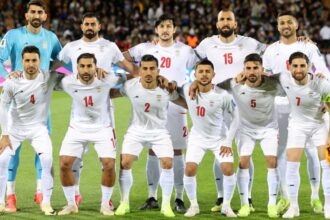
The countdown to the 2026 FIFA World Cup has taken a dramatic turn, with the Islamic Republic of Iran issuing a stark ultimatum to football’s governing body and the tournament’s joint hosts. While the Iranian Football Federation (FFIRI) has confirmed it will participate in this summer’s global showpiece, it has simultaneously laid down a series of rigid demands, framing its involvement as conditional on securing ironclad guarantees from FIFA and the host nations—the United States, Mexico, and Canada.
This is not merely a routine pre-tournament squabble over logistics. It is a geopolitical fuse lit by the denial of a visa to FFIRI president Mehdi Taj, escalating into a broader confrontation over national sovereignty, security protocols, and the very definition of what it means to compete on the world’s biggest sporting stage. As a veteran sports journalist who has covered World Cup politics for decades, I can tell you this: we are watching a high-stakes game of diplomatic poker, and the cards are still on the table.
The Spark: A Visa Denial and a Presidential Snub
The crisis did not erupt overnight. The immediate catalyst was the refusal by Canadian authorities to grant a visa to Mehdi Taj, the president of the FFIRI, preventing him from attending last month’s FIFA Congress in Vancouver. For Tehran, this was not an administrative oversight; it was a calculated insult. The denial, rooted in Canada’s stringent sanctions against members of the Islamic Revolutionary Guard Corps (IRGC), struck at the heart of Iran’s political and military establishment.
“We will participate in the World Cup without any retreat from our beliefs, culture and convictions,” the FFIRI stated in a defiant communiqué published on Saturday. “But the hosts must take our concerns into account. This is not a request; it is a necessity.” The statement made clear that Iran views its participation not as a favor to FIFA, but as a right that must be protected by explicit guarantees.
Let’s be clear about the symbolism here. The IRGC is not a rogue faction; it is a constitutionally enshrined branch of Iran’s armed forces, deeply integrated into the nation’s political and economic fabric. For Iran, demanding that players and officials who served in the IRGC receive visas is akin to asking for the right to bring its own national identity to the tournament. For the host nations—particularly the U.S. and Canada—the IRGC is a designated terrorist organization. This is the core collision.
Breaking Down the 10 Conditions: What Iran Actually Wants
According to Mehdi Taj, the FFIRI has formally presented FIFA with a list of 10 conditions for Iran’s participation. While the full text has not been published, the key demands that have emerged from the federation’s statement and official leaks paint a picture of a team seeking total immunity from political and legal friction. Here are the critical points:
- Unconditional Visa Guarantees: Iran demands that every player, coach, and delegation member—including those with past or present ties to the IRGC—receive entry visas to the U.S., Mexico, and Canada without exception or delay.
- Security and Sovereignty: The team insists on protection from any form of political protest, harassment, or legal action during their stay, including immunity from local laws that might conflict with Iranian cultural or religious norms.
- No Political Interference: A guarantee that Iranian flags, anthems, and national symbols will be displayed without alteration, and that no host government will impose restrictions on the team’s freedom of movement or expression.
- Logistical Autonomy: The right to appoint their own security personnel (drawn from IRGC-affiliated units) to accompany the delegation, and the ability to choose their training base without host-nation oversight.
- Financial Guarantees: Assurance that Iranian players’ families and support staff will not face visa issues or asset freezes under existing sanctions regimes.
These are not minor technicalities. If you are a player who served in the IRGC, you are currently barred from entering Canada under its sanctions law. To grant a visa would require a political waiver from Ottawa—a move that would ignite a firestorm in Canadian parliament. Similarly, the U.S. has a long history of denying entry to individuals with IRGC affiliations. Iran is essentially asking the hosts to rewrite their national security laws for the sake of a football match.
Expert Analysis: FIFA’s Tightrope and the Geopolitical Calculus
From a journalistic perspective, this situation is unprecedented. We have seen political boycotts before—the Soviet Union in 1984, Yugoslavia in 1994—but never a team threatening to walk out after qualifying, while simultaneously demanding that the host nations change their immigration policies. FIFA’s position is precarious. On one hand, the organization’s statutes explicitly forbid government interference in football matters. On the other, FIFA cannot force the U.S. or Canada to issue visas to individuals they have designated as security risks.
My prediction: FIFA will attempt a classic diplomatic fudge. Expect a closed-door agreement where the host nations quietly grant visas to a limited number of “essential personnel”—likely the players and head coach—while denying entry to higher-profile IRGC-linked officials like Taj himself. This would allow Iran to claim a partial victory (“we got our players in”) while the hosts save face (“we didn’t let the IRGC commander in”). But this is a Band-Aid on a bullet wound.
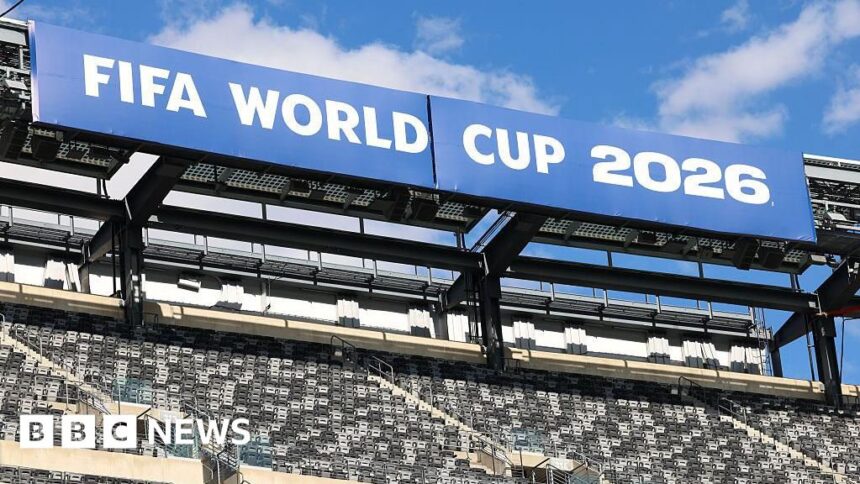
The bigger issue is the 2026 World Cup’s unique structure. With 48 teams spread across three nations, this is the most politically complex tournament in history. Iran’s group-stage matches are likely to be in the U.S., a country with which Tehran has no diplomatic relations. The potential for a security incident is immense. Imagine Iranian fans clashing with anti-regime protesters outside a stadium in Houston or Los Angeles. The U.S. State Department is already on high alert.
Furthermore, Iran’s domestic audience is watching. The regime has historically used the World Cup as a tool for nationalist propaganda. If the team is seen as being “humiliated” by visa denials or political protests, it could backfire on the government at home. That is why the FFIRI is so publicly aggressive: they need to show their base that they are fighting for Iran’s dignity, not just for a spot in Group B.
Strong Conclusion: The Clock is Ticking on a Potential Crisis
Let me be direct: this is not going to be resolved with a simple handshake. The World Cup begins on 11 June, and we are roughly four months out. The visa processing time for Iranian nationals, particularly those with military backgrounds, is months-long. If Iran’s demands are not met by, say, early April, the FFIRI will be forced to either escalate—by threatening a formal boycott—or to back down, which would be a massive loss of face.
My final prediction: Iran will play in the 2026 World Cup. The regime loves the global stage too much to forfeit it. But the journey there will be fraught with last-minute drama, back-channel negotiations, and likely a few more visa denials that will be framed as “unacceptable provocations.” The real story, however, is not whether Iran shows up—it is what precedent this sets. If a nation can demand the rewriting of host-country laws as a condition for playing, then the World Cup is no longer just a sporting event. It is a geopolitical battlefield where the whistle is blown by diplomats, not referees.
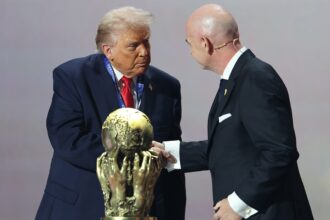
For now, all eyes are on FIFA president Gianni Infantino and the U.S. Soccer Federation. They have a choice: find a creative diplomatic solution that keeps Iran in the tournament, or watch the first major political crisis of the 2026 World Cup unfold before a single ball is kicked. The stakes could not be higher—for the players, for the fans, and for the fragile notion that sport can ever truly be separate from politics.
Source: Based on news from BBC Sport.