Is Pep Guardiola Right? The Surprising Truth Behind Manchester City’s Net Spend Argument
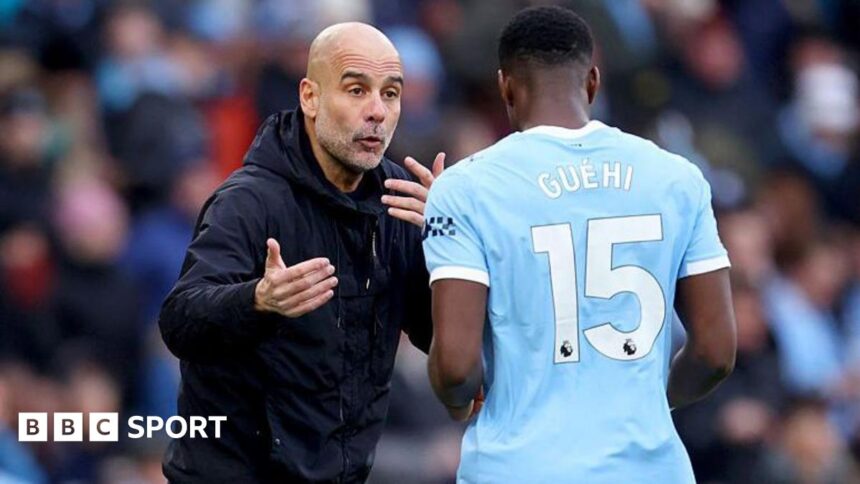
The January transfer window had barely slammed shut when Pep Guardiola, the architect of Manchester City’s modern dynasty, offered a rare glimpse of public irritation. Fresh from securing the signatures of England defender Marc Guehi and dynamic forward Antoine Semenyo for a combined £84 million, the manager was expected to discuss his new reinforcements. Instead, he delivered a masterclass in financial deflection. “I was a little bit grumpy,” he admitted, before pivoting to a statistic that has since echoed across the footballing world: “In net spend the last five years we are seventh.” In one sentence, Guardiola reframed the entire narrative around City’s dominance, shifting the focus from gross outlay to net investment and taking a pointed swipe at his rivals. But is this a legitimate defense or a clever smokescreen? We investigate the numbers, the strategy, and the high-stakes implications of Pep’s provocative claim.
Decoding the Dueling Metrics: Gross Spend vs. Net Spend
To understand Guardiola’s point, we must first dissect the two primary ways of measuring a club’s transfer market activity. Gross spend is the simple, headline-grabbing figure: the total amount a club pays in transfer fees. By this measure, Manchester City are consistently at or near the summit, as their recent winter outlay confirms. It’s the metric critics most frequently cite when labeling City a “state-owned club” buying success.
Net spend, however, is a more nuanced calculation. It is the gross spend minus the income received from player sales. This figure reveals a club’s transfer market efficiency and financial sustainability. Guardiola’s assertion that City rank seventh in the Premier League in net spend over five years is a strategic pivot to this more flattering metric. It highlights a crucial aspect of City’s operation under Director of Football Txiki Begiristain: a ruthless and profitable player trading model that funds future purchases.
Consider these recent high-profile sales that bolster City’s net spend argument:
- Cole Palmer: Sold to Chelsea for an initial £40 million, a product of the academy.
- Riyad Mahrez & Aymeric Laporte: Moved to the Saudi Pro League for a combined £54 million, representing savvy sales of ageing stars.
- Gabriel Jesus & Oleksandr Zinchenko: Sold to Arsenal for a combined £75 million, directly strengthening a rival but balancing the books.
This model transforms the squad continuously, injecting funds and keeping the wage bill manageable, a reality often overshadowed by their big-money arrivals.
The Guardiola Gambit: A Defense Built on Data
Guardiola’s comments were far from an offhand remark; they were a pre-emptive, data-driven strike. With City engaged in a fierce title battle and facing increased scrutiny over 115 Premier League financial charges, the manager is meticulously shaping the narrative. His argument is twofold.
First, he is challenging the popular perception of financial doping. By pointing to the net spend table, he implicitly argues that City’s success is not merely a product of blank-cheque spending, but of superior coaching, recruitment strategy, and player development. “Others have been spending more money to catch up,” he implied, framing City not as a financial Goliath but as a well-run entity others are desperately trying to emulate and outspend.
Second, this is a classic Guardiola psychological deflection. By appearing “grumpy” and shifting focus to finances, he protects his players from questions about on-pitch performance and places external pressure on rival clubs. It’s a message to the league: catching City requires more than just spending; it requires the institutional excellence and footballing philosophy he has instilled.
The Rival Reality: Who Actually Spends More?
So, if City are seventh in net spend, who is above them? Analysis of the last five years consistently places clubs like Chelsea, Manchester United, Arsenal, and Tottenham Hotspur with higher net expenditures. Chelsea’s £1 billion+ outlay under Todd Boehly, with minimal recoupable sales, is the most extreme example. Manchester United’s struggles in the market, with huge fees for players who have depreciated in value, also contribute to a high net spend.
This context is vital. These rivals have spent vast sums trying to bridge the gap City opened. Guardiola’s point is that this investment from others has been necessary just to compete, let alone overtake, his side. It turns the criticism on its head: the sustained excellence of City has forced an inflationary arms race that they themselves, according to the net spend metric, are navigating more prudently than their challengers. However, critics counter that City’s ability to sell players for significant fees is built upon a foundation of acquiring and developing talent with initial heavy investment—a cycle that began with substantial gross spending in the early years of the Sheikh Mansour era.
The Future Forecast: A New Era of Fiscal Responsibility?
Guardiola’s net spend lecture may be a signpost for the future of elite football. With Profit and Sustainability Rules (PSR) tightening and the specter of independent regulation, sustainable squad building is no longer optional. City’s model—buy high-potential, sell high, continuously refresh—is becoming the blueprint for survival at the top.
We can predict several key developments:
- Academy Emphasis Will Grow: The sales of Cole Palmer and James Trafford represent pure profit on the balance sheet. Every top club will now prioritize their youth systems as a financial lifeline.
- Player Trading Becomes Paramount: The era of stockpiling players is over. Clubs will need to be as adept at selling as they are at buying, making figures like Txiki Begiristain increasingly valuable.
- The Net Spend Narrative Will Dominate: Guardiola has fired the first shot in a new PR war. Expect managers of well-run clubs to tout their net spend figures as a badge of honor, while those struggling will face questions about wasteful expenditure.
For City, the immediate future involves integrating Guehi and Semenyo while likely preparing for another summer of strategic sales to fund the next phase. The cycle continues, now under the glaring spotlight of Guardiola’s own framing.
Conclusion: A Calculated Truth with Strategic Brilliance
Is Pep Guardiola right? On the specific, statistical claim, the evidence largely supports him. Over a five-year horizon, Manchester City’s net spend is indeed lower than several of their rivals, a testament to a remarkably efficient and proactive sporting department. This is not a club merely hoarding talent; it is a ruthless, self-sustaining football machine.
But Guardiola’s statement is more than a fact—it’s a strategic masterstroke. It reframes the conversation from one of financial might to one of managerial and executive genius. It deflects pressure, challenges rivals, and provides a robust defense against accusations of simply buying titles. While the cloud of the 115 charges remains a separate and profound issue, in the court of public opinion regarding transfer market conduct, Guardiola has presented a compelling case. The truth is, in the modern game, gross spend tells you who is buying players, but net spend reveals who is building a club. And by that measure, Guardiola is arguing, Manchester City’s rivals still have much to learn.
Source: Based on news from BBC Sport.