Neutral Jerseys, Political Battles: The Controversy Over Russian Athletes at Milan-Cortina
The stage is set for the 2026 Winter Olympics in Milan-Cortina, a celebration of athletic excellence against the backdrop of the Italian Alps. Yet, a shadow from the ongoing war in Ukraine threatens to darken the snow. The International Olympic Committee (IOC), navigating a geopolitical minefield, has cleared a select group of Russian athletes to compete as “Individual Neutral Athletes” (AINs)—stripped of national symbols, anthems, and flags. This carefully constructed neutrality, however, is now facing intense scrutiny. New evidence suggests some approved athletes have documented links to pro-war activity, directly challenging the IOC’s own eligibility criteria and raising profound questions about the separation of sport and state in modern conflict.
The IOC’s Tightrope: Neutrality in Name and Deed
Following Russia’s full-scale invasion of Ukraine in 2022, the IOC recommended the exclusion of Russian and Belarusian athletes from international competition. As the 2026 Games approached, the committee crafted a precarious pathway for their return, contingent on strict conditions. Athletes must compete as neutrals, with no connection to their country’s military or state security agencies. Crucially, they are deemed ineligible if they have actively supported the war.
The IOC’s guidance, while broad, explicitly cites social media activity and participation in pro-war events as potential disqualifiers. A three-person IOC review panel was tasked with vetting each applicant. To date, they have approved 13 competitors from Russia for Milan-Cortina. The committee asserts this process is rigorous and independent. Yet, the very foundation of this vetting is now under fire, as investigative findings contradict the panel’s conclusions for specific athletes.
Case Studies: When Personal Platforms Meet Propaganda
Material shared with BBC Sport by the Molfar Intelligence Institute and journalist Artem Khudolieiev provides a stark counter-narrative to the IOC’s clean bills of health. The evidence focuses on several approved athletes, highlighting a gap between the IOC’s rules and their enforcement.
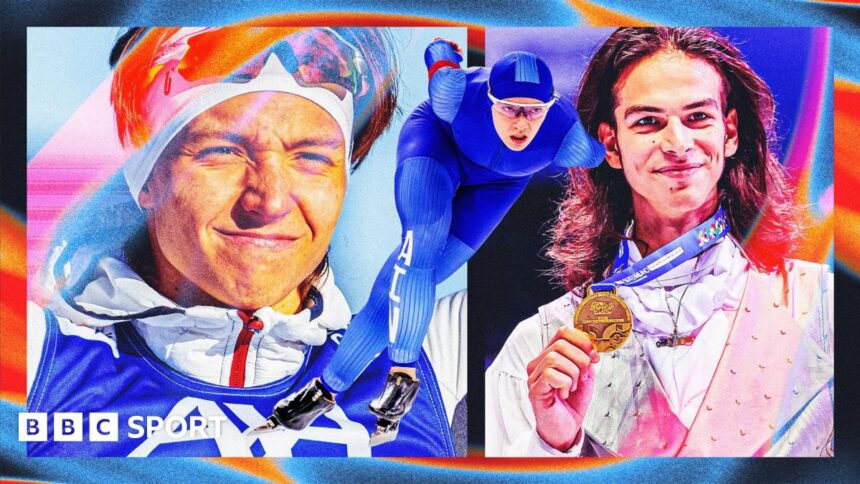
- Savelii Korostelev (Freestyle Skiing): The skier was photographed in December 2022 at a pro-war rally titled “A World Without Nazism” in Moscow, an event featuring symbols like the pro-war “Z.” His social media history also reportedly includes following and engaging with content from prominent pro-war figures and state propagandists. His presence at a explicitly pro-war rally appears to be a direct contravention of the IOC’s ban on participation in such events.
- Kseniia Korzhova (Luge): Investigators point to Korzhova’s social media activity, which includes following and liking posts by pro-war officials and propagandists. More notably, she is linked to participation in a 2023 “Sports Marathon” event that was part of the “We Don’t Abandon Our Own” campaign, a initiative heavily associated with supporting Russian troops in Ukraine and organized with state-backed patriotic clubs.
- Petr Gumennik (Figure Skating): The skater’s alleged links are more nuanced but equally telling. He is reported to have performed in ice shows organized by and in support of the “Army of Russia” fund, a state-affiliated charity that provides direct material support to the military effort. Performing for such an organization could reasonably be interpreted as active support, blurring the line between athletic exhibition and patriotic endorsement.
These cases represent a critical challenge. The athletes’ actions, documented in the public domain, seem to align with the very activities the IOC pledged to police. The question becomes: what standard of proof does the IOC panel require, and is public association with state-backed war support not sufficient evidence of “active support”?
Expert Analysis: The Impossibility of Apolitical Sport?
Sports governance experts and ethicists are deeply divided. “The IOC is attempting an impossible surgery: to extract the athlete from the political organism of the state,” says Dr. Anya Petrova, a professor of sports geopolitics. “In an authoritarian context where public figures are expected to demonstrate loyalty, athletic success is inherently political. A like, a attendance, a performance—these are not innocent gestures; they are signals within a controlled system.”
The IOC’s stance is one of pragmatic isolation. Their argument hinges on evaluating the individual athlete’s conduct, not the actions of their government. They contend that young athletes operate under immense pressure and that their presence at broadly defined “patriotic” events may not constitute explicit, personal endorsement of the war. However, this perspective is met with fierce criticism from Ukrainian officials and human rights groups, who view any inclusion as a legitimization of Russian aggression and a betrayal of Ukrainian athletes whose lives and training have been destroyed.
“The ‘neutral athlete’ facade collapses when the individual has willingly stood on a stage built by war propaganda,” argues Marko Teric, a former Olympic diplomat. “The IOC’s criteria are sound on paper, but their application appears selectively blind. This erodes trust in the entire neutral athlete framework and suggests political expediency may be overriding principled enforcement.”
Predictions and Repercussions for Milan-Cortina and Beyond
The controversy is unlikely to subside before the opening ceremony. We can anticipate several developments:
- Formal Challenges and Protests: National Olympic Committees, particularly from nations aligned with Ukraine, may lodge formal appeals against the eligibility of specific athletes, citing the publicly available evidence. This could lead to last-minute legal battles at the Court of Arbitration for Sport (CAS).
- On-Protests and a Fractured Atmosphere: The presence of these athletes, even under a neutral flag, will be a lightning rod. We may see subdued protests from other competitors, podium gestures, or a palpable tension in mixed zones and team venues, potentially overshadowing athletic achievement.
- Scrutiny of Every Gesture Approved Russian AINs will be under a microscope in Milan-Cortina. Any perceived pro-Russian symbol, comment, or association will trigger immediate backlash and calls for their expulsion, placing immense psychological pressure on the athletes themselves.
- Long-term IOC Credibility Damage If the evidence against approved athletes is as clear-cut as it appears, the IOC’s vetting process will be seen as fundamentally flawed. This will have lasting consequences for how the IOC manages future conflicts, undermining its authority to set and enforce rules on political neutrality in sport.
Conclusion: The Unwinable Race for Neutrality
The 2026 Winter Olympics were destined to be a complex chapter in Olympic history. The saga of the Russian neutral athletes confirms that the games cannot outrun the world’s conflicts. The IOC’s attempt to create a pure, apolitical space for competition is colliding with the reality of modern hybrid warfare, where social media, public appearances, and cultural events are active fronts.
The cases of Korostelev, Korzhova, and Gumennik are not mere bureaucratic oversights; they are stress tests for the soul of the Olympic movement. Can an athlete who has, by available evidence, engaged with the propaganda machinery of a warring state truly be considered neutral? The IOC’s panel has answered yes. A growing body of external evidence, and much of the watching world, answers no.
As the focus turns to Milan-Cortina, the victory at stake is no longer just about gold medals. It is about the integrity of the rules themselves. The world will be watching not only the feats on the slopes and rinks, but also the Olympic movement’s ability—or inability—to uphold its own principles in the face of inconvenient truths. The podium for this contest has yet to be built.
Source: Based on news from BBC Sport.