Italy’s World Cup Crucible: Why Bosnia is Secondary to the Battle Within
The air in Bergamo is thick with more than just the late March chill. As the Italian national team prepares for its most critical match in years, a spectral opponent looms larger than the talented Bosnian squad arriving on Tuesday. It is the ghost of play-offs past, the weight of a nation’s desperate expectation, and the paralyzing fear of a third consecutive World Cup failure. The Italian media, in a sobering chorus, are issuing a stark warning to Gennaro Gattuso and his Azzurri: Bosnia and Herzegovina’s greatest weapon is Italy’s own anxiety.
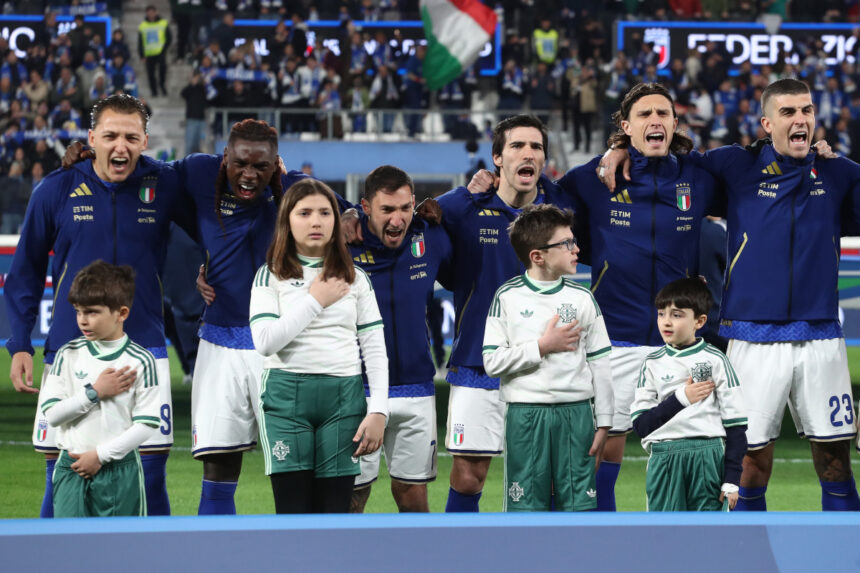
Following a labored, nerve-jangling 2-0 victory over a dogged Northern Ireland, the path to the 2026 World Cup narrows to one final, winner-take-all showdown. The memories of the seismic failures against Sweden in 2017 and North Macedonia in 2022 are not just history; they are a living, breathing part of the atmosphere. As Sebastiano Vernazza articulated in the Gazzetta dello Sport, the primary enemy is anxiety—a foe more dangerous than Edin Džeko or any tactical scheme Bosnia can deploy. This is not merely a football match; it is a psychological siege.
The Weight of the Blue Jersey: A Nation’s Trauma
To understand the palpable tension surrounding the Italy camp, one must acknowledge the unprecedented nature of their recent exile. For a nation that views qualification as a birthright, missing two consecutive World Cups was unthinkable—a footballing apocalypse. That trauma has forged a generational scar on Italian football, transforming every qualifying match into a high-stakes drama.
The play-off format itself has become a source of collective dread. The single-elimination nature offers no margin for error, no second leg for redemption. It is a 90-minute (or more) rollercoaster where one moment of lost concentration, one errant pass, can condemn a nation to another four years of soul-searching. This historical baggage creates a vicious cycle of pressure:
- Players feel the immense weight of being the group that either ends the curse or perpetuates it.
- Every missed chance is magnified, every backward pass met with groans of apprehension from the crowd.
- The game plan can become conservative and fearful, as seen in patches against Northern Ireland, where the desire not to lose overpowers the instinct to win.
Gattuso, a warrior of the pitch in his day, now faces his greatest battle as a manager: not on the tactics board, but in the minds of his players. He must convert that nervous energy into focused intensity.
Bosnia’s Real Threat: Exploiting Italian Nerves
This is not to dismiss the genuine quality Bosnia and Herzegovina will bring to the Stadio di Bergamo. In players like veteran striker Edin Džeko, creative midfielder Miralem Pjanić, and the emerging talents across Europe, they possess the individual brilliance to punish any opponent. Their strengths are tangible:
- A potent attacking duo in Džeko and others capable of clinical finishing.
- Technical midfielders who can control tempo and deliver deadly set-pieces.
- A collective spirit forged through their own hard-fought qualifying campaigns.
However, their most potent strategy may be a passive one: letting Italy wrestle with its own demons. A slow start from the Azzurri, a few early misplaced passes fueled by tension, would embolden Bosnia immensely. If the match remains scoreless past the hour mark, the anxiety in the stadium will reach a fever pitch. Every Bosnian counter-attack will feel like a potential death knell. In this scenario, Bosnia transforms into the perfect trap—a capable team lying in wait as their more illustrious opponents potentially succumb to the occasion.
The Bosnians have nothing to lose and a World Cup to gain. Italy has everything to lose, carrying the dread of a nation. This asymmetry of pressure is Bosnia’s intangible advantage.
Gattuso’s Mandate: Coaching Courage Over Tactics
All eyes are on Gennaro Gattuso. The iconic midfielder, known for his snarling, fearless demeanor, now must instill that very essence into his squad. His team selection and in-game management will be scrutinized, but his pre-match messaging will be paramount. He must perform a delicate balancing act: acknowledging the stakes to foster urgency while liberating his players from the shackles of fear.
This requires more than a fiery pep talk. It demands tactical clarity and proactive courage. Opting for a positive, attacking lineup that seeks to dominate the game from the outset could be the key to dispelling nerves. Players like Federico Chiesa, with his direct, fearless running, and a creative midfielder capable of unlocking a defense, must be central figures. The objective must be to impose their quality early, to give the crowd and themselves a positive reason to believe, rather than playing not to make a mistake.
Gattuso’s own legacy is on the line. Steering Italy to the World Cup would etch his name in history as the man who restored the natural order. Failure would see him become another figure associated with the bleakest period in modern Azzurri history. His famous grit is now a managerial tool—his most important one.
Prediction: A Night of Suffering or Liberation?
Forecasting this match is less about form and more about psychology. Italy, on paper, has the superior squad and the overwhelming advantage of playing at home. But paper offers no protection against the psychological warfare of a play-off.
The most likely scenario is a night of intense suffering for Italy. Expect a cagey, tense opening where the Azzurri look hesitant. The first goal, as it always does in these fixtures, will be monumental. If Italy scores it, especially early, a wave of relief could wash over the team, allowing their quality to flourish and potentially leading to a multi-goal victory. If Bosnia scores first, the specter of past failures will become a deafening roar in the ears of every Italian player, and a monumental task will become Herculean.
My prediction leans on the character Gattuso must instill. I believe Italy will navigate the storm, but not without profound scares. The match will be decided by a single goal, likely from a moment of individual brilliance or a set-piece, in a contest where chances are scarce due to the suffocating pressure. A 1-0 or 2-1 victory for Italy, achieved through gritted teeth and collective will more than flowing football, seems the destined path. It will be a night that feels less like a celebration and more like an exorcism.
Conclusion: Facing the Mirror for a World Cup Dream
When the whistle blows in Bergamo, two teams will take the field, but Italy will face two opponents. The one in blue and yellow is known, scouted, and respected. The other—an invisible entity of fear, history, and expectation—is the more formidable. The warning from the Italian press is not just journalistic melodrama; it is an acute diagnosis of the Azzurri’s condition.
The journey to the 2026 World Cup does not run through Zenica or Sarajevo, but through the psyche of the Italian football nation. To book their ticket, the players must accomplish what their predecessors could not: they must win the battle within before they can win the battle on the pitch. Victory will require more than skill; it will require a monumental display of mental fortitude. For Italy, the road back to the world’s stage is a mere 90 minutes long, but it is a path they must walk while carrying the heaviest burden in their footballing history. The world will be watching to see if they stumble under its weight, or finally, triumphantly, cast it aside.
Source: Based on news from Yahoo Sports.