Italy’s World Cup Agony Deepens: Azzurri Crumble in Bosnia Shoot-Out Catastrophe
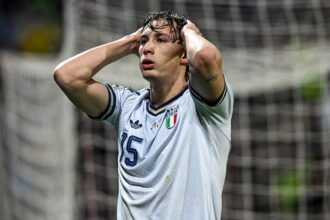
The unthinkable has become a recurring nightmare. For the third consecutive World Cup cycle, the four-time champions of the world will be absent from the planet’s grandest sporting stage. In the cauldron of Zenica’s Bilino Polje Stadium, the Italian national team’s fragile psyche shattered once more, succumbing 4-1 on penalties to a resilient Bosnia and Herzegovina after a 1-1 draw. This wasn’t just a defeat; it was a systemic collapse, a brutal exposure of a footballing giant caught in a spiral of its own making, left to watch as Esmir Bajraktarevic’s winning penalty sealed their fate and Bosnia’s fairytale.
A Dream Start, A Predictable Unraveling
For a fleeting quarter of an hour, it seemed the script might be rewritten. Moise Kean’s sharp 15th-minute finish, a rare moment of clinical precision, offered a glimmer of redemption. But the lead, rather than settling Italian nerves, seemed to amplify an ever-present anxiety. The weight of a nation’s expectation, heavy with the scars of failures in 2018 and 2022, visibly bowed Italian shoulders. Play became rushed, decision-making erratic. The tactical discipline that is their birthright evaporated, replaced by a palpable fear of the consequence. Bosnia, driven by a ferocious home support and unburdened by history, grew into the game. The turning point was as reckless as it was inevitable. Four minutes before the break, Alessandro Bastoni’s desperate lunge on Amar Memic earned him a straight red card, leaving Italy to navigate an hour of high-stakes football a man down. It was a moment of sheer panic, a microcosm of Italy’s entire qualifying campaign.
The Inevitable Collapse and Penalty Trauma
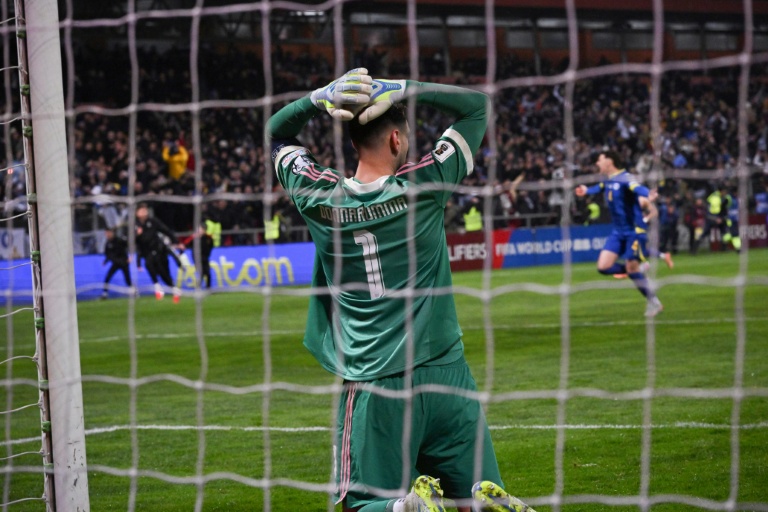
What followed was a masterclass in stubborn, heroic defending mixed with sheer Italian torment. Gianluigi Donnarumma produced a series of spectacular saves to keep his team afloat, but the dam finally broke in the 79th minute. Haris Tabakovic, a constant menace, prodded home from close range to send Zenica into raptures and Italy into a state of shock. Extra time was a war of attrition, with Italy clinging on and Bosnia lacking the final killer instinct. The spectacle was destined for the cruel lottery of penalties—a scenario that has become Italy’s personal purgatory.
The penalty shoot-out was not a contest; it was a public execution. The composure of the four-time champions was a myth. The sequence was horrifying for Azzurri fans:
- Pio Esposito, young and thrust into an impossible situation, blazed Italy’s first kick wildly over the bar.
- Bosnia converted. Nicolò Fagioli scored for Italy to offer brief hope.
- Bosnia converted again. Then, Bryan Cristante saw his powerful strike cannon back off the crossbar.
- After another Bosnian conversion, the stage was set for Esmir Bajraktarevic. His shot squirmed under Donnarumma, and the nightmare was complete.
The contrast was stark: Bosnia’s penalties were ice-cool; Italy’s were a product of pure, unadulterated pressure. The Bilino Polje Stadium erupted, a nation celebrated its greatest footballing achievement, while blue shirts fell to the turf, their World Cup dream extinguished in the most brutal fashion.
Anatomy of a Crisis: Systemic Failure Exposed
To blame this disaster solely on a red card and missed penalties is to miss the profound, systemic issues plaguing Italian football. This failure is years in the making. The shoot-out defeat is merely the tragic final act. The problems are deep-rooted:
- Talent Development Stagnation: While the Euro 2020 triumph was a glorious outlier, the pipeline of world-class, creative talent has slowed. The squad lacks depth, and too many players are performing at a level below the historic Italian standard.
- Psychological Scarring: The failure to qualify for the 2018 and 2022 World Cups created a monster of doubt. This team plays not to win, but not to lose—a fatal mentality in high-stakes matches.
- Tactical Inflexibility: Even with ten men, Italy appeared devoid of a Plan B. The ability to control a game through game management and tactical intelligence, once a hallmark, has faded.
The federation now faces a monumental task. The cycle of hiring and firing managers must end. A long-term vision, focusing on youth development and rebuilding the shattered identity of the national team, is non-negotiable.
The Road Ahead: A Long and Painful Rebuild
For Bosnia and Herzegovina, a golden summer awaits. Their place in Group B against Canada, Switzerland, and Qatar is a reward for resilience and a moment of unbridled national joy. For Italy, the summer will be spent in introspection and anguish. The financial and cultural cost of another absence is incalculable. Predictions for the Azzurri are now shrouded in uncertainty:
The immediate future is likely to be turbulent. A new coach will be appointed, but no quick fix exists. The 2026 World Cup, with its expanded format, offers a clearer path, but the qualifiers will now be played in an atmosphere of unprecedented tension and skepticism. The core of this team, haunted by this night in Zenica, may need to be gradually phased out to break the psychological cycle. The focus must shift entirely to nurturing a new generation untainted by this trauma.
Italy’s World Cup nightmare is no longer a blip; it is an era. The defeat to Bosnia and Herzegovina is a landmark low, a result that will echo through the halls of Italian football for years. It was a failure of nerve, of system, and of ideas. The Azzurri are not just missing a tournament; they are searching for their soul. The road back to the summit of world football looks longer, steeper, and more daunting than ever before. The beautiful game can be cruel, and in Zenica, it delivered a verdict of heartbreaking finality to a nation that once defined its very essence.
Source: Based on news from Yahoo Sports.