Jake Paul’s “Fake Citizen” Jab at Bad Bunny Ignites Super Bowl Culture War
The spectacle of the Super Bowl halftime show is no stranger to controversy, but this year, the drama began weeks before the first note was played. In a fiery social media exchange that has spilled from sports pages into political discourse, boxer and influencer Jake Paul leveled a stunning accusation at global superstar Bad Bunny, calling him a “fake citizen” for his criticism of U.S. agencies like ICE. The spat, amplified by Logan Paul’s terse dismissal of the upcoming performance, has transformed a celebratory musical slot into a heated referendum on patriotism, protest, and the price of fame in America.
From the Ring to the Political Arena: The Paul Brothers Weigh In
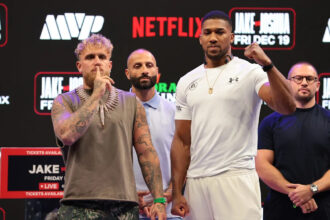
The controversy ignited when Fox News Digital asked Logan Paul, Jake’s brother and fellow content creator, if he was excited for Bad Bunny’s halftime show. His response was a single, loaded word: “No.” This cryptic reply opened the door, and Jake Paul swiftly kicked it down. On Sunday, Jake elaborated on a previous social media post, clarifying that his “fake citizen” barb was not directed at Bad Bunny’s Puerto Rican heritage—Puerto Ricans are, of course, U.S. citizens by birth—but at the singer’s political stance.
Jake Paul’s core argument hinges on a classic “love it or leave it” mentality. He framed his criticism around the idea that Bad Bunny, who has achieved monumental success within the American commercial system, was biting the hand that feeds him. “It’s about the principle of profiting immensely from American platforms, the American economy, and American fans, while openly hating on key American institutions,” a source close to Paul’s camp suggested. This perspective reduces a complex geopolitical relationship to a simple transaction, ignoring the nuanced history of Puerto Rico’s status and the long tradition of artistic protest within the United States itself.
Bad Bunny: The Unlikely Political Provocateur
To understand the weight of Jake Paul’s attack, one must recognize who Bad Bunny is beyond the reggaeton hits. Born Benito Antonio Martínez Ocasio, the artist has consistently used his platform to address social issues. His criticism of U.S. Immigration and Customs Enforcement (ICE) is part of a broader, pointed commentary on colonialism, inequality, and the treatment of Latin American people. For Bad Bunny, these are not abstract issues; they are reflections of the lived experience for many in Puerto Rico and the diaspora.
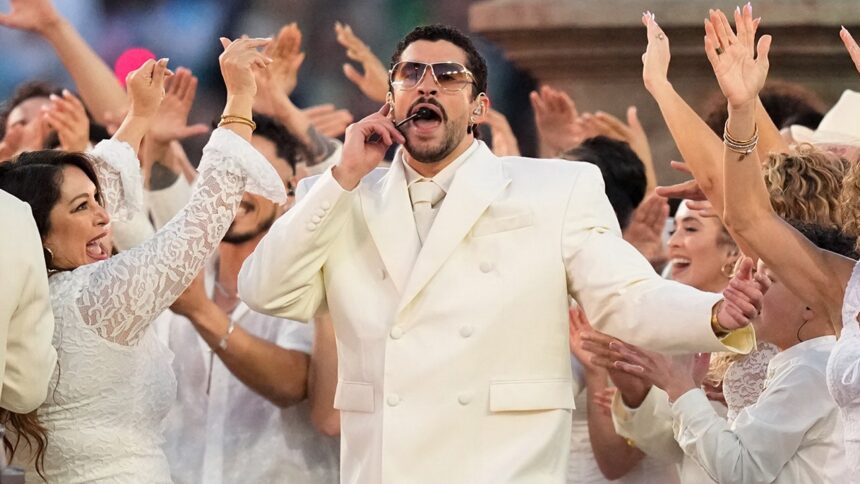
His halftime performance, therefore, was never going to be just a concert. It was a statement—a moment of unprecedented visibility for a Spanish-language artist on America’s biggest stage. The political subtext was inevitable. By targeting Bad Bunny’s “citizenship,” Jake Paul attempted to undermine the legitimacy of his critique, painting it as the hypocrisy of an ungrateful guest rather than the valid protest of a citizen with a divergent viewpoint.
- Artistic Protest vs. Patriotic Duty: The clash highlights a fundamental divide: is the halftime show a place for unadulterated entertainment, or is it a legitimate platform for an artist’s identity and beliefs?
- The Complexity of Puerto Rican Identity: The episode forces a public reckoning with the unique and often misunderstood status of Puerto Rico, a territory whose citizens carry U.S. passports but lack full congressional representation.
- Influencer Politics: The Paul brothers, masters of viral media, have inserted themselves into a sensitive geopolitical conversation, leveraging their massive followings to amplify a particular nationalist perspective.
Expert Analysis: The Halftime Show as Political Theater
Sports sociologists and media analysts see this feud as a microcosm of a larger cultural battle. “The Super Bowl halftime show is the ultimate assimilation ritual in American culture,” notes Dr. Elena Marquez, a professor of media studies. “For decades, it was about confirming a very specific, mainstream American ideal. An artist like Bad Bunny—unapologetically Spanish-speaking, politically vocal, and culturally specific—disrupts that narrative. Jake Paul’s comments are a reaction to that disruption. He’s policing the boundaries of what kind of ‘citizen’ is allowed to critique America on its own stage.”
The strategic timing is also critical. By launching this criticism in the weeks leading up to the Super Bowl, the Paul brothers have effectively framed the narrative. They have placed Bad Bunny’s political stance at the center of the conversation, ensuring that millions will watch his performance not just for the music, but through a lens of political controversy. This generates immense engagement, a currency both the Pauls and the NFL understand deeply, even if the league publicly shies away from political firestorms.
Predictions: A Performance That Will Echo Beyond the Stadium
The fallout from this pre-game feud will dictate the legacy of Super Bowl LX’s halftime show. Here is what to expect:
1. A Defiant, Culturally-Rich Performance: Bad Bunny is not an artist who backs down. Expect a spectacular, visually stunning show that doubles as a celebration of Puerto Rican and Latin American culture. Subtlety may be abandoned for direct symbolism; think Puerto Rican flags, possible lyrical callbacks in his medley, and choreography that tells a story of resilience.
2. A Polarized Reception: The audience reaction will be split sharply along ideological lines. One segment will hail it as a historic, empowering moment of representation. Another will decry it as an inappropriate politicization of sports entertainment, echoing Jake Paul’s sentiments. Social media will explode with both reactions immediately.
3. The Paul Brothers’ Next Move: Jake and Logan Paul will undoubtedly comment during and after the show, likely on their podcasts and social channels, driving further engagement and cementing their roles as conservative cultural commentators. This feud is valuable content for their ecosystems.
4. Long-term Impact on Artist Selection: The NFL will internally scrutinize this controversy. While they seek global stars, the league’s desire for a controversy-free spectacle may make them more cautious with outspoken artists in the future, potentially leading to safer, more anodyne bookings.
Conclusion: More Than a Feud—A Reflection of America’s Identity Crisis
The clash between Jake Paul and Bad Bunny is more than a celebrity spat ahead of a big game. It is a stark reflection of America’s ongoing identity crisis. It questions who gets to be called a patriot, who is allowed to criticize, and what price of silence is demanded for access to the American dream. Bad Bunny’s performance was always destined to be historic, but thanks to this controversy, it is now a cultural flashpoint.
Jake Paul’s “fake citizen” comment may have been intended as a silencing tactic, but it has had the opposite effect. It has guaranteed that Bad Bunny’s halftime show will be dissected as a political statement, a moment where the often-suppressed tensions of empire, territory, and dissent played out on the world’s most-watched stage. In the end, the winner of this bout won’t be decided in a boxing ring, but in the collective memory of the audience. The real fight is over the soul of the spectacle itself, and on Sunday, Bad Bunny has the microphone.
Source: Based on news from Fox Sports.