Jake Paul’s Super Bowl Halftime Backtrack: From Boycott Call to Bad Bunny Praise
The world of influencer commentary is often a fire-and-forget arena, but sometimes the sparks land too close to home. In a dizzying 24-hour cycle of criticism, controversy, and conciliation, Jake Paul managed to encapsulate the volatile nature of online discourse while inadvertently spotlighting the immense cultural weight of the Super Bowl Halftime Show. His rapid pivot from labeling Bad Bunny a “fake American citizen” to declaring his “love” for the performer ahead of Super Bowl LX wasn’t just a personal backtrack; it was a masterclass in the modern dynamics of fame, cultural representation, and the inescapable gravity of the NFL’s biggest stage.
The Inflammatory Tweet and the Immediate Backlash
On Sunday afternoon, February 9th, as final tailgates wrapped up and fans settled in for Super Bowl LX between the Seattle Seahawks and New England Patriots, Jake Paul ignited a digital brushfire. The YouTube star-turned-boxer, no stranger to using controversy as currency, took to social media with a direct call to action. “Turn off this halftime. A fake American citizen performing who publicly hates America. I cannot support that,” he wrote, urging a boycott of the upcoming Bad Bunny-headlined spectacle.
The statement was a loaded volley, combining misinformation about citizenship with a sweeping accusation of anti-American sentiment. Bad Bunny, born Benito Antonio Martínez Ocasio in Puerto Rico, is a U.S. citizen by birth, as Puerto Rico is a U.S. territory. The “hates America” claim appeared to be a distorted reference to the artist’s nuanced, often critical lyrical commentary on colonialism, social inequality, and the complex political relationship between Puerto Rico and the mainland United States—themes central to his Grammy-winning artistry.
The backlash was swift and multifaceted:
- Cultural critics and fans highlighted Paul’s apparent ignorance of Puerto Rico’s political status.
- Music journalists pointed to Bad Bunny’s historic achievements, including his recent Grammy dominance, as proof of his authentic, globe-shaking impact.
- Social media users accused Paul of engaging in a tired tactic of labeling any critique as “hatred.”
More than just a fan dispute, the incident underscored the high-stakes environment of the Super Bowl Halftime Show, where every performer is subjected to a unique, intense scrutiny that blends sports, politics, and pop culture.
The Strategic Retreat: “Clarification” and Overt Praise
By Monday morning, the tenor of Jake Paul’s social media had undergone a complete transformation. Facing a growing wave of criticism and factual correction, Paul shifted strategy. He first attempted to explain his “fake American citizen” remark, though his clarification did little to address the core inaccuracy. More tellingly, he then executed a full pivot, posting messages that declared his “love” for Bad Bunny and excitement for the 2026 halftime show.
This wasn’t merely an apology; it was a strategic retreat and rebranding of the narrative. Several factors likely contributed to this reversal:
- Factual Reality: The undeniable truth of Bad Bunny’s U.S. citizenship made the original critique untenable.
- Brand Alignment: As a businessman with ventures in boxing, media, and betting, alienating the massive, passionate Latinx fanbase Bad Bunny commands is poor commercial calculus.
- Event Gravity: The Super Bowl Halftime Show is an institution. Criticizing an announced performer two years in advance is one thing; actively campaigning against the show as it unfolds places one outside the unifying cultural moment, a bad look for any influencer whose currency is relevance.
Paul’s backtrack highlights a key tenet of modern digital fame: the ability to rapidly change course when a narrative turns sour. It also subtly acknowledged the sheer power of the Halftime Show platform—an entity so large it can force a recalibration from even its loudest detractors.
Bad Bunny’s Inaugural Show: A Glimpse into Super Bowl LX
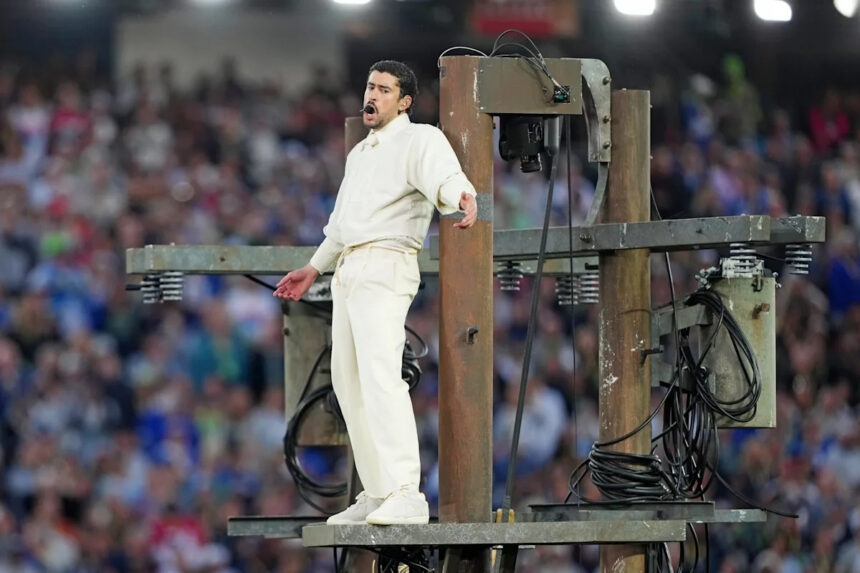
While Jake Paul’s comments dominated one corner of the internet, the actual Super Bowl LX Halftime Show, fresh off Bad Bunny’s historic Grammy wins, offered a breathtaking vision of music’s global future. The performance was a triumphant celebration of Latin music’s centrality to American pop culture, seamlessly blending reggaeton, salsa, and arena-rock sensibilities.
A defining, viral moment came with a surprise appearance by Lady Gaga. The pop icon joined Bad Bunny for a salsa-inspired, horn-heavy rendition of their collaboration “Die with a Smile,” a moment that brought the Allegiant Stadium crowd to a fever pitch and showcased the cross-genre appeal of the modern Halftime Show. The spectacle was a statement: this was not a “niche” performance, but a main event reflecting the demographic and musical reality of 2026 America.
The show’s success, met with critical acclaim and record streaming numbers post-game, effectively rendered pre-show boycotts irrelevant. It proved that the Halftime Show’s cultural authority is now rooted in global sounds and artistic authenticity, a far cry from the purely classic-rock-centric shows of decades past. Bad Bunny didn’t just perform; he curated an experience that was both personally authentic and massively accessible, setting a new benchmark for what the event can be.
Analysis & Predictions: The Halftime Show’s Unassailable Throne
Jake Paul’s rapid flip-flop is more than a personal blip; it’s a data point in understanding the evolving power dynamics of entertainment. The incident offers several key insights and allows for predictions about the future of this marquee slot.
Expert Analysis: Media analysts see this episode as evidence of the Halftime Show’s “Teflon” status. “The show has transcended mere entertainment,” says Dr. Aliyah Vance, a professor of media studies. “It’s a cultural appointment. Attempting to boycott it is like trying to boycott the weather. The conversation becomes about the critique itself, not the performance. Paul learned that attacking the institution only reinforced its importance and exposed his own missteps.”
Looking ahead to future shows, we can predict:
- Increased Genre Diversity: Following Bad Bunny’s success, the NFL and Apple Music will aggressively pursue global megastars from K-Pop, Afrobeats, and other dominant international scenes.
- The Death of the “Safe” Pick: The era of choosing solely legacy acts to avoid controversy is over. The new strategy is to pick defining, of-the-moment artists who generate organic buzz, understanding that any “controversy” will be subsumed by the event’s scale.
- Influencer Caution: Other online personalities will see the Paul incident as a case study. Pre-emptive criticism of a Halftime performer, especially based on shaky premises, is now a high-risk, low-reward engagement tactic.
The role of the performer has also shifted. They are no longer just a musical guest; they are a cultural curator and a statement of intent from the NFL about the audience it values most.
Conclusion: A Lesson in Cultural Currency
Jake Paul’s weekend journey from boycott crusader to Bad Bunny booster is a succinct parable for the digital age. It demonstrated that even with millions of followers, some platforms are too big to troll. The Super Bowl Halftime Show, in its modern incarnation, is one of them. Its cultural currency—forged from billions of live viewers, historic performances, and its role as a societal mirror—is simply too potent.
Ultimately, the brief controversy did little to dim Bad Bunny’s star or the show’s success. If anything, it amplified the conversation, ultimately funneling attention back to the artist and the institution. The lesson was clear: in the high-stakes arena of global pop culture, authentic, ground-breaking artistry like Bad Bunny’s will always command the main stage. And the Super Bowl Halftime Show, as Jake Paul’s rapid retreat revealed, remains the most unassailable main stage of them all. The event is no longer just a show; it’s a fact of cultural life, and as Paul discovered, you don’t argue with facts—you adjust to them.
Source: Based on news from Yahoo Sports.