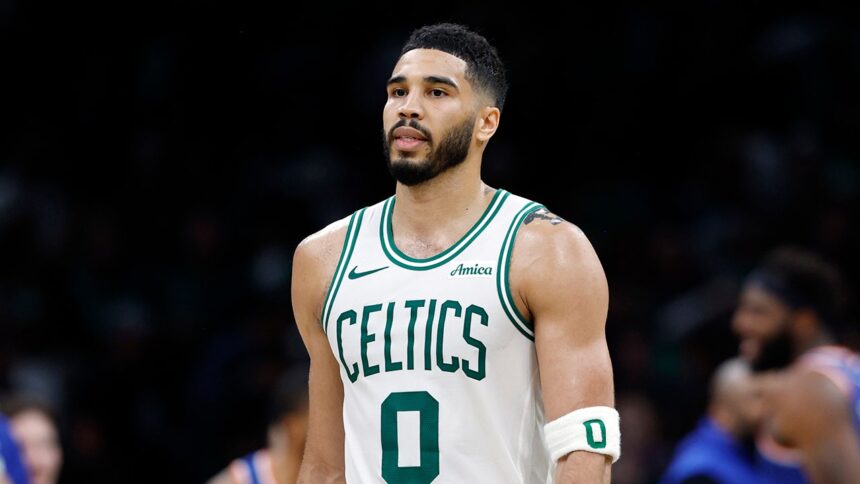
Jayson Tatum Set for Stunning Return as Celtics Host Mavericks
The wait is nearly over. The Boston Celtics, and the entire NBA landscape, are on the cusp of a seismic shift. Nearly ten months after a devastating Achilles tear silenced his playoff run, superstar forward Jayson Tatum is reportedly targeting a return to the court this Friday night against the Dallas Mavericks at TD Garden. This accelerated timeline, first reported by ESPN and confirmed by his questionable status on the official injury report, sends a shockwave through the league and instantly re-calibrates the championship conversation.
A Road Less Traveled: Defying the Achilles Timeline
Achilles injuries have historically been a grim punctuation in the careers of elite athletes, often requiring a full year or more for recovery and a return to peak form. Tatum’s potential return at just under the 10-month mark is not just encouraging; it’s a testament to modern sports medicine, relentless rehabilitation, and the player’s own legendary work ethic. His injury, sustained in a non-contact play against the New York Knicks in last season’s Eastern Conference Semifinals, cast a pall over a Celtics team with title aspirations.
Boston has managed admirably in his absence, holding a strong position in the East thanks to the stellar play of Jaylen Brown and a deep, well-constructed roster. However, Tatum’s absence has been a constant “what if” hanging over the season. His return injects an MVP-caliber talent back into the lineup—a 6’8″ forward capable of scoring 30 points effortlessly, making plays for others, and defending multiple positions. The psychological lift for the team, and the city, is immeasurable.
Strategic Ripple Effects: Celtics’ Title Odds Re-Examined
Tatum’s reintegration will be the most fascinating storyline in basketball for the remainder of the regular season. Head coach Joe Mazzulla will have the luxury, and the challenge, of managing his franchise player’s minutes while re-incorporating him into an ecosystem that has evolved without him. The immediate questions are plentiful:
- Minute Management: Expect a strict minutes cap, likely in the 20-25 minute range initially, with Tatum sitting one half of back-to-backs.
- Rotation Reshuffle: Which player sees a reduced role? How does the offensive hierarchy re-establish itself between Tatum, Brown, and Kristaps Porzingis?
- Playoff Readiness: The primary goal is to have a fully integrated, rhythm-having Tatum for the playoffs. Every game from Friday forward is a step toward that cohesion.
From a macro perspective, the Eastern Conference just got a lot more complicated. A healthy Tatum transforms the Celtics from a very good team into a legitimate championship favorite. His ability to create his own shot in the half-court, a skill that becomes paramount in the postseason, is the final piece the Celtics have been missing.
A Marquee Matchup: Tatum vs. The Future in Cooper Flagg
The narrative of Friday’s game is almost too perfect. Tatum’s return coincides with the arrival of the Dallas Mavericks and their own phenom, rookie Cooper Flagg. The timing is serendipitous, as Flagg was recently named the #1 American NBA player to build around in a controversial list by analyst Jason McIntyre—a list that notably placed Flagg and Cade Cunningham above established stars like Kawhi Leonard.
This creates a symbolic passing-of-the-torch moment, albeit one where the current torchbearer isn’t ready to relinquish anything. Tatum, at 26, is squarely in the prime of his career and will be eager to remind the league of his place in its hierarchy. Flagg, the electrifying rookie who has helped propel Dallas into contention, represents the relentless march of the next generation. Their on-court battles, even in a limited-minute scenario for Tatum, will be a mesmerizing preview of the NBA’s present and future colliding.
Expert Analysis: What to Expect from Tatum 1.0
Sports medicine experts and league analysts will be watching Tatum’s movements with a keen eye. The physical benchmarks of cutting, jumping, and decelerating have likely been cleared. The greater challenge now is the mental hurdle and the re-acquisition of game timing.
“The first phase is physical trust,” says a veteran NBA athletic trainer not directly involved in Tatum’s rehab. “The second, harder phase, is subconscious trust—when you stop thinking about the injury and just play. He’ll likely be aggressive, which is a good sign. The explosiveness might come and go early on, but the skill, the size, and the IQ are all still there.”
From a basketball standpoint, expect a simplified role initially. We will likely see Tatum operating more as a spot-up shooter and in early-post isolations to minimize chaotic, high-speed play. Defensively, he may be stationed more as a low-help defender rather than chasing elite wings on the perimeter. The key for the Celtics is patience; the payoff is a player who, if he regains his full pre-injury self, is a Top-5 NBA talent and the final piece of a championship puzzle.
Conclusion: A New Chapter Begins in Boston
Jayson Tatum’s journey back from an Achilles tear is a story of resilience that transcends sports. His expected return on Friday night is not merely a player checking back into a box score. It is the return of a franchise’s identity and its championship ambitions. The matchup against Cooper Flagg and the Mavericks provides a storybook backdrop—a clash of eras that highlights the relentless cycle of the NBA.
For the Celtics, the final stretch of the season now has a clear, thrilling objective: accelerate the fusion of a superstar with a team that has learned to thrive without him. The road to the NBA Finals still runs through Denver, Oklahoma City, and Milwaukee, but with a healthy Jayson Tatum, Boston has just signaled to the entire league that they intend to be the team waiting at the end of that road. The wait is over. The real work begins now.
Source: Based on news from Fox Sports.