Jazz Forward Jaren Jackson Jr. Undergoes Knee Surgery, Recovery Timeline Set
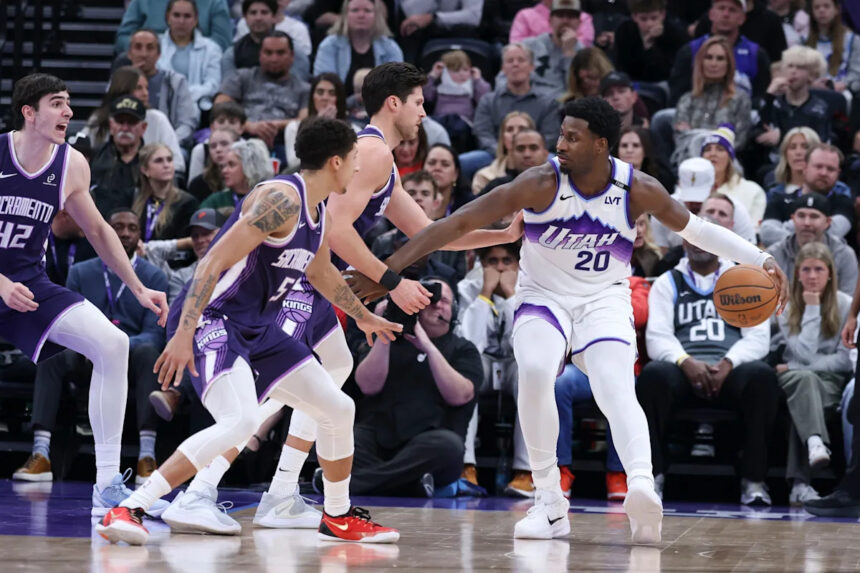
In a development that casts a shadow over the Utah Jazz’s ambitious offseason, newly acquired forward Jaren Jackson Jr. has undergone a surgical procedure on his left knee. The surgery, performed Tuesday in Salt Lake City by Dr. Travis Maak, successfully removed a growth identified as localized pigmented villonodular synovitis (PVNS). The Jazz announced that Jackson will begin rehabilitation immediately and will be re-evaluated in four weeks, a timeline that puts his status for the start of training camp squarely in question. This news comes just months after Utah secured the former Defensive Player of the Year in a blockbuster eight-player trade with Memphis, signaling him as a cornerstone of their future alongside Lauri Markkanen.
Unpacking the Diagnosis: What is Pigmented Villonodular Synovitis?
The condition discovered during Jackson’s post-trade physical, pigmented villonodular synovitis, is a rare but significant diagnosis for an elite athlete. It is a benign tumor-like growth of the synovial tissue that lines joints and tendons. While non-cancerous, PVNS can cause pain, swelling, stiffness, and recurrent bleeding into the joint, directly impacting mobility and performance. For a player whose value is predicated on defensive mobility, shot-blocking timing, and offensive versatility, even a minor knee issue is a major concern.
The Jazz’s medical staff discovering this growth in his left knee during the physical was a crucial, if unfortunate, piece of due diligence. It allowed the team to address the issue proactively rather than reactively mid-season. The “localized” form of PVNS, as opposed to the more diffuse type, is generally less aggressive and has a higher success rate with surgical intervention. The key now is the rehabilitation process and ensuring the growth does not recur, a possibility with PVNS that requires ongoing monitoring.
Timeline and Impact on the Utah Jazz’s Season Blueprint
The directive that Jackson will be re-evaluated in four weeks sets the clock ticking toward the opening of NBA training camps in late September. A best-case scenario could see him cleared for limited contact at that point, but a more conservative approach is likely. The Jazz will prioritize long-term health over short-term gains, especially for a 26-year-old they view as a foundational piece.
This immediate setback affects Utah’s on-court construction in several key areas:
- Defensive Identity: Jackson is the only true elite rim protector on the roster. His absence, even for a portion of the preseason or early regular season, leaves a massive void in the paint that players like Walker Kessler and rookie Kyle Filipowski will be asked to fill.
- Frontcourt Chemistry: Developing synergy with Lauri Markkanen was the single most exciting aspect of Utah’s offseason. Every missed practice and scrimmage delays the crucial development of their two-man game, both offensively and defensively.
- Rotation Clarity: Head coach Will Hardy now faces early uncertainty in structuring his frontcourt rotations, potentially leading to expanded roles for Taylor Hendricks or John Collins at the four-spot earlier than anticipated.
Historical Context and Reasons for Cautious Optimism
While any knee surgery for a professional athlete is cause for concern, history provides some solace. Other NBA players have successfully returned from PVNS procedures. Most notably, former All-Star guard Isaiah Thomas was diagnosed with the condition in 2015, underwent surgery, and returned to play at an All-NBA level. The success of the surgery hinges on complete removal of the growth and a disciplined rehab protocol.
Furthermore, Jackson’s age and proven durability are assets. Despite some injury history in Memphis, he has played 66 and 78 games in the last two seasons, respectively, showcasing an ability to handle a significant workload. The procedure was described as a removal, not a reconstruction, which typically implies a less invasive process and a more straightforward recovery path compared to ligament or cartilage repairs.
Dr. Travis Maak, the surgeon who performed the operation, is a renowned figure in sports orthopedics, serving as a head team physician for the Jazz and the University of Utah. Being in the care of the organization’s own top specialist ensures continuity and alignment between the surgical and rehabilitation phases.
Looking Ahead: Predictions for Jackson and the Jazz
The coming four weeks will be filled with intense speculation, but a measured approach is the only logical path forward. Predictions must be bifurcated into short-term and long-term outlooks.
In the short term, it is reasonable to expect the Jazz to be extremely conservative. A return for the season opener is plausible but not guaranteed. More likely, the team may manage his minutes through October and November, potentially holding him out of back-to-back sets to build strength and confidence in the knee gradually. The primary goal for 2024 will be integration and long-term health, not necessarily pushing for a playoff spot.
For the long term, the prognosis remains overwhelmingly positive. This surgery was a corrective measure for a pre-existing issue, not the result of a new traumatic injury. Once fully recovered, there is no medical reason to believe Jackson cannot return to his Defensive Player of the Year-caliber form. His unique skill set as a switchable big who can protect the rim and space the floor remains one of the most valuable archetypes in the modern NBA. This hurdle, while significant, is likely a delay, not a derailment, of the Jazz’s vision of a Markkanen-Jackson frontcourt terrorizing the Western Conference for years to come.
Conclusion: A Pause, Not a Stop, for Utah’s Rebuild
The news of Jaren Jackson Jr.’s knee surgery is undoubtedly a sobering start to a new era in Utah. It introduces an element of risk and waiting into a summer that was defined by exciting, aggressive action. However, the context of the discovery—through diligent medical review—and the reported nature of the condition suggest this is a manageable setback. The Jazz acquired Jackson for his prime years, and a few cautious months at the outset are a small price to pay for ensuring those years are played at full capacity.
The narrative around the Utah Jazz has now shifted temporarily from playoff dreams to patient recovery. The franchise’s commitment to a methodical rebuild will be tested as they navigate the early season without their key defensive anchor. For Jackson, the focus is singular: attack rehabilitation with the same intensity he uses to contest shots at the rim. If all goes according to plan, the growth removed this week will be a minor footnote in the story of a dominant duo taking root in Salt Lake City.
Source: Based on news from Yahoo Sports.