New York Jets 2026 NFL Draft Target: Scouting Report for Texas Tech DT Lee Hunter
The New York Jets are sitting in a position of power as the 2026 NFL Draft approaches. With nine total picks, including two first-round selections at No. 2 and No. 16, general manager Darren Mougey has the ammunition to reshape the roster. While much of the pre-draft chatter focuses on quarterbacks and wide receivers, the trenches remain the foundation of any championship contender. That brings us to Texas Tech defensive tackle Lee Hunter, a prospect who could be a perfect fit for the Jets’ defensive identity.
As the draft kicks off on April 23, the Jets Wire will break down every potential target. Hunter is the next name on our list, and his scouting report suggests he offers something this defensive line room currently lacks: raw power, disruptive interior pressure, and a high motor. Let’s dive into why Hunter should be on New York’s radar.
Why Lee Hunter Fits the Jets’ Defensive Scheme
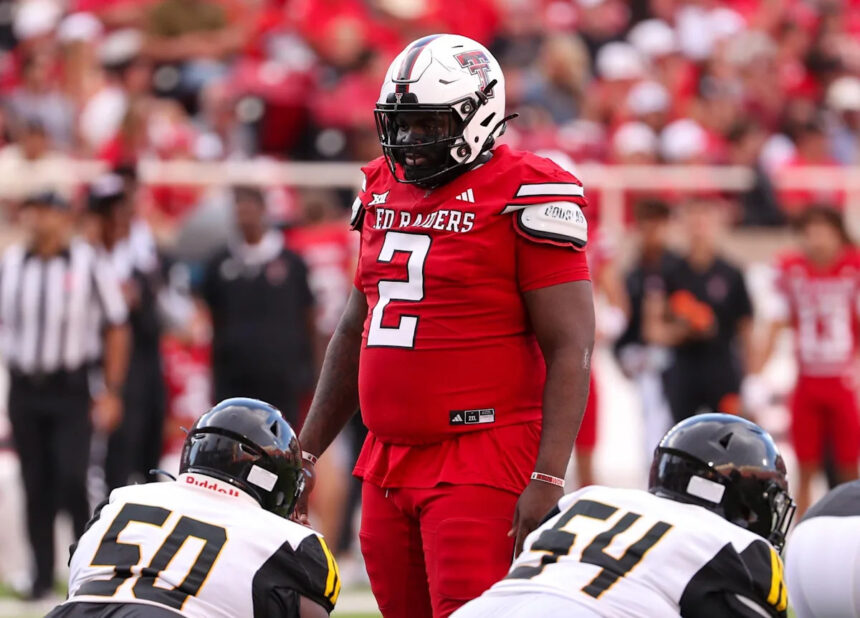
The Jets have long prided themselves on a dominant defensive front. With Quinnen Williams anchoring the interior, the team needs a complementary force who can eat blocks and generate push. Lee Hunter fits that mold perfectly. At 6-foot-4 and 320 pounds, he combines mass with surprising quickness off the snap. His tape at Texas Tech shows a player who commands double teams but still finds ways to collapse the pocket.
Defensive coordinator Jeff Ulbrich runs a hybrid scheme that values versatility. Hunter can line up as a 3-technique or shade over the center as a nose tackle. This flexibility makes him a valuable chess piece. In 2025, Hunter recorded 8.5 sacks and 14 tackles for loss, showcasing his ability to win one-on-one matchups. For a Jets team that ranked middle of the pack in sacks last season, adding a penetrator like Hunter could elevate the entire unit.
What stands out most is his hand usage. Hunter doesn’t just rely on bull rushes; he uses a swim move and rip technique to disengage from blockers. This technical refinement is rare for a player his size and suggests he can transition smoothly to the NFL. If the Jets want to pressure Patrick Mahomes and Josh Allen twice a year, they need interior disruptors. Hunter provides that.
Scouting Report: Strengths, Weaknesses, and NFL Comparison
Let’s break down the scouting report for Lee Hunter as we approach the 2026 NFL Draft. Scouts from multiple outlets have praised his explosiveness, but there are areas for improvement.
Strengths
- First-step quickness: Hunter fires off the line with elite burst for a defensive tackle. This allows him to win gaps before offensive linemen can set their anchor.
- Run defense: He maintains gap integrity and uses his length to shed blocks. Against the run, he’s a brick wall who rarely gets moved off his spot.
- Motor: Hunter plays until the whistle. Even when initially blocked, he chases plays laterally and doesn’t give up on downfield pursuit.
- Versatility: Played both 3-technique and 1-technique at Texas Tech, showing he can adapt to multiple defensive fronts.
Weaknesses
- Pass-rush plan: While his first move is effective, Hunter lacks a deep bag of counters. If his initial rush is stymied, he can get stuck.
- Conditioning: There are snaps where he takes plays off, especially late in games. NFL coaching will need to push his stamina.
- Pad level: Occasionally plays too high, allowing stronger guards to leverage him out of plays. This is correctable with technique work.
NFL Comparison
When projecting Hunter to the next level, the closest comparison is Da’Ron Payne of the Washington Commanders. Both players share similar size, explosiveness, and the ability to dominate against the run while providing interior pass rush. Payne was a first-round pick, and Hunter could follow that same path if he tests well at the combine.
How the Jets’ Draft Capital Aligns with Hunter’s Value
The Jets currently hold the No. 2 and No. 16 overall picks, plus two second-rounders at No. 33 and No. 44. This draft capital gives Mougey immense flexibility. While No. 2 will likely be used on a quarterback or elite offensive tackle, Lee Hunter is a realistic target at No. 16 or even in a trade-down scenario.
Most mock drafts project Hunter as a late first-round to early second-round pick. That puts him squarely in the Jets’ wheelhouse. If New York addresses quarterback at No. 2, they could use No. 16 on Hunter and still have two seconds to fill other needs like wide receiver or cornerback. Alternatively, if a top pass rusher falls, the Jets could trade back from No. 16, accumulate more picks, and still land Hunter in the 20s.
This is where Darren Mougey’s experience matters. The Jets’ GM has shown a willingness to be aggressive but also patient. With nine picks, he can afford to wait for value. Hunter’s stock could rise after the combine, but if he’s available at No. 16, the Jets should sprint to the podium. Pairing him with Quinnen Williams creates a terrifying interior duo that would immediately improve the league’s 18th-ranked run defense from 2025.
Expert Prediction: Will the Jets Draft Lee Hunter?
Based on current roster needs and draft positioning, I predict the New York Jets will select Lee Hunter—but not with their first pick. Here’s the likely scenario: At No. 2, the Jets take a quarterback like Shedeur Sanders or Cam Ward. Then, at No. 16, they target the best available offensive lineman or wide receiver. If Hunter is still on the board at No. 33 (their second-round pick), Mougey will pull the trigger.
Why the second round? Because the depth of this defensive tackle class is strong. Players like Mason Graham (Michigan) and Deone Walker (Kentucky) will go in the top 15, pushing Hunter down boards. Teams may overthink his conditioning concerns, but the Jets’ coaching staff—led by a defensive-minded head coach—will see a player who can contribute 30-35 snaps per game immediately.
Another factor: The Jets face a brutal 2026 schedule with multiple elite quarterbacks. Adding a disruptive interior force like Hunter is a long-term investment in pressuring the pocket. He may not be a 10-sack rookie, but his impact on run defense and double-team gravity will free up Quinnen Williams and the edge rushers. This is a classic “win in the trenches” move that fits the Jets’ organizational philosophy.
Conclusion: Lee Hunter Is a Steal Waiting to Happen
The 2026 NFL Draft is still months away, but the scouting groundwork is already laid. For the New York Jets, Lee Hunter represents a high-upside, high-character addition to a defensive line that needs a jolt. His combination of power, quickness, and versatility makes him a natural fit for Jeff Ulbrich’s scheme. With nine picks in their pocket, the Jets can afford to be patient and let Hunter fall into their lap.
If Darren Mougey walks away from this draft with a franchise quarterback and a wrecking ball like Hunter, the Jets will have addressed their two biggest needs. Keep an eye on Texas Tech’s defensive tackle as April 23 approaches. He might just be the missing piece in New York’s defensive puzzle.
Final verdict: Lee Hunter to the Jets at No. 33 overall. Mark it down.
Source: Based on news from Yahoo Sports.