Joe Brady Makes History, But He’s Not the Youngest Buffalo Bills Head Coach Ever
The Buffalo Bills have officially entered a new era, naming 36-year-old Joe Brady as the 19th full-time head coach in franchise history. The move solidifies a partnership that began in 2022 and signals a clear intention to build a long-term, offensive-minded future around superstar quarterback Josh Allen. While Brady’s youth and rapid ascent are headline-grabbing, a dive into the annals of Bills history reveals a fascinating precedent. Despite the modern fanfare, Joe Brady is not the youngest man to ever hold the top job in Buffalo. That distinction belongs to a figure from a different era, whose own promising start ultimately forged a legendary career on a different path.
A Legacy of Youth: The Bills’ History with Thirty-Something Coaches
The hiring of Joe Brady marks only the third time the Buffalo Bills have entrusted their franchise to a head coach in his thirties. This rarity underscores the significance of the moment. In a league often skewed toward veteran leadership, the Bills are betting on Brady’s innovative offensive mind and his established rapport with Josh Allen. However, to understand the full context of Brady’s appointment, we must look back at the two men who blazed this trail before him.
The most recent example was Kay Stephenson, who was 39 when he took over in 1983. His tenure serves as a cautionary tale of early promise fading quickly. Before Brady, Stephenson was the last Bills coach promoted directly from a position coach (quarterbacks) without coordinator experience. His first season yielded a respectable 8-8 record, but a disastrous 2-18 stretch over the next 20 games led to his dismissal early in the 1985 season. Stephenson’s story highlights the immense challenge Brady faces in transitioning from play-caller to the CEO of an entire NFL organization.
The True Record Holder: Joe Collier’s Meteoric Rise and Fall
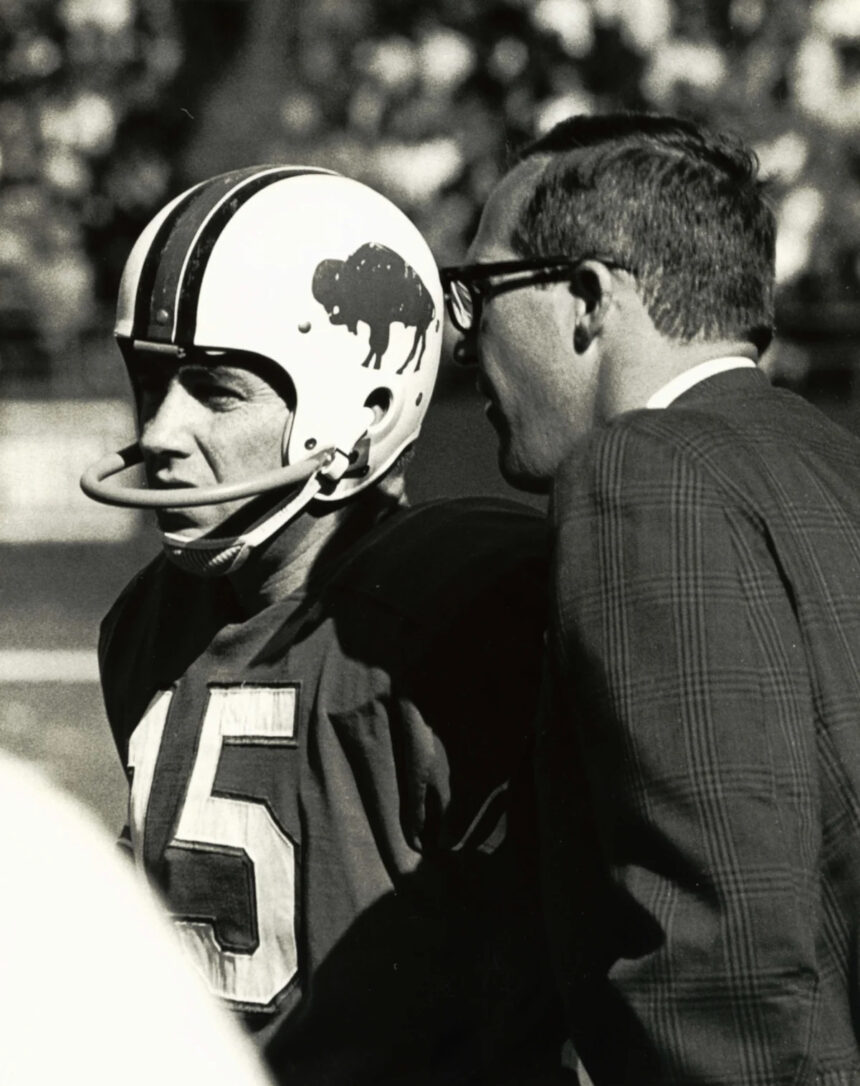
The title of youngest head coach in Buffalo Bills history belongs to Joe Collier, who was a mere 34 years old when he was promoted from defensive coordinator to head coach in 1966. Collier’s situation bears intriguing parallels to Brady’s. He was elevated from within, taking over a championship-caliber team following the sudden resignation of his boss, Lou Saban. The Bills had just won back-to-back AFL Championships in 1964 and 1965.
Collier’s debut season was, by any measure, a roaring success. He led the Bills to a 9-4-1 record and a third consecutive AFL Championship Game appearance. His defensive expertise kept the team among the league’s elite. However, the loss to the Kansas City Chiefs in that title game proved to be a turning point. The Bills collapsed to a 4-10 record in 1967, and after an 0-2 start in 1968, Collier was fired.
- Age at Hiring: 34 years old (Youngest in team history).
- Previous Role: Defensive Coordinator for a championship team.
- First Season Success: 9-4-1 record, AFL Championship Game berth.
- Ultimate Outcome: Fired after a 4-12 stretch over his final 16 games.
Collier’s story is a classic “what if” in Bills lore. He inherited a veteran team at its peak and couldn’t sustain the success once the roster began to age. His firing, however, was not the end of his football story—it was the beginning of a defensive renaissance elsewhere.
Diverging Paths: The Post-Bills Careers of Young Coaches
The trajectories of Buffalo’s youngest head coaches after their tenures ended could not be more different, offering two potential roadmaps for how a coach’s career can evolve.
Kay Stephenson’s path was essentially a dead end. Following his firing in 1985, he never coached in the NFL again, eventually moving to the World League of American Football and later into sports agency. His story represents the high-risk nature of such a promotion.
Conversely, Joe Collier leveraged his defensive genius into a second act that cemented his legacy as one of the great coordinators in NFL history. After reuniting with Lou Saban in Denver, he became the Broncos’ defensive coordinator in 1972. For the next 17 seasons, he was the architect of the famed “Orange Crush” defense, a unit that propelled Denver to three Super Bowl appearances in the late 1970s and 1980s. His innovative 3-4 schemes influenced a generation of coaches. Collier’s career proves that an early head coaching stumble does not define a football mind; it can redirect it toward historic, sustained excellence in a specialized role.
Brady’s Buffalo: Analysis and Predictions for the New Era
Joe Brady steps into a uniquely pressurized yet opportunistic situation. Unlike Collier or Stephenson, he inherits a franchise quarterback in his prime. His mission is not to rebuild but to refine, taking a team that has been a perennial contender and finding the final pieces to a championship puzzle. His interim stint as offensive coordinator in 2023 showed flashes of potent, aggressive play-calling that maximized Josh Allen’s talents.
The challenges are clear. Brady must:
- Prove he can manage all three phases of the game and the entire 53-man roster, not just the offense.
- Navigate a difficult salary cap situation that will require shrewd personnel decisions.
- Establish his own leadership identity separate from his predecessor, Sean McDermott.
However, the predictions for Brady’s tenure start with optimism. His age and offensive philosophy are perfectly aligned with Josh Allen’s window of elite play. The organization’s familiarity with him suggests a cohesive vision. We predict that Joe Brady’s first season will mirror the early success of Joe Collier—a playoff berth fueled by a high-powered offense—but with a crucial difference: institutional support and a foundational quarterback already in place. The specter of Stephenson’s collapse is a reminder of volatility, but the modern NFL is more accepting of young, offensive innovators. Brady’s success will hinge less on his age and more on his ability to evolve from a brilliant tactician into a complete leader.
Conclusion: Youth is Just a Number, Legacy is Everything
While Joe Brady’s name now sits beside Joe Collier and Kay Stephenson as the third head coach hired by the Bills in his thirties, his story is just beginning to be written. The history of youthful leaders in Buffalo is a tapestry of both sharp disappointment and redirected greatness. Collier’s legacy, ultimately, was not defined by his brief, failed head coaching stint but by the defensive dynasty he built afterward.
For Brady, the past is merely prologue. He is not the youngest, but he may be the most strategically positioned young coach the franchise has ever hired. He has the quarterback, the offensive system, and the institutional knowledge. The question is whether he can synthesize those elements into the sustained success that eluded his predecessors. The Bills are not betting on Brady’s birth certificate; they are betting that his football mind, now given the ultimate responsibility, can learn from the past and finally lead Buffalo to a future it has chased for decades.
Source: Based on news from Yahoo Sports.