Anthony Joshua’s Driver Appears in Court Over Fatal Crash That Killed Boxer’s Coaches
The world of heavyweight boxing, so often focused on the spectacle of the ring, was forced to confront a profound tragedy this week as the legal proceedings began in a case that has left the sport in mourning. Adeniyi Kayode, the chauffeur driving unified world champion Anthony Joshua at the time of a devastating December crash, made his first court appearance, bringing the somber reality of the incident that claimed two lives into a stark legal focus.
A Somber Court Appearance and the Weight of the Charges
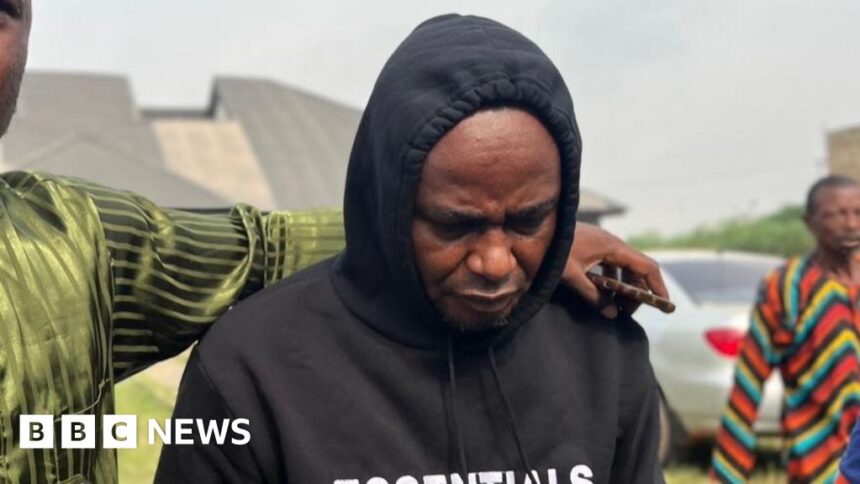
On Tuesday, the Sagamu Magistrates Court in Ogun State, Nigeria, became the setting for the next painful chapter in this story. Adeniyi Kayode, 46, arrived dressed entirely in black—a hoodie, trousers, and shoes—a fittingly solemn attire for the gravity of the occasion. The hearing was brief but significant. The prosecutor was granted an adjournment to secure further legal advice, pushing the substantive proceedings to February 25th. Kayode remained silent throughout, a solitary figure bearing the weight of four criminal charges, most notably death by dangerous driving.
The charges stem from the catastrophic events of December 29th, near Lagos. The vehicle carrying Anthony Joshua, his personal trainer Latif “Lati” Ayodele, and his strength and conditioning coach Sina Ghami collided with a stationary lorry. The impact was fatal for Ayodele and Ghami, two integral pillars of Joshua’s inner circle. Joshua himself was hospitalized with injuries, a physical and emotional blow from which he is still recovering. The court’s adjournment does little to ease the pervasive sense of loss but underscores the meticulous, and undoubtedly painful, legal process now underway.
Beyond the Headlines: The Human Loss in Joshua’s Inner Circle
To understand the full impact of this crash, one must look past the celebrity of Anthony Joshua and recognize the profound human loss. In the high-stakes environment of elite boxing, a fighter’s team is his fortress. Latif Ayodele and Sina Ghami were not mere employees; they were trusted confidants and architects of Joshua’s physical prowess.
- Latif “Lati” Ayodele: As a personal trainer, Ayodele’s role transcended fitness. He was a constant presence, responsible for the day-to-day conditioning and sharpening of an athlete whose body is his instrument. Their relationship was built on trust and a shared commitment to excellence.
- Sina Ghami: The strength and conditioning coach is the engineer behind a boxer’s power. Ghami’s expertise was crucial in developing the explosive force that became Joshua’s trademark. His work was scientific, meticulous, and fundamental to Joshua’s championship capabilities.
The sudden eradication of these two key figures represents an incalculable personal and professional blow to Anthony Joshua. He has lost friends and key strategic minds simultaneously. The process of rebuilding a team with such deep, earned trust is a monumental task that goes far beyond simply hiring new experts.
Legal Road Ahead and the Question of Culpability
The adjournment of the case until late February indicates the complexity prosecutors are facing. Charges of death by dangerous driving in a case with such high-profile victims and defendant will be scrutinized intensely. The court will need to examine a multitude of factors:
- The exact circumstances leading to the collision with the stationary lorry.
- Road conditions, visibility, and the state of the vehicles involved.
- The driver’s actions and decisions in the moments before the crash.
For Adeniyi Kayode, the personal driver entrusted with the safety of one of the world’s most famous athletes, the stakes could not be higher. His silent appearance in court speaks volumes about the serious legal battle he now faces. The outcome of this case will be watched closely, not just for its legal precedent, but for any sense of closure it may bring to the grieving families and a shattered team.
Predictions: Joshua’s Path Forward in the Ring and in Life
The future for Anthony Joshua is now split into two parallel, challenging paths: the legal and emotional journey surrounding the crash, and his career as a top-tier heavyweight. Predictably, his immediate boxing schedule has been, and will remain, on hold. The mental toll of such a trauma cannot be underestimated. While athletes often speak of compartmentalization, the loss of two close friends and coaches is a burden that defies easy separation.
Professionally, Joshua’s camp must now undertake a massive rebuild. Finding replacements for Ayodele and Ghami is about more than just skill; it’s about chemistry, trust, and understanding the unique psyche of the fighter. This process will likely delay any planned fights for the first half of 2024. When Joshua does return, he will be a different man, carrying a weight that no training regimen can lift. His performance will be a testament to his resilience, but expectations must be tempered by the understanding of what he has endured.
Furthermore, this tragedy may prompt a broader reflection within the entourages of elite athletes on road safety protocols and security during travel, especially in regions with challenging driving conditions. The incident serves as a horrific reminder that danger exists far from the bright lights of the arena.
Conclusion: A Tragedy That Redefines a Champion’s Journey
The image of Adeniyi Kayode in a black hoodie in a Nigerian magistrate’s court is a stark contrast to the global spectacle of Anthony Joshua fighting in a sold-out stadium. It grounds a sensational story in heartbreaking reality. This case is no longer about boxing; it is about loss, accountability, and the fragile nature of life. The deaths of Latif Ayodele and Sina Ghami have left an indelible scar on Joshua, his team, and the sport.
As the legal process moves slowly forward, the boxing world must offer patience. Anthony Joshua’s journey back to the ring will be his most difficult fight yet—one fought not with fists, but with grief and the arduous task of moving forward. The court’s eventual ruling will provide a legal conclusion, but for those left behind, the process of healing from a crash that stole two vital lives will continue long after the gavel falls.
Source: Based on news from BBC Sport.