Judge’s Ruling Ends Charles Bediako’s Alabama Season, Ignites College Sports’ Core Debate
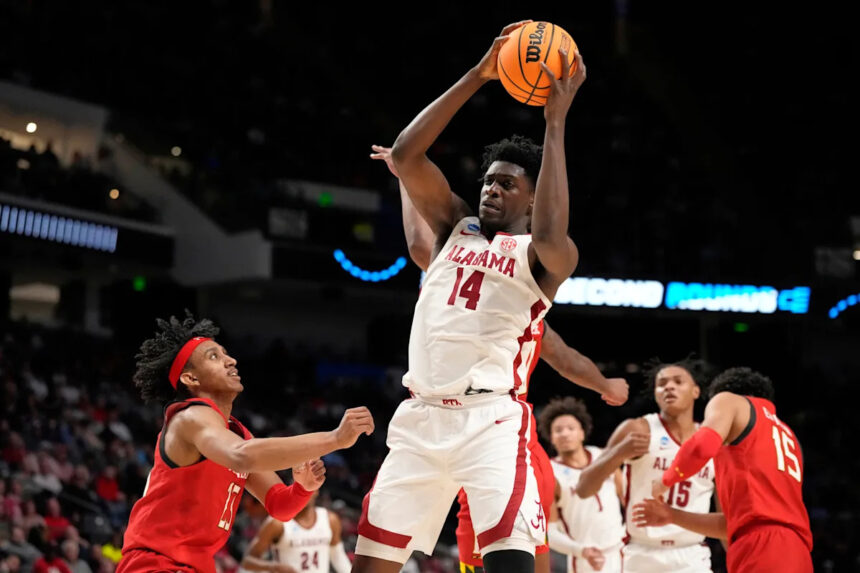
In a Tuscaloosa courtroom on Monday, a gavel fell, and with it, the collegiate career of 7-foot center Charles Bediako came to an abrupt and precedent-setting halt. Circuit Judge Daniel Pruet’s denial of Bediako’s motion for a preliminary injunction is more than a season-ending ruling for one player; it is a seismic verdict in the ongoing war over the soul of modern college athletics. The decision, which upheld the NCAA’s eligibility rules against a former professional seeking a return, has drawn a stark, contentious line in the sand. It is a victory for the NCAA’s traditional model, a crushing blow for Alabama’s title hopes, and a clarion call from NCAA President Charlie Baker for Congressional intervention in a landscape he describes as a “national mess.”
The Case That Tested the NCAA’s Remaining Walls
The saga of Charles Bediako is a product of college sports’ most turbulent era. After a two-year stint at Alabama, Bediako declared for the 2023 NBA Draft, went unselected, and signed a professional contract with the NBA G League’s Birmingham Squadron. By participating in the G League, he crossed a bright, long-standing NCAA red line: he became a professional athlete, forfeiting his remaining collegiate eligibility.
However, the landscape has shifted. With name, image, and likeness (NIL) rights now allowing college athletes to earn money, and immediate transfer eligibility the norm, the definition of “amateurism” has become profoundly blurred. Bediako’s legal team sought to exploit this ambiguity, arguing for a return to college under a temporary restraining order that briefly allowed him to practice and play. Judge Pruet’s ruling shut this down definitively. The court found Bediako “failed to demonstrate that he is entitled to the injunctive relief that he seeks,” a legal affirmation of a fundamental principle: playing professionally is still a one-way door out of NCAA competition for most.
This case diverges sharply from recent high-profile waiver victories. It was not about a second transfer or an NIL arrangement, but about the core act of professional competition. The NCAA’s stance, as echoed by Baker, is that this line must remain to preserve opportunities for incoming students.
Baker’s Blunt Victory and a Plea to Congress
NCAA President Charlie Baker’s statement following the ruling was notably forceful and politically charged. He framed the victory not just as a legal win, but as a moral one for the “next generation of students.” His language was deliberately stark, accusing professionals of attempting to “crowd out” teenagers and “hit the ‘undo’ button.” This rhetoric serves multiple purposes:
- Defining the Battle: It reframes the complex athlete rights debate into a simpler, more sympathetic narrative: protecting young amateurs from seasoned pros.
- Highlighting Inconsistency: Baker explicitly pointed to the “national mess of state laws” on NIL and athlete compensation, arguing they create an uneven field ripe for exploitation.
- Escalating to Capitol Hill: The conclusion was a direct, public plea: “It’s time for Congress to stop watching from the sidelines.” Baker is using this ruling as a case study to demand federal legislation that would preempt state laws and provide the NCAA with a unified regulatory framework it currently lacks.
Baker’s statement is a masterclass in political messaging, transforming a single eligibility case into a national policy imperative.
Immediate Fallout: Alabama’s Title Dreams and a Warning Shot
The immediate impact is acutely felt in Tuscaloosa. Head Coach Nate Oats had taken a calculated risk by integrating Bediako, a known defensive force and veteran of his 2023 SEC Championship team, mid-season. His presence was meant to solidify a frontcourt for a deep March run. Without him, Alabama must recalibrate instantly.
The basketball consequences are significant:
- Defensive Void: Bediako’s shot-blocking and rim protection are irreplaceable. His absence forces less proven players into major roles.
- Rotational Disruption: Mid-season chemistry is delicate. Inserting and then removing a key piece creates instability.
- Strategic Pivot: Oats may have to lean even heavier on his high-octane offense, adopting a “outscore our problems” approach that is riskier in tournament play.
Beyond Alabama, the ruling fires a warning shot across the bow of other players and programs considering similar paths. It signals that, for now, the professional barrier remains enforceable in court, potentially chilling similar attempts this season.
The Future: A Temporary Dam in a Flood of Change
While the NCAA secured a crucial victory, it feels more like the successful defense of a single levee against a rising tide. The fundamental forces eroding the old model—athlete empowerment, revenue sharing demands, and public sentiment—remain unchecked. Predictions for the road ahead are fraught with complexity.
Short-Term (Next 1-2 Years): We will likely see fewer Bediako-style attempts as this case sets a clear legal precedent. The NCAA will cite it aggressively in similar disputes. However, pressure will mount through other channels, notably the ongoing antitrust lawsuits and employee classification battles that threaten the NCAA’s foundation far more than individual eligibility cases.
Long-Term (3-5 Years): The ultimate fate of the “professionalism” rule may not be decided in courtrooms like Pruet’s, but in broader settlements or legislation. Possible futures include:
- A new federal model that creates distinct, formalized pathways for “post-professional” return, perhaps with sitting-out periods or scholarship restrictions.
- A complete uncoupling of professional experience from eligibility, mirroring European sports systems, especially if revenue-sharing or employee status becomes reality.
- The rise of alternative leagues (G League, Overtime Elite) becoming so robust that the “return to college” dilemma becomes less common, as top prospects bypass NCAA entirely.
The Bediako ruling is a pause, not a conclusion. It upholds a rule that an increasing portion of the sports world views as anachronistic.
Conclusion: A Line Drawn, But For How Long?
The final buzzer has sounded on Charles Bediako’s Alabama career, but the game it was a part of is headed to overtime. Judge Pruet’s ruling is a definitive moment, affirming that within the current fractured system, the act of signing a professional contract still carries a permanent consequence for NCAA eligibility. It is a win for the NCAA’s traditional governance and a validation of Charlie Baker’s aggressive strategy to force a Congressional solution.
Yet, the victory feels transitional. It protects a boundary that exists in rulebooks but is fading in the public’s perception of what college sports should be. The case underscores the central, unresolved tension: is college athletics a student-focused endeavor with clear lines, or is it a high-level talent ecosystem where movement should be fluid? For now, the court has sided with the former. But the tectonic shifts in athlete rights, revenue, and power suggest this line, so clearly drawn today, may be redrawn tomorrow by forces far beyond any single judge’s courtroom. The season is over for Bediako, but the season of reckoning for the NCAA is just getting started.
Source: Based on news from Yahoo Sports.