Kazakhstan’s Mikhail Shaidorov Stuns World, Seizes Olympic Gold as Ilia Malinin’s Dream Shatters
The ice at the Palavela in Milano Cortina was meant to be a coronation site. Instead, it became a theater of the utterly unforeseen, where the narrative of men’s figure skating was rewritten in the most dramatic fashion imaginable. In the defining shock of the 2026 Winter Games, 21-year-old Mikhail Shaidorov of Kazakhstan, skating with the weight of a nation and the freedom of a dark horse, captured the Olympic gold medal. His triumph was cemented by the catastrophic, heart-wrenching collapse of the heavy favorite, America’s “Quad God” Ilia Malinin, whose dream dissolved in two devastating falls, leaving him in a distant and disconsolate eighth place.
A Night of Agony and Ecstasy on Olympic Ice
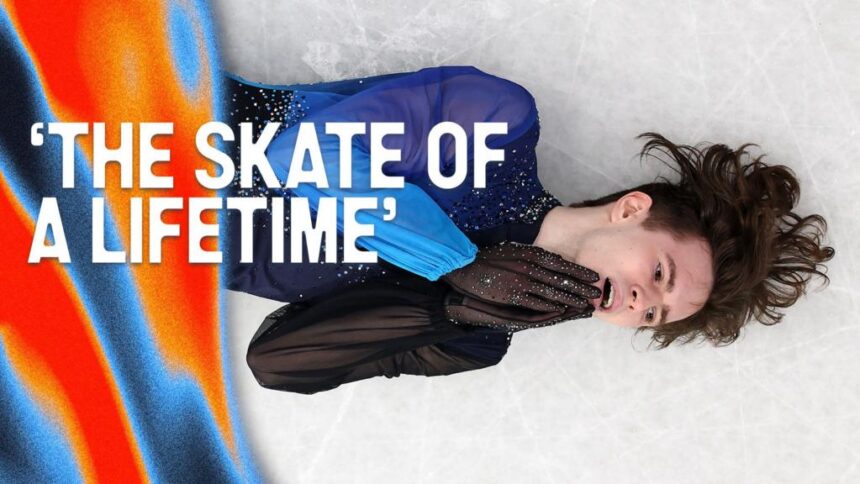
The men’s free skate unfolded with a palpable sense of inevitability. Malinin, the reigning World Champion and the only skater to have landed a quadruple Axel in competition, held a commanding lead from the short program. The gold was seemingly his to lose. As he took his starting position, the arena hushed in anticipation of history. The opening quad Axel, however, set the tone for a nightmare. Malinin under-rotated and fell hard. The shockwave was audible. A subsequent quad Lutz met the same fate. From that moment, the champion’s composure unraveled; jumps were stepped out, rotations cheated, and the artistic performance became a fight for survival. When the music stopped, the stunned silence spoke volumes.
Enter Mikhail Shaidorov. Skating immediately after the favorite’s disaster, the Kazakh skater faced a psychological mountain. With the pressure paradoxically lifted, he delivered the performance of his life. His program was not just technically sound—it was electrically charged with passion and precision.
- Flawless Jump Execution: He cleanly landed two quadruple jumps and a triple Axel, his technique crisp and secure.
- Artistic Maturity: Often praised for his component scores, Shaidorov’s interpretation was nuanced, connecting deeply with the music and the moment.
- Capitalizing on Chaos: In the high-stakes vacuum left by Malinin’s fall, Shaidorov’s steady brilliance shone impossibly bright.
When his score flashed, confirming the top spot, the reality began to sink in: Kazakhstan had its first-ever Olympic gold medal in figure skating.
Expert Analysis: Deconstructing a Historic Upset
This result will be analyzed for decades. From a technical standpoint, Malinin’s failure was a stark reminder that the extreme physical demands of quad-heavy programs leave zero margin for error. The biomechanical precision required for five quads is immense, and on Olympic ice, the slightest hitch in timing or axis can cascade into disaster. The psychological burden of being the prohibitive favorite, a mantle he has worn for two seasons, finally proved crushing.
For Shaidorov, the victory was a masterclass in competitive strategy. While others chase the quad revolution, he and his team have built a model of consistency and high-component skating. He did not attempt the most difficult layout, but he executed his plan perfectly. His skating skills, edge quality, and musicality have always been elite; on this night, they were combined with pristine jumping under maximum duress. This gold is a testament to the enduring value of a complete skating package, not just a jumping arsenal.
Furthermore, the mental fortitude required to skate after the favorite’s meltdown cannot be overstated. Where some might have tightened, Shaidorov expanded. He seized the opportunity not with reckless ambition, but with the confident execution of his well-honed craft.
The New Landscape: Predictions for a Post-Milano World
The fallout from this event will reshape the sport’s trajectory. For Ilia Malinin, the path is one of painful redemption. The questions about his ability to deliver on the absolute biggest stage will now dominate the narrative. His response in the coming seasons will define his legacy; will he double down on the quads or seek a more balanced, sustainable approach? The psychological recovery from an Olympic collapse is often more difficult than the physical training.
For Mikhail Shaidorov, life has changed forever. He transitions from a respected contender to the reigning Olympic champion and the face of a sport in Kazakhstan. The target is now on his back. How he handles newfound fame, expectation, and the pressure of defending a global title will be his next great test. His victory may also inspire a shift in coaching philosophies worldwide, emphasizing reliability over sheer difficulty.
The silver and bronze medalists—likely emerging from a pack including Japan’s Shoma Uno, Yuma Kagiyama, and France’s Adam Siao Him Fa—will also see the podium as an open landscape. The era of a single, untouchable quad king has been abruptly ended, suggesting a return to a more volatile and unpredictable competitive field.
A Lasting Legacy Forged in Drama
The 2026 Olympic men’s figure skating final will be remembered not for a coronation, but for a revolution. Mikhail Shaidorov’s name is now etched in history, a symbol of poise triumphing over pressure, of preparation meeting a once-in-a-lifetime opportunity. His gold medal is a victory for Kazakhstan and a powerful reminder that in sport, the script is never truly finished until the final note plays.
Conversely, the image of Ilia Malinin’ shattered dream on the ice is a poignant testament to the brutal, unforgiving nature of Olympic competition. It underscores that talent and difficulty alone are not enough; they must be married to a fortitude that can withstand the unique gravity of the Games.
In the end, this night provided the essence of Olympic drama: the human scale of triumph and despair, played out on a blade’s edge. It reaffirmed that in figure skating, the heart, the mind, and the muscle must align. On this historic evening in Milano Cortina, it was the steady heart of Mikhail Shaidorov that beat the strongest, carving a path to gold from the shards of a fallen favorite’s dream and forever altering the sport’s constellation.
Source: Based on news from BBC Sport.