Kenneth Walker III Carries the Load, Makes History as Super Bowl 60 MVP
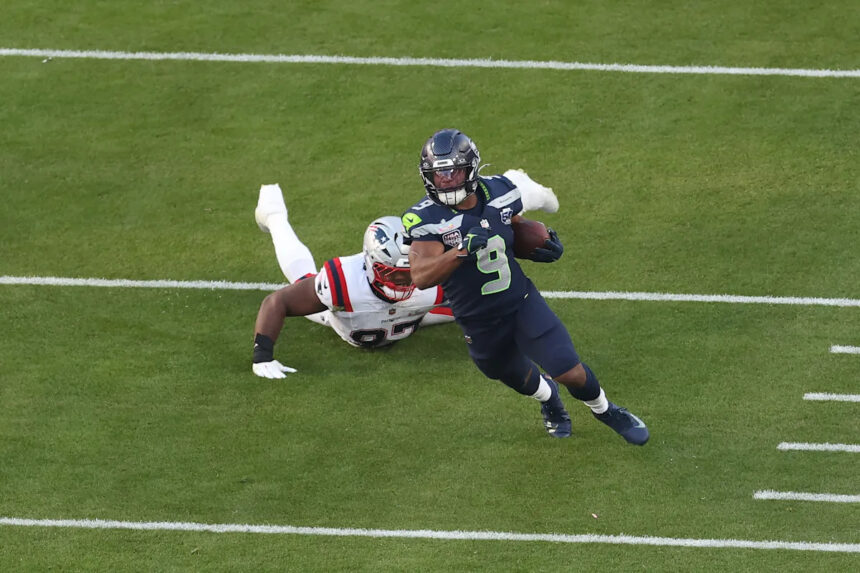
In an era where the passing game reigns supreme, a throwback performance for the ages carved its name into the Lombardi Trophy. On the grandest stage, where offensive fireworks were suffocated by defensive brilliance, Seattle Seahawks running back Kenneth Walker III didn’t just run—he authored a masterpiece of grit, vision, and explosive patience. In a grinding, defensive battle that was Super Bowl 60, Walker’s 135 rushing yards, 26 receiving yards, and relentless clock control were the defining forces, earning him the Pete Rozelle Trophy as Super Bowl Most Valuable Player. In doing so, he shattered a 28-year drought, becoming the first running back since Terrell Davis in 1998 to claim the award, a stunning reminder that football’s most brutal art form still has the power to crown a champion.
A Defensive Slugfest Demands a Ground-and-Pound Answer
Super Bowl 60 was not the high-flying aerial showcase many predicted. Both the Seattle Seahawks and their opponent deployed elite, ferocious defensive units that turned the pocket into a prison. Quarterbacks Sam Darnold and Drake Maye found yards through the air to be a precious, rare commodity, with passes batted down and receivers blanketed from whistle to whistle. In this pressurized environment, where every inch was contested, the strategic path to victory narrowed to a singular, fundamental truth: establish the run.
The Seahawks, understanding the assignment better, leaned into their identity. This was a game won in the trenches, a four-quarter fistfight where time of possession and field position were the ultimate currencies. While kickers traded blows and history was made—Seahawks kicker Chris Myers becoming the all-time leading scorer by a kicker in the Super Bowl—the offensive spark remained elusive. The stage was set not for a flashy hero, but for a workhorse. As the game wore into the critical second half, one player began to consistently churn out the tough yards, transforming a stalemate into a strategic advantage: Kenneth Walker III.
The Anatomy of an MVP Performance: Patience, Power, and Poise
Walker’s final stat line—27 carries for 135 yards—tells only part of the story. The true testament to his MVP worth was how he accumulated those yards against a defensive front dedicated to stopping him. This was not a day for gaping holes and easy sprint-outs. Defensive lines clogged lanes, and penetration was constant. Walker’s performance was a clinic in advanced running back traits:
- Elite Vision and Patience: Walker was calm and collected behind the line of scrimmage, often pausing in the backfield to let blocks develop or a crease to flash. His ability to read the chaos and make the correct cut was the difference between a loss and a four-yard gain.
- Stop-Start Explosiveness: When that microscopic lane finally appeared, Walker’s acceleration was breathtaking. His unique stop-start speed allowed him to hit the hole with devastating force, turning would-be tackles in the backfield into positive plays.
- Reliability in the Crunch: On third-and-manageable, in the fourth quarter with the world watching, the Seahawks went to Walker. He consistently moved the chains, draining the clock and the spirit of the opposing defense. His 26 receiving yards, often on check-downs and safety-valve routes, were equally vital in sustaining drives.
The discussion of a kicker winning MVP was valid in a low-scoring affair, but as the game reached its zenith, Walker separated himself. He didn’t just score; he controlled the entire rhythm of the game. Every hard-fought yard tilted the field and the momentum, making him the undeniable engine of Seattle’s championship victory.
Breaking the Drought: A Running Back’s Place in History
Kenneth Walker’s name is now forever linked with Terrell Davis, the last running back to win Super Bowl MVP. Davis’s 157-yard, three-touchdown effort for Denver in Super Bowl XXXII was a legendary performance that broke a streak of 13 straight MVPs going to quarterbacks or wide receivers. In the decades since, the award has become almost exclusively the domain of quarterbacks, with a few legendary defensive performances and wide receivers sprinkled in.
Walker’s win is a significant and symbolic moment for the running back position. In a league that often devalues the every-down back, favoring committee approaches and passing-game contributions, Walker proved that a feature back with a complete skillset can still be the most valuable player on the field in the most important game. It reinforces that while the game evolves, core principles remain: controlling the line of scrimmage, managing the game, and delivering physical punishment are still championship virtues. Walker’s MVP is a victory for traditionalists and a powerful reminder that football, at its heart, is about imposing your will.
What Walker’s MVP Means for the Future of the Seahawks and the NFL
This historic performance is a franchise-altering moment for the Seattle Seahawks. It validates their team-building philosophy and cements Walker as a cornerstone player. Looking ahead, the implications are vast:
- Contract and Legacy: Walker’s value skyrockets. He enters the conversation as one of the league’s premier backs, and his next contract will reflect his status as a Super Bowl MVP. He is now the face of the Seattle offense.
- Strategic Blueprint: The Seahawks have a proven formula for winning the biggest games: a dominant defense paired with a relentless, MVP-caliber running game. Expect them to continue investing in their offensive line and defensive core to support this identity.
- League-Wide Ripple Effect: While the pass-happy trends won’t reverse, general managers and coaches will undoubtedly point to Super Bowl 60 as evidence that investing in a elite running talent can be a championship-deciding move. It may slow the trend of completely devaluing the position.
For Kenneth Walker III, the future is blindingly bright. He is no longer just a promising young back; he is a legend who delivered when it mattered most. His place in NFL history is secure.
Conclusion: A Legacy Forged in the Trenches
Super Bowl 60 will be remembered as a defensive classic, a brutal and beautiful game where points were precious. And at the center of it all was a young man with the ball in his hands, the weight of a franchise on his shoulders, and the patience of a veteran. Kenneth Walker III didn’t just run for yards; he ran for history. In a league constantly looking forward, he provided a glorious, ground-shaking nod to the past, proving that the heart of a champion can still beat strongest in the chest of a running back. His MVP performance was more than a statistical achievement; it was a statement—a powerful, enduring reminder that sometimes, the path to glory is paved one tough, determined yard at a time.
Source: Based on news from Yahoo Sports.