Kevin Durant Returns to Rockets Lineup, Aiming to Level Series vs. Lakers in Game 2
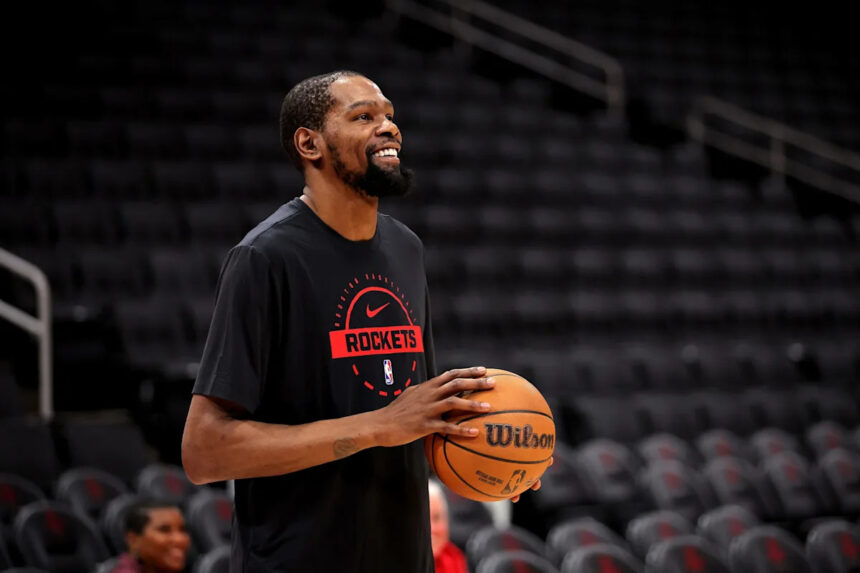
The narrative of the Houston Rockets’ playoff hopes shifted dramatically Tuesday night at Crypto.com Arena. After a Game 1 defeat that felt inevitable with their best player in street clothes, the Rockets’ first-round series against the Los Angeles Lakers was instantly recalibrated. As expected, but no less momentous, All-Star forward Kevin Durant, sidelined in Game 1 by a right knee contusion, was cleared to play and rejoined the starting lineup for a pivotal Game 2. His mere presence on the floor transformed the entire calculus of the series, offering Houston a fighting chance to steal home-court advantage and turn a best-of-seven into a true battle.
The Void in Game 1 and the Immediate Impact of KD’s Return
Saturday’s series opener laid bare the Rockets’ limitations without their offensive linchpin. The Lakers’ defense, anchored by Anthony Davis, comfortably keyed in on Houston’s secondary scorers, forcing contested shots and disrupting rhythm. The Rockets’ offense often stagnated, lacking that singular, unstoppable force to bend the defense and create easy opportunities. The result was a loss that, while disappointing, carried a built-in excuse.
Durant’s return for Game 2 was more than a morale boost; it was a strategic earthquake. Starting alongside Amen Thompson, Alperen Sengun, Jabari Smith Jr., and Josh Okogie, Durant’s skill set forces the Lakers into a series of unenviable choices. His ability to score from all three levels—whether pulling up over smaller defenders, driving past bigger ones, or simply rising for his iconic mid-range jumper—forces defensive rotations that were unnecessary in Game 1. This gravity creates open lanes for Sengun to operate in the post and provides cleaner looks for shooters like Smith on the perimeter.
Key Game 2 Details:
- Tipoff: 9:30 p.m. Central Time
- National Broadcast: NBC and Peacock
- Houston Starting Five: Durant, Thompson, Sengun, Smith Jr., Okogie
- Series Status: Lakers lead 1-0
No Restrictions: Udoka’s Confidence and Durant’s Conditioning
The most significant news from pregame, beyond the clearance itself, was the declaration from Rockets head coach Ime Udoka. In his media session, Udoka stated that if Durant was cleared, there would be no minutes restriction on the future Hall of Famer. This was a bold and necessary stance. Playoff basketball is a war of attrition, and tying one hand behind your back by managing the minutes of your best player is a luxury Houston cannot afford against a veteran-laden Lakers squad.
“He was testing it out,” Udoka said of Durant’s pregame workout. The fact that ESPN insider Shams Charania reported Durant’s clearance just minutes after that workout concluded indicates the evaluation was positive and decisive. For Durant, a player with a meticulous approach to his body and game, being unleashed fully is paramount. He is not a role player; he is the system. His ability to play extended minutes, especially in closing lineups, is Houston’s greatest weapon against the late-game execution of LeBron James and Anthony Davis.
This decision speaks volumes about the urgency of the moment and the trust the organization has in both Durant’s physical readiness and his legendary basketball IQ to navigate any potential discomfort within the flow of a high-stakes game.
Strategic Ripple Effects and the Lakers’ Counter-Adjustment
Durant’s insertion fundamentally alters the strategic matchup. In Game 1, the Lakers could use LeBron James in more free safety roles on defense, helping off non-shooters and protecting the rim. With Durant on the floor, assigning James primary defensive duties against KD is likely, a titanic matchup that will test both legends physically. Alternatively, the Lakers may start with Jarred Vanderbilt or Rui Hachimura, saving LeBron’s energy for offense.
Furthermore, Durant’s presence severely complicates the Lakers’ defensive coverage on the pick-and-roll. With Sengun and Durant operating in two-man actions, the Lakers must decide whether to switch (potentially creating a size mismatch), blitz (leaving a shooter open), or drop (giving Durant space to operate). There are no good answers.
Critical Matchups to Watch:
- Durant vs. James/Hachimura: The premier scoring wing against the Lakers’ best defensive options.
- Sengun’s Playmaking: How his passing exploits the extra attention paid to Durant.
- Houston’s Perimeter Defense: Can Thompson and Okogie contain the Lakers’ guards to allow Durant to conserve energy?
For the Lakers, the game plan must now account for a player who can single-handedly win a playoff game. Their offensive execution must be sharper, as Houston’s margin for error has shrunk considerably. Every missed rotation or transition lapse will be punished by Durant’s ruthless efficiency.
Series Outlook and What’s at Stake for Houston
Game 2 was not merely about tying the series; it was about seizing control of its narrative. A loss would have sent the Rockets home in an 0-2 hole, a historically dire position. A win, however, accomplishes the primary road goal of any playoff series: stealing home-court advantage. It would validate the Rockets’ offseason gamble to acquire Durant and signal that this young core, led by a superstar, is ready to compete on the biggest stage.
The pressure now subtly shifts back to the Lakers. A series tied 1-1 with momentum wearing red is a far cry from the commanding 2-0 lead they envisioned. The Rockets, with their athleticism and now their alpha, present a unique and persistent threat. Durant’s health remains the overarching variable, but a full-go performance in Game 2 sets a powerful precedent.
Ultimately, the Rockets’ ceiling in this postseason is intrinsically tied to Kevin Durant’s availability and dominance. His return in Game 2 was the first, necessary step. His performance will determine how many more steps this team can take. The Lakers have been warned: the real series has just begun.
Source: Based on news from Yahoo Sports.