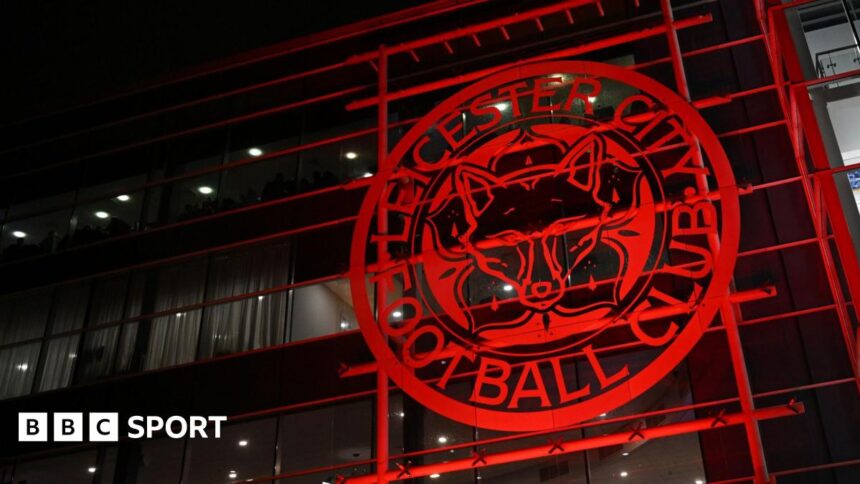
Leicester City’s £71.1m Relegation Loss: A Financial Freefall Threatens Foxes’ Future
The fairytale is over, and the bill has arrived. Leicester City, the club that defied 5000-1 odds to win the Premier League in 2016, now faces a stark financial reality that threatens to eclipse the on-pitch turmoil of a second successive relegation battle. Newly released accounts reveal a staggering pre-tax loss of £71.1 million for the 2024-25 season—the very campaign that ended with their demotion from the Premier League. This figure is more than a line in an accountant’s ledger; it is a seismic shockwave that exposes the precarious high-wire act of a club caught between ambition and sustainability, with its very identity hanging in the balance.
The Yo-Yo Cost: A £180m Hangover from Football’s Rollercoaster
Leicester’s latest financial statement is not an isolated incident but the latest, and most severe, chapter in a costly trilogy. Over a turbulent three-year period of bouncing between the Premier League and the Championship, the Foxes have hemorrhaged more than £180 million. This cycle of promotion and relegation, often romanticized, has proven financially ruinous. The Premier League’s riches are addictive, but the cost of trying to stay at the top table—in player wages, transfer fees, and operational overhead—becomes a millstone when the parachute payments stop. The 2024-25 season was a perfect storm: Premier League-caliber expenses collided with Championship-level revenue, creating a deficit that lays bare the unsustainable model forced upon clubs outside the established “Big Six.”
The club’s strategy, hinging on a swift return to the top flight, has backfired spectacularly. Key factors in the £71.1m loss include:
- Plummeting Broadcast Revenue: The lifeblood of any Premier League club, lost upon relegation.
- High Wage Bill: Contracts signed for top-flight survival, now crippling in the second tier.
- Transfer Market Stagnation: An inability to sell key assets at peak value to balance the books.
- Operational Inertia: Maintaining a Premier League infrastructure without Premier League income.
PSR Peril and the Points Deduction Shadow
The eye-watering loss figure immediately triggers alarm bells regarding the Premier League’s Profit and Sustainability Rules (PSR). At almost £100m over the permitted £83m loss threshold over a three-year period, Leicester would appear to be in clear breach. However, the club has expressed confidence that it will avoid sanction when allowable “add-backs” are considered. These are deductions for investments deemed to be for the long-term health of the club, such as:
- Infrastructure and academy development
- Funding for the women’s football team
- Community and youth projects
This accounting argument is fraught with tension. The football world is watching closely, especially given Leicester were already deducted six points this Championship season for PSR breaches in their final Premier League years. That punishment has directly contributed to their current plight, sitting third from bottom and fighting for their lives. Another potential future points penalty, either in the Championship or upon any hoped-for Premier League return, looms like a specter. The question is no longer just about balance sheets, but about competitive integrity and sporting punishment for financial mismanagement.
Analysis: From Dreamers to Dealers in a Fire Sale?
As a sports journalist, the trajectory here is deeply concerning. Leicester City is at a critical inflection point. The club, under its current ownership, has been defined by bold ambition—building a new training ground, investing in the squad to compete in Europe, and trying to cement a top-half Premier League status. That ambition has now crashed into the rigid framework of financial regulation. The club must pivot from dreamers to pragmatic dealers.
The immediate future likely involves a painful but necessary player exodus. The squad’s remaining high-value assets, the players who could command significant transfer fees, will be vulnerable. This isn’t just about raising funds; it’s about drastically reducing a wage structure that is currently incompatible with the Championship. The model must shift towards a self-sustaining one, heavily reliant on the prolific academy that produced the likes of Kiernan Dewsbury-Hall. The danger is that this reset could take years, trapping the club in a cycle of mediocrity—or worse—in the second tier.
Furthermore, the ownership’s commitment and strategy will be scrutinized. Do they have the appetite and the capital to navigate this period of austerity and potential further punishment? Or will the financial pressure force a reconsideration of their custodianship?
Predictions: A Long Road Back in a Changed Landscape
Predicting Leicester’s immediate future is grim. The fight to avoid League One this season is all-consuming, and the financial damage from a further relegation is almost unthinkable. Even if they survive, the path back to the Premier League is now exponentially harder.
My predictions for the coming years are:
- A Summer of Significant Player Sales: The squad will be stripped back to its bare bones to address PSR concerns and reduce losses.
- Extended Championship Tenure: A quick promotion is now highly unlikely. The club faces a minimum of 2-3 years of rebuilding and financial consolidation in the second tier.
- Continued PSR Scrutiny: The debate over their compliance will rage, potentially leading to further disputes and possible sanctions from the football authorities.
- Academy Ascendancy: The club’s youth system will become its most important department, tasked with producing both first-team players and sellable assets.
The era of Leicester as a plucky, overachieving side challenging the elite is, for now, conclusively over. They have become a cautionary tale for every club living on the Premier League’s financial edge.
Conclusion: More Than a Football Club, Facing Its Greatest Test
The £71.1 million loss is not merely a financial statistic; it is the price of a dream that soured. Leicester City’s story captivated the world, but the financial realities of modern football are unforgiving. The club now stands at the precipice, battling on the pitch to retain its Championship status while fighting a far more complex war off it to restore fiscal sanity and regulatory compliance.
The coming months will define the club for a generation. The decisions made in the boardroom—how to sell, how to cut, how to invest—will be as crucial as any made by the manager on the touchline. The 2016 Premier League title was a miracle, but securing the club’s stable, sustainable future would be an achievement of equal, if not greater, significance. The Foxes have weathered storms before, but this is a hurricane of their own making. Navigating it will require humility, shrewdness, and a complete reinvention of what it means to be Leicester City.
Source: Based on news from BBC Sport.