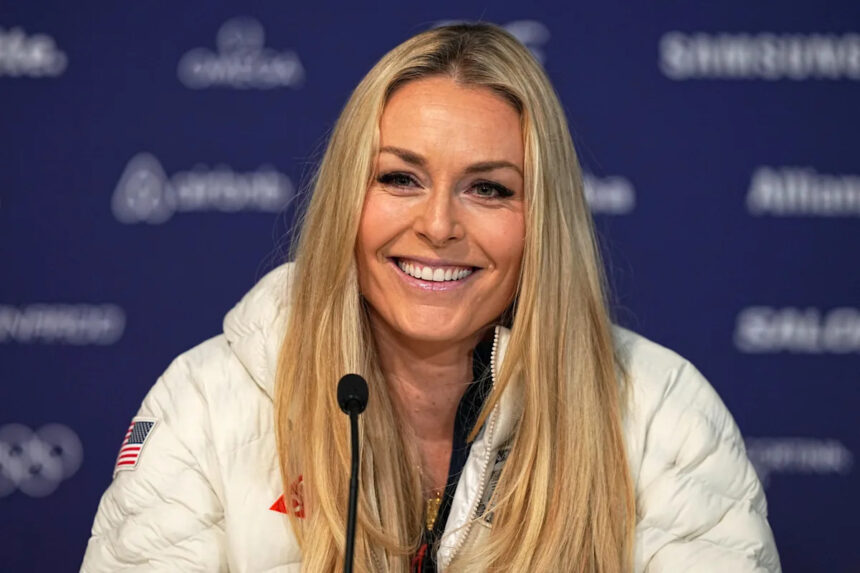
Lindsey Vonn Defies Time and Trauma, Vows Olympic Comeback After ACL Rupture
The roar of the crowd, the bite of cold air, the singular focus of a pristine downhill course—for Lindsey Vonn, these elements are a siren call too powerful to ignore. In an announcement that sent shockwaves through the world of alpine skiing and sports at large, the legendary champion confirmed Tuesday that a ruptured anterior cruciate ligament in her left knee will not deter her from her audacious goal: competing at the 2026 Winter Olympics in Milano-Cortina. At 41 years old, facing one of the most devastating injuries an athlete can endure, Vonn is not just planning a recovery; she is declaring war on doubt, precedent, and the very physics of the human body.
A Crash, A Diagnosis, and Unwavering Resolve
The incident occurred during a World Cup race last Friday, a stark reminder of the razor-thin margin between control and catastrophe in downhill skiing. Vonn, pushing the limits as she has for decades, lost control upon landing a jump, her body catapulting into the safety nets lining the course’s upper section. While she walked away from the crash—a testament to her toughness—the telltale avoidance of weight on her left leg hinted at significant damage. The MRI confirmed the worst: a complete tear of the left ACL, an injury that has ended seasons and careers for countless athletes.
Yet, in her press briefing, Vonn projected a demeanor not of devastation, but of steely determination. “I had a feeling it was bad, but I held out hope until I saw the MRI in front of me,” she stated. “But I haven’t cried. I haven’t deviated from my plan.” This emotional fortitude marks a profound shift from past injuries. She described a pivotal absence: the moment of breakdown, where dreams feel lost. “I didn’t have that this time,” Vonn asserted. “I’m not letting this slip through my fingers. I’m gonna do it. End of story.”
The Anatomy of a Comeback: History, Hurdles, and Hope
Lindsey Vonn’s medical chart reads like a map of her relentless career: fractures, torn ligaments, and multiple surgeries. Her relationship with pain and rehabilitation is long and intimate. This history, however, is what makes her current declaration so compelling. She is not a novice confronting her first major setback; she is a master of the comeback, armed with hard-won knowledge of her own body and mind.
The 2026 Winter Olympics schedule places the women’s downhill on February 8, giving Vonn a clear, albeit daunting, timeline. Her planned program is aggressively ambitious:
- Women’s Downhill: The event where she reigns as an Olympic champion (2010).
- Super-G: Where she earned Olympic bronze in 2010.
- New Team Combined Event: A chance at a fresh Olympic medal in a format emphasizing versatility.
The hurdles are immense. ACL recovery is a grueling 9-12 month process for peak return to sport, and Vonn will be navigating it in her 40s, when physiological recovery is slower. The chances at ending up on the podium, as she herself admitted, are diminished. But Vonn’s benchmark for success may be evolving. Merely standing in the start gate in Italy, less than two years from this injury, would be a monumental victory.
Expert Analysis: What Vonn’s Quest Truly Represents
Sports medicine experts point to the unprecedented nature of this challenge. “An ACL reconstruction at 41, with the goal of returning to a high-impact, high-velocity sport like downhill skiing, is virtually unheard of,” says Dr. Elena Marcos, a orthopedic surgeon specializing in ski injuries. “The demands on the knee are catastrophic-level. It’s not just about stability; it’s about rebuilding the muscular strength and, more critically, the neurological trust to attack a course at 80+ miles per hour.”
Beyond the physical, the psychological component is paramount. Vonn’s mindset, as revealed in her briefing, may be her greatest asset. Her statement that she was “in a position to even try” after already testing her mobility on skis post-injury reveals a focus on possibility, not limitation. This isn’t blind optimism; it’s the cultivated resilience of a champion who has stared down the end of her career multiple times and chosen to keep going.
Her potential legacy is also at stake. A medal in 2026 would shatter records, making her the oldest alpine skier to medal at the Winter Olympics—a title that would perfectly bookend a career defined by breaking barriers.
Predictions for the Road to Cortina
The path to the 2026 Olympics will be a public, painstaking documentary of willpower. We can expect:
- A Meticulous, Non-Linear Rehabilitation: Vonn’s team will likely employ the most advanced rehab technology and techniques, with progress measured in tiny increments. Setbacks will be part of the narrative.
- Strategic Race Scheduling: Her return to World Cup competition will be highly calculated, focusing on specific courses that suit her rehabbed knee rather than a full-season onslaught.
- The Power of Narrative: Vonn’s journey will transcend sports. It will become a story about defying age, overcoming trauma, and the pure, unadulterated love of sport. This narrative will fuel her and captivate a global audience.
- The Podium Question: While a medal is the ultimate goal, the skiing world will measure her success differently. A clean, competitive run down the Cortina downhill may resonate as powerfully as a bronze.
Conclusion: More Than a Medal Chase
Lindsey Vonn’s pledge to compete after an ACL injury is not merely an athletic goal; it is a profound statement of identity. It declares that her story is not written by MRI results or birth certificates. The Olympic medals she owns—the gold and bronze from Vancouver 2010, the bronze from PyeongChang 2018—are testaments to past dominance. This quest for the 2026 Games is about something else entirely: the essence of a competitor.
It is about the sound of edges carving into ice, the pursuit of a feeling that no other arena can provide. By choosing to fight for that feeling once more, Vonn elevates her legacy from that of a champion to that of a true iconoclast. She is racing against time, against a damaged knee, and against conventional wisdom. Whether she stands on the podium in Italy or simply stands in the start gate, Lindsey Vonn has already reminded the world that some forces—will, passion, and sheer stubbornness—can be as powerful as gravity itself.
Source: Based on news from Yahoo Sports.