Patriots’ Dynasty Denied: Robert Kraft, Bill Belichick Snubbed by Pro Football Hall of Fame
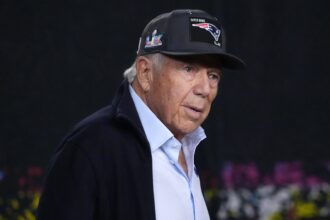
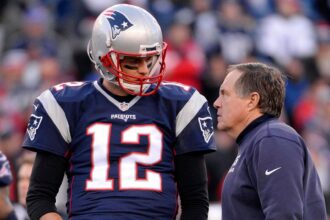
The architect and the builder of the NFL’s most dominant modern dynasty will have to wait for their bronze busts. In a stunning double rejection, New England Patriots owner Robert Kraft and former head coach Bill Belichick were both passed over for the Pro Football Hall of Fame’s Class of 2026, according to multiple reports. This news, coming just days before the official enshrinement announcement, sends shockwaves through the football world and raises profound questions about the Hall’s selection process and the legacy of an era defined by one team’s relentless excellence.
A Coordinated Snub for a Coordinated Legacy
According to ESPN, neither Kraft nor Belichick received the required 80% (40 of 50 votes) from the Hall’s selection committee to gain entry this year. The most jarring aspect is the context: they were considered in the same contributor/coach category, pitting the two most instrumental figures of the Patriots’ two-decade reign against each other and a field of other worthy finalists. The reported outcome suggests a deliberate choice by voters to separate the duo’s intertwined legacies, or perhaps an inability to decide which man was more deserving first.
The timing is particularly awkward. The official class will be unveiled this Thursday at the NFL Honors ceremony in San Francisco, casting a shadow over what is typically a celebratory event. This follows last week’s report that Belichick, the mastermind behind six Super Bowl championships, would also be waiting. The dual rejections create a narrative of a Hall of Fame seemingly hesitant to fully embrace the Patriots’ era, an era marked by unparalleled success but also by the lingering controversies of Spygate and Deflategate.
Dissecting the Kraft Candidacy: Beyond the Trophies
Robert Kraft’s journey from season ticket holder to savior of a franchise is the stuff of NFL legend. His impact stretches far beyond the six Lombardi Trophies acquired under his ownership.
- Franchise Savior: In 1994, Kraft purchased a moribund Patriots team that was one foot out the door to St. Louis. He kept the team in New England and built what is now Gillette Stadium, largely with private funds, revolutionizing the stadium economy and creating a year-round destination.
- League Visionary: Kraft has been a pivotal figure in league governance, serving on critical committees. He was instrumental in the 2011 labor agreement that secured a decade of labor peace and played a key role in NFL media deals, including the groundbreaking Thursday Night Football package.
- The Brady Catalyst: While Belichick drafted Tom Brady, it was Kraft who famously intervened to keep Brady as the starter after Drew Bledsoe returned healthy in 2001, backing his coach’s gut decision. He later served as a crucial mediator between his star quarterback and head coach for years.
Despite this resume, the “contributor” category is notoriously difficult, often requiring a longer wait for owners compared to players. The question voters may have grappled with is whether Kraft’s success is too inextricably linked to Belichick and Brady to stand alone this quickly.
Belichick’s Baffling Wait: A Standard Without Precedent?
Bill Belichick’s omission is even more analytically perplexing. His coaching resume is, by any objective measure, the greatest in NFL history.
Consider these bullet-point facts:
- Most Super Bowl wins by a head coach (6).
- Most playoff wins by a head coach (31).
- Third in all-time regular season wins (333), trailing only Don Shula and George Halas.
- Nine Super Bowl appearances and 17 division titles in 24 seasons with New England.
Every coach with three or more Super Bowl wins is already in the Hall. The only argument for delay hinges on his abrupt, losing final seasons in New England and his unresolved future in the league. Yet, the Hall’s bylaws state coaches can be eligible immediately upon retirement, not acknowledging that Belichick, at 71, clearly intends to coach again. This creates a procedural purgatory for a figure whose career achievements are already complete.
Controversy, Competition, and the Hall’s Unwritten Rules
To understand this snub, one must examine the competitive category and the Hall’s unwritten politics. Kraft and Belichick were up against former San Francisco 49ers running back Roger Craig, Cincinnati Bengals quarterback Ken Anderson, and Pittsburgh Steelers defensive end L.C. Greenwood.
Reports indicate that Roger Craig, a pioneer as the first 1,000-yard rusher/receiver, may have been the beneficiary of a split Patriots vote, potentially emerging as the highest vote-getter in a category where that can be enough for election. This scenario highlights a flaw in the process: when multiple era-defining figures are bunched together, it can allow a third candidate to surge through a divided electorate.
Furthermore, the Patriots’ scandals, however one weighs them, remain a subtext. Some voters may believe that making Kraft and Belichick wait—a form of “cooling off” period—is appropriate. Others may simply believe that in a stacked category, the legendary players from earlier eras deserved their moment first. The shadow of Tom Brady’s impending first-ballot entry in 2028 also looms; the Hall may be strategically spacing out the Patriots’ triad.
What Comes Next: Predictions for Canton’s Timeline
The immediate fallout is clear: the NFL Honors stage will feel incomplete without the architects of the league’s 21st-century flagship franchise. Looking ahead, the path to Canton remains open but now fraught with new questions.
For Robert Kraft: His wait will likely extend at least another year. The contributor committee may look to honor other figures first, and his candidacy may now be permanently yoked to the timeline of Belichick’s eventual enshrinement. A joint induction, while poetic, is logistically difficult given the Hall’s annual selection rules.
For Bill Belichick: His fate is tied to his employment. If he takes a head coaching job in 2025, his clock resets upon his eventual retirement. If he does not coach again, he should be a slam-dunk first-ballot selection for the Class of 2027. The Hall must also clarify its stance on “active” coaches seeking jobs to avoid this limbo in the future.
The bigger prediction is one of legacy. This delay, rather than diminishing their achievements, will ignite a fierce debate that ultimately burnishes their legend. It forces the football world to meticulously recount why they belong, solidifying the argument rather than weakening it.
Conclusion: A Canton Delay, Not a Denial
The Pro Football Hall of Fame’s reported decision to bypass Robert Kraft and Bill Belichick is a historic pause, not a permanent verdict. It reflects the complexities of evaluating contemporaries, the crowded field of legends, and the subtle politics of immortality. While Thursday night in San Francisco will belong to others, the absence of Kraft and Belichick will be the evening’s most resonant story. Their contributions—Kraft’s transformative ownership and league stewardship, Belichick’s tactical genius and sustained dominance—are already etched in the record books. Canton’s doors will open for them, but for now, the most successful partnership in NFL history finds itself in an unfamiliar place: waiting on the sidelines.
Source: Based on news from Deadspin.
Image: CC licensed via en.kremlin.ru