LIV Golf Defies Collapse Rumors, Vows to Continue ‘At Full Throttle’
In the high-stakes world of professional golf, rumors can spread faster than a Bryson DeChambeau drive. The latest whirlwind swirled around the very future of LIV Golf, with reports suggesting its financial bedrock—Saudi Arabia’s Public Investment Fund (PIF)—was preparing to withdraw its monumental support. Yet, in a defiant internal message, LIV Golf’s leadership has slammed the brakes on the speculation, insisting the breakaway tour is not just surviving but accelerating “at full throttle.” This clash between external doubt and internal confidence defines the latest, and perhaps most critical, chapter in golf’s ongoing civil war.
The Rumor Mill vs. The Official Line: A Stark Contradiction
This week, the narrative around LIV Golf fractured. On one side, prestigious financial publications, led by the Financial Times, reported that the PIF was considering a dramatic pivot. The suggestion was that after pumping billions into luring stars like Jon Rahm, Brooks Koepka, and Cameron Smith, the Saudi sovereign wealth fund was looking to end its direct, loss-funding support of the tour. For a league built on guaranteed money and eye-popping purses, such a move would indeed threaten its operational viability.
Contrast that with the internal communique from LIV Golf CEO Scott O’Neil. In an email to staff obtained by major news agencies, O’Neil delivered a point-blank rebuttal. “I want to be crystal clear: Our season continues exactly as planned, uninterrupted and at full throttle,” he wrote. He framed the turbulence as a rite of passage, stating, “The life of a start-up movement is often defined by these moments of pressure.” This direct messaging aims to project stability to players, staff, and sponsors, but it also raises immediate questions about the source of the conflicting reports.
- Reported by Financial Times: PIF considering an end to its financial backing, jeopardizing LIV’s future.
- Stated by LIV CEO Scott O’Neil: 2026 season and beyond will proceed “as planned and uninterrupted.”
- Key Takeaway: A classic clash of insider assurance versus external financial speculation.
Expert Analysis: The High-Stakes Poker Game Behind the Scenes
To understand this contradiction, one must view it through the lens of high-stakes negotiation and strategic positioning. LIV Golf was never conceived as a traditional, profit-driven sports league in the short term. Its inception was a disruptive force, designed to leverage PIF’s capital to force a merger or partnership with the established PGA Tour. That strategic goal is now in its most delicate phase.
“This feels less like a report of an imminent collapse and more like a strategic leak from one side of a tense negotiation,” suggests a veteran sports business analyst who requested anonymity due to ongoing dealings. “The PIF and the PGA Tour are still deep in talks to form a commercial partnership. Reminding the world, and specifically the PGA Tour, that walking away from the table and letting LIV potentially falter is an option, is a powerful piece of leverage.”
Furthermore, O’Neil’s “start-up” language is telling. It acknowledges the losses while framing them as necessary investments for growth. The PIF’s commitment is measured not in quarterly returns but in decades-long influence and the soft power that comes with controlling a major global sport. Whether the current model is sustainable indefinitely is debatable, but the commitment to seeing through the current strategic disruption appears unwavering from LIV’s internal perspective.
The Garcia Parallel: Resilience in the Face of Doubt
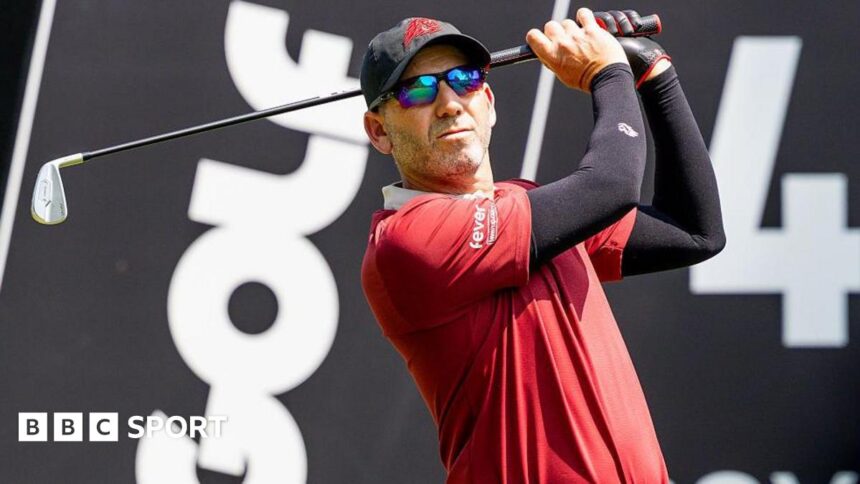
The psychological battle within LIV mirrors the career arcs of many of its star players. Consider Sergio Garcia. For years, the Spanish maestro was labeled the “best player without a major,” a talent perpetually on the verge of a breakthrough that seemed to slip away in dramatic fashion. The pressure mounted with each near-miss. Then, in 2017, he broke through at Augusta, capturing the Masters in a playoff, silencing the doubters who said he couldn’t win the big one.
LIV Golf is in its own “pre-2017 Masters” phase. It has the financial backing (the talent), has made a huge splash (contending in majors), but faces relentless questions about its ultimate sustainability (winning the long game). O’Neil’s message is a direct attempt to instill the same resilience in his organization that Garcia finally found. The subtext is clear: ignore the external noise, focus on the process, and the legitimacy will come. The question is whether LIV’s “major moment” will be a finalized merger, profitability, or widespread fan acceptance.
Predictions: What’s Next for LIV Golf and the Sport’s Landscape?
Given the intense clash of narratives, the immediate future is likely to see the following developments:
- Short-Term Stability: LIV’s 2024 and 2025 seasons will almost certainly proceed as scheduled. Contracts are in place, and venues are booked. The tour will continue to operate with its signature pomp and substantial prize funds.
- Intensified Negotiations: The rumors will add fuel to the already complex PGA Tour-PIF negotiations. Expect both public posturing and private urgency as the deadline to finalize a framework agreement looms.
- Roster Churn Speculation: If rumors of PIF doubt persist, they could impact future signing seasons. While LIV secured Rahm last offseason, the next wave of player moves may hinge on visible progress toward a unified golf ecosystem.
- The “At Full Throttle” Test: LIV will likely double down on its differentiators—the team format, global schedule, and fan experience—to prove its model has intrinsic value beyond just Saudi capital.
The most probable endgame remains a commercial détente. A world where the PIF invests in a new, for-profit PGA Tour Enterprises, LIV becomes a contained “series” or team championship within a broader calendar, and player pathways between tours are re-established. The collapse of LIV would be a messy, multi-billion-dollar failure for the PIF, an outcome they are strategically and financially positioned to avoid.
Conclusion: More Than Just a Golf Tour, a Strategic Asset
The “full throttle” declaration from LIV Golf’s CEO is more than a corporate pep talk. It is a statement of strategic intent in a multi-front war for the future of professional golf. The tour exists at the intersection of sport, finance, and geopolitics. Reports of its financial peril are not merely sports gossip; they are leaks in a multi-billion-dollar negotiation between some of the most powerful entities in global sport.
Like Sergio Garcia staring down a crucial putt at Augusta, LIV is under immense pressure. The whispers of collapse are the modern equivalent of the groans from a missed short putt. But O’Neil’s message is the defiant fist pump after a birdie. The tour is betting that its combination of star power, disruptive format, and, most importantly, the deep, long-term vision of its backers will carry it through this period of intense scrutiny. The 2026 season may indeed proceed “as planned,” but the plan itself is being written in real-time, in boardrooms and on back channels, far from the fairways where the players compete. The only certainty is that the ride, at full throttle or otherwise, is far from over.
Source: Based on news from BBC Sport.