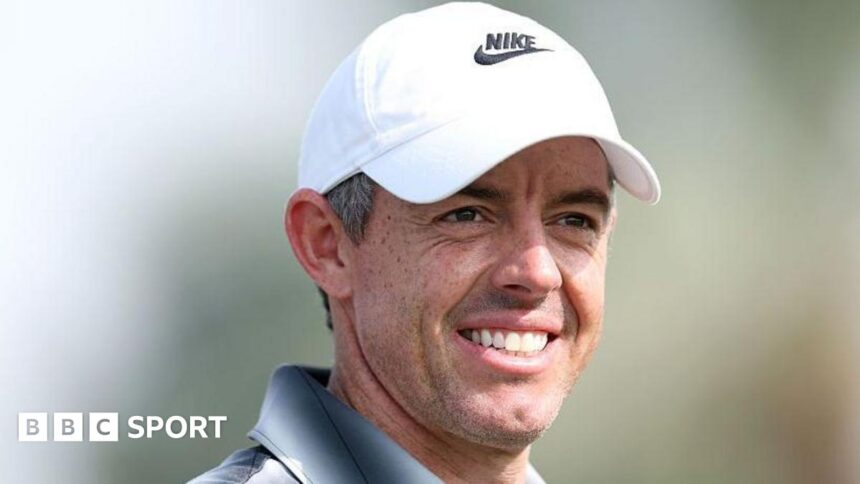
Rory McIlroy Declares LIV Golf ‘Not Moving the Needle’ as PGA Tour Power Shift Emerges
The tectonic plates of professional golf are grinding once more, but this time, the seismic activity suggests a shift back towards familiar ground. In a stark assessment that reverberated across the sport, Rory McIlroy—fresh from his historic career Grand Slam achievement—has cast a critical eye on the rival LIV Golf circuit, declaring it is “not moving the needle.” His comments come amidst the high-profile, penitent return of Brooks Koepka to the PGA Tour, a move McIlroy interprets as a potential bellwether for LIV’s declining influence. This isn’t just about player movement; it’s a narrative about legacy, competition, and the fragile economics of a fractured sport.
The Grand Slam Voice: McIlroy’s Authority in a Fractured Era
When Rory McIlroy speaks on the state of golf, the sport listens with a unique intensity. His recent victory at the Tour Championship, securing his status as the first European to win a career Grand Slam of major wins, grants him an authority that transcends leaderboards. He is now a defining figure of his generation, a custodian of the sport’s history. His perspective on the LIV-PGA conflict is therefore not merely opinion; it is a weighted analysis from a player whose legacy is inextricably linked to the traditional pathways of the game. McIlroy has evolved from a reluctant spokesman into a strategic observer, and his latest critique cuts to the core of LIV’s fundamental challenge: cultural and commercial impact.
Analyzing the Koepka Comeback: A Costly Homecoming
The return of Brooks Koepka is not a simple free agent signing; it is a structured repatriation with significant financial teeth. The details of his return outline the PGA Tour’s firm stance and the price of departure:
- A $5m charitable donation as a gesture of goodwill.
- Forfeiture of any 2026 FedExCup Bonus scheme earnings.
- Ineligibility for the Tour’s lucrative player equity programme (2026-2030), a benefit potentially worth $50-85m.
This punitive framework signals two things. First, the PGA Tour is protecting its loyal members and its ecosystem. Second, for a star of Koepka’s caliber to accept these terms suggests the calculus on the other side has changed dramatically. McIlroy posits this not as an isolated defection, but as a canary in the coal mine. “The lack of any new signings suggests that the power may be shifting,” McIlroy noted, highlighting a critical stagnation in LIV’s once-aggressive expansion. When the rumor mill for new, top-tier acquisitions goes silent, the narrative of momentum falters.
The Loyalists and the Stalemate: Rahm, DeChambeau, and Smith Dig In
To view this as a total collapse of LIV Golf, however, would be a misreading. The tour retains formidable, marketable talent. Jon Rahm, Bryson DeChambeau and Cam Smith have all indicated their intentions to remain, providing the league with major championship pedigree and distinct personalities. They represent a committed core. Yet, their continued presence also underscores the current stalemate. The era of breathtaking, nine-figure offers to pluck the world’s very best in their prime appears to have paused. The focus has shifted from explosive growth to consolidation, a phase that often lacks the headline-grabbing dynamism needed to capture casual fan interest. As McIlroy implies, maintaining a roster is different from expanding its influence; the needle, in terms of broad sporting relevance, remains stubbornly still.
Predictions: The Inevitable Convergence and the New World Order
Where does golf go from here? The trajectory points toward an eventual, negotiated coexistence, but the balance of power is subtly recalibrating.
Short-term (1-2 years): Expect a “cold war” scenario. The PGA Tour, bolstered by its strategic alliance with SSG and the return of players like Koepka, will emphasize its depth and history. LIV will lean into its team format and the star power of its anchors, hoping for its players to perform in the majors—the only arena where the divided tours currently collide. The lack of any new signings to LIV will become a pivotal talking point; if it continues, the perception of a closed shop will solidify.
Long-term (3+ years): The pressure from sponsors, television partners, and fans for a unified product will become overwhelming. The current framework of punitive reintegration for returning players is likely a temporary negotiating stance. A future model will probably involve designated LIV events within a broader global tour schedule, or a Champions League-style season finale featuring top performers from both circuits. The player equity programme and shared financial incentives will be the glue that binds any final agreement.
Conclusion: Legacy, Leverage, and the Long Game
Rory McIlroy’s declaration that LIV is “not moving the needle” is a powerful piece of narrative framing from a player whose own needle is permanently fixed in the record books. The return of Brooks Koepka to the PGA Tour, with its significant financial concessions, provides tangible evidence for McIlroy’s claim. It reveals a path where the allure of guaranteed money is being weighed against the cost to legacy, competitive fulfillment, and long-term wealth within the sport’s traditional structure.
The war for golf’s soul is not over, but the battle lines are shifting from pure financial bombardment to a more complex struggle for sustainability and significance. The stalwarts like Rahm and DeChambeau give LIV credibility, but the halted recruitment and high-profile returns suggest the initial shockwave has passed. The ultimate victory may not belong to one tour obliterating the other, but to the side that can best position itself as the indispensable heart of the sport when the inevitable negotiations begin. For now, the momentum, as McIlroy keenly observes, is shifting back to the home of the Grand Slams.
Source: Based on news from BBC Sport.