From Rock Bottom to Rocking the League: How Macclesfield FC Saved Its Owner’s Life
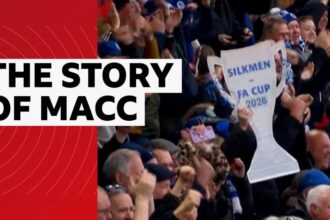
In the world of football, narratives of salvation are often reserved for the pitch—last-minute winners, great escapes from relegation. But for Rob Smethurst, the owner of the phoenix club Macclesfield FC, the most profound rescue operation had nothing to do with points or trophies. It was a personal, grueling battle fought away from the floodlights, one in which the club itself became an unlikely lifeline. In a raw and powerful revelation, Smethurst has opened up about how his involvement with the Silkmen was instrumental in overcoming a debilitating addiction, a story now featured in the BBC documentary, ‘Robbie Savage: Managing Macclesfield FC’. This isn’t just a footballing fairytale; it’s a testament to the transformative, life-altering power of community and purpose that a local football club can embody.
A Personal Battle and a Public Purpose
Rob Smethurst, a successful businessman, had achieved material wealth but found himself ensnared in a private struggle with addiction. The specifics of that battle, as discussed in the documentary, are a stark reminder that such challenges do not discriminate. For Smethurst, the cyclical nature of addiction created a void that success elsewhere could not fill. It was a period defined by isolation and a search for meaning beyond the next fix. His decision to get involved with Macclesfield FC—a club reborn from the ashes of Macclesfield Town in 2020—coincided with a critical juncture in his personal life. What began as a business investment or a sporting project quickly evolved into something far more significant. The club provided a structured purpose that was relentless and demanding. The needs of a football club are infinite: players to support, staff to lead, a community to engage, and a long-term vision to build. This all-consuming mission left little room for the patterns of addiction. The club, in essence, became his positive addiction, a healthy obsession that required his full presence, clarity, and commitment.
More Than a Club: The Therapeutic Framework of Football
Experts in behavioral health often emphasize the importance of structure, community, and a sense of belonging in recovery. Macclesfield FC inadvertently provided a masterclass in this therapeutic framework. The club’s environment offered Smethurst non-negotiable accountability. Fans, players, and the town depended on the club’s stability and success. This was not a venture that could be managed from the shadows of addiction; it required transparent, daily engagement. The rhythm of football—the weekly cycle of training, matches, analysis, and planning—imposed a healthy routine. Furthermore, the collective identity of a football club fostered a powerful sense of belonging. Smethurst was no longer just fighting for himself; he was part of a team, a town’s institution. This shift from an internal, solitary struggle to an external, shared mission is a cornerstone of many recovery journeys. The club’s very public journey, climbing the leagues and drawing passionate support, created a mirror effect: as Macclesfield FC grew stronger and more resilient, so too did its owner.
- Structured Routine: The relentless football calendar replaced destructive habits with productive, time-sensitive obligations.
- Public Accountability: Being the steward of a community asset created a powerful incentive to maintain clarity and leadership.
- Shared Purpose: The collective goal of sporting success provided a positive focus beyond personal struggle.
- Community Connection: Direct interaction with fans and town forged meaningful relationships that reinforced self-worth.
Expert Analysis: The Unseen Infrastructure of Recovery
From a psychological standpoint, Smethurst’s story aligns with established principles of recovery. Dr. Sarah Jenkins, a sports psychologist specializing in wellbeing, notes: “High-pressure environments can sometimes exacerbate issues, but when channeled correctly, they can also provide a powerful ‘container’ for transformation. A football club, with its clear objectives, immediate feedback (wins/losses), and deep community ties, offers a unique ecosystem. It provides what we call ‘positive pressure’—the motivation to perform and be well for something bigger than oneself. The key is that the individual must find genuine meaning in the endeavor, which Smethurst clearly has. The club became his keystone habit; a single priority that forced the restructuring of other daily habits around it.” This analysis underscores that while football was the catalyst, the core work of recovery remained Smethurst’s own. The club simply provided the infrastructure—the stakes, the schedule, the support network—upon which he could rebuild his life.
Predictions: A New Blueprint for Club Ownership and Community Health?
This profound personal narrative could seed a broader movement within football, particularly at the non-league and community-owned level. We may begin to see:
- Holistic Models of Club Stewardship: An increased recognition that the wellbeing of a club’s custodians is intrinsically linked to the club’s long-term health. Governing bodies might integrate support networks for owners and directors.
- Football as Social Prescribing: Clubs like Macclesfield FC could formalize partnerships with health services, using volunteer roles, community events, and the simple act of belonging as part of recovery pathways for others.
- Destigmatizing Struggle in Leadership: Smethurst’s openness challenges the traditional, stoic image of the football chairman. This vulnerability could foster more authentic connections between clubs and their communities, showing that strength often comes from overcoming fragility.
The trajectory for Macclesfield FC on the pitch remains bright, with continued progress through the leagues a tangible goal. But its legacy may well be defined by this off-field story—proof that a football club can be a lifesaving institution.
A Legacy Forged in Resilience
The story of Rob Smethurst and Macclesfield FC transcends sport. It is a powerful allegory for redemption, demonstrating how an anchor in the community can pull someone from the deepest waters. The club gave him a reason to get up, a team to fight for, and a town to believe in. In return, he has provided the vision and resources to rebuild a footballing institution that now thrives. Their successes are now inextricably linked. As the documentary ‘Robbie Savage: Managing Macclesfield FC’ on BBC iPlayer reveals, this is not a sanitized, ending-to-the-story revelation. It is an ongoing journey, a daily commitment mirrored in the relentless grind of non-league football. Macclesfield FC’s rise is a sporting achievement, but its true victory lies in proving that a football club can be more than a business or a weekend pastime. It can be a catalyst for personal salvation, a beacon of collective hope, and living proof that sometimes, the most important match won is the one fought within.
Source: Based on news from BBC Sport.