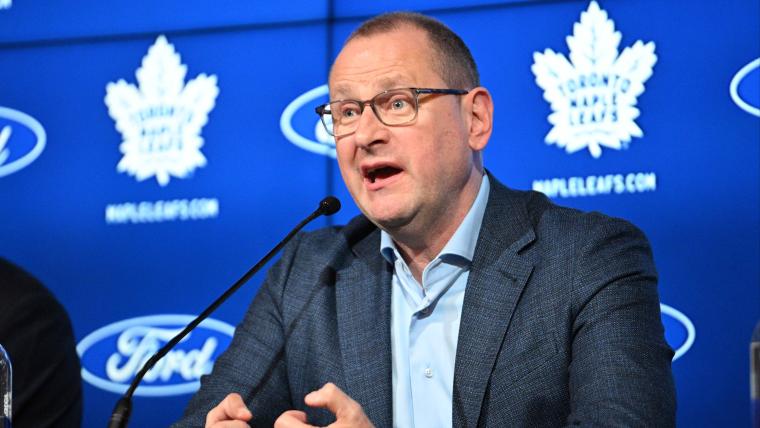
Maple Leafs Fire GM Brad Treliving, Signaling Major Offseason Shakeup
The winds of change are howling through Scotiabank Arena. In a move that reverberated across the hockey world, the Toronto Maple Leafs announced on Monday that they have parted ways with general manager Brad Treliving, abruptly ending his tenure after less than two full seasons. The decision, confirmed by Maple Leaf Sports & Entertainment president Keith Pelley, marks the first major domino to fall in what promises to be a franchise-altering offseason for a team whose championship window feels perilously close to slamming shut.
A Tenure Defined by Bold Moves and Unmet Expectations
Brad Treliving’s appointment in May 2023 was seen as a pivot, not a rebuild. Tasked with steering a core of elite, high-priced talent over the championship hump, Treliving acted decisively. His tenure was characterized by aggressive, high-risk maneuvers aimed at toughening a roster often criticized for its playoff fragility. However, with the Maple Leafs sitting 13 points out of a playoff spot and languishing in 24th place league-wide, the stark reality of the present overwhelmed the intent of those moves.
Treliving’s signature transactions were a double-edged sword:
- The John Tavares Contract Extension: Before his first season even began, Treliving secured captain John Tavares with a team-friendly extension, a vote of confidence in the core but also a commitment to its expensive structure.
- The Core Four Shakeup: His most dramatic move was trading William Nylander’s negotiation rights, only to swiftly pivot and sign the superstar winger to a massive eight-year deal. He then inked Auston Matthews to a record-setting extension, ensuring two pillars were secured.
- Goaltending Gambles: He let Jack Campbell walk in 2022 and later traded for and extended Ilya Samsonov, then signed veteran Martin Jones. The position never found stability.
- The 2024 Trade Deadline: In an all-in push, Treliving acquired top-pairing defenseman Chris Tanev and center Elias Lindholm, sacrificing significant draft capital. The moves failed to spark a consistent turnaround.
Ultimately, the deep analysis cited by Keith Pelley revealed an uncomfortable truth: the sum of these bold parts was a deeply flawed team on pace to miss the playoffs for the first time since 2015-16.
Pelley’s New Direction and the Pressing “Core” Question
Keith Pelley’s statement was respectful but unequivocal. The phrase “chart a new course under different leadership” is the key takeaway for the Maple Leafs organization. It signals that Pelley, still early in his own tenure as MLSE’s top executive, is not satisfied with the status quo and is willing to make the difficult, headline-grabbing decisions he was brought in to execute.
This move is less about indicting Treliving’s every move and more about a fundamental philosophical shift. The question now becomes: what does a “new course” entail? The entire hockey world will focus on one seismic issue: the future of the Maple Leafs’ core of Auston Matthews, Mitch Marner, John Tavares, and William Nylander. For years, the debate has raged about whether this group, consuming a huge portion of the salary cap, can win together. Treliving’s mandate was to make it work. His successor may have a different directive.
All eyes immediately turn to Mitch Marner, who carries a no-movement clause and one year remaining on his contract. Does the new GM attempt to extend him, or is a painful, culture-shifting trade the true definition of a “new course”? The decision will define the next decade for the franchise.
Potential Candidates and the Daunting Task Ahead
The search for the next GM of the Maple Leafs will be the most scrutinized executive hiring in recent NHL memory. The candidate pool will feature a mix of experienced veterans and analytical-minded newcomers. Key names will inevitably include:
- Experienced Retreads: Executives like former Flames GM Craig Conroy, or even a Marc Bergevin, could be considered for their seasoned hands.
- Rising Assistant GMs: Figures like Mathieu Darche (Lightning), Eric Tulsky (Hurricanes), or Jason Botterill (Kraken) represent the modern, data-influenced front-office archetype.
- The Blockbuster Name: Could MLSE pursue a sitting GM or a big-name like Patrik Allvin? It would require significant compensation but would signal immense ambition.
Whoever accepts the role inherits a daunting checklist: navigate the Marner dilemma, overhaul a shaky defense and goaltending situation, replenish a depleted prospect pipeline, and inject the roster with a competitive identity that translates to playoff success—all under the blinding spotlight of Toronto.
Predictions for a Franchise at a Crossroads
The firing of Brad Treliving is not the end of the story; it is the explosive beginning of the Maple Leafs’ most critical offseason in a generation. Here is what to expect in the coming months:
1. A Methodical, But Urgent, GM Search: Pelley will lead a thorough search, but time is of the essence with the NHL Draft and free agency looming. Expect a hire by mid-June.
2. The Mitch Marner Saga Will Dominate: This is the new GM’s first and biggest decision. A trade is now a very real possibility, though executing it will be complex. If he stays, an extension negotiation will be tense and public.
3. Goaltending Will Be Completely Rebuilt (Again): With Joseph Woll’s health a question mark and Ilya Samsonov likely departing, the new GM must find a true, reliable number-one goaltender, potentially via trade.
4. A Shift in Roster Construction Philosophy: The era of stacking all financial resources into four forwards is over. Look for a more balanced allocation of cap dollars, with a premium placed on defensive responsibility and playoff-style grit across all lines.
5. Head Coach Craig Berube’s Influence Will Grow: Hired by Treliving, Berube is now the lone architect in the hockey ops department. The new GM will likely seek a coach who aligns with Berube’s hard-nosed vision, or fully empower Berube in roster decisions.
Conclusion: The End of an Era, The Start of a Revolution
The dismissal of Brad Treliving is a clear message from the Maple Leafs’ highest office: incremental change is no longer acceptable. The “Shanaplan,” which began nearly a decade ago, has reached its logical endpoint—a core built to dominate the regular season but repeatedly failing in the spring. Keith Pelley has now taken the first, definitive step to reshape it.
While Treliving departs with respect for his effort and personal integrity, the results were undeniably lacking. The Maple Leafs are now in 24th place in the NHL, a stunning fall for a team with championship aspirations. This move is about accountability at the highest level and a recognition that the previous vision had run its course.
For the fans, this is a moment of painful uncertainty but also necessary upheaval. The promise of a “new course” brings anxiety—potentially involving the departure of beloved stars—but also the hope of a more complete, resilient, and ultimately victorious team. The Brad Treliving chapter is closed. The next chapter for the Toronto Maple Leafs begins with a monumental question and an entire city waiting, once again, for an answer that has been elusive for 57 years and counting.
Source: Based on news from Yahoo Sports.