Mark Cuban’s Tanking Takedown: Mavericks Owner Urges NBA to Embrace the Rebuild
The age-old NBA debate over “tanking”—the strategic losing by teams to improve draft position—has erupted once again. This time, the spark comes not from a disgruntled fan, but from one of the league’s most prominent and outspoken owners. After NBA Commissioner Adam Silver condemned the practice as being at its worst “in recent memory,” Dallas Mavericks owner Mark Cuban fired back with a provocative counter-argument: it’s time for the league to stop fighting it and start embracing the strategic rebuild.
The Commissioner’s Crackdown vs. The Owner’s Advocacy
The tension between the league office and team strategists hit a boiling point recently. The NBA fined the Utah Jazz $500,000 and the Indiana Pacers $100,000 for violating the league’s player resting policy by sitting multiple healthy players. This action, seen as a clear anti-tanking measure, was backed by Silver’s strong words, where he promised to explore “every possible remedy” to combat the issue. The commissioner’s stance is clear: tanking undermines competitive integrity and insults the paying fan.
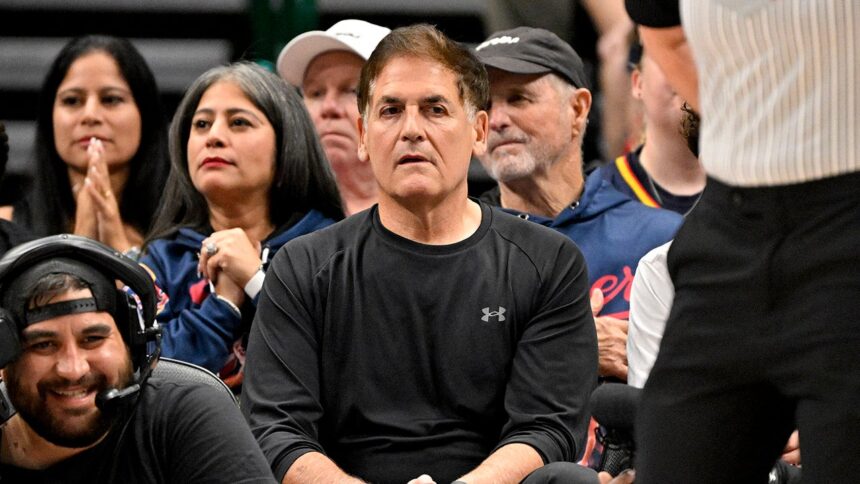
Enter Mark Cuban. Never one to shy from controversy, the Mavericks owner took to X to post a simple, pointed message: “Why the NBA should embrace” it. This isn’t theoretical for Cuban; he has openly admitted to engineering a tanking strategy in the past, which ultimately led to drafting franchise cornerstone Luka Dončić. His perspective is forged in the front office fire, arguing that what the league calls “tanking,” smart organizations call long-term asset management.
Deconstructing “The Process”: Tanking as a Rational Strategy
To understand Cuban’s argument, one must look past the emotional charge of the word “tanking” and examine the cold, hard economics of the modern NBA. The league’s system, designed to promote parity through the draft and a salary cap, inherently incentivizes being very bad to get very good. For small and mid-market teams without the allure of Los Angeles or Miami, the most reliable path to a superstar is through the top of the draft.
Cuban’s likely reasoning, which echoes through front offices league-wide, includes:
- The Draft as a Talent Lifeline: The NBA’s superstar-centric model means one player can transform a franchise. For teams stuck in mediocrity—the dreaded “middle”—the draft offers the only realistic shot at such a talent.
- Financial Realities: A middling team often means maxed-out cap space on good-but-not-great players, leading to first-round playoff exits and no premium draft picks. A strategic reset clears future cap space and resets the talent clock.
- Defining “Competitive Integrity”: Cuban would argue that forcing a poorly constructed team to win 35 games instead of 25 is a false integrity. The true competitive dishonesty, some executives whisper, is large-market teams using their location as a primary recruiting tool.
The infamous “Process” era of the Philadelphia 76ers, though polarizing, is the ultimate case study. By bottoming out, they accumulated assets that became Joel Embiid, Tyrese Maxey, and the trade capital for James Harden (and later, the flexibility to recover from it). The ends, for them, justified the means.
The Fan Experience Paradox: Short-Term Pain for Long-Term Gain?
Adam Silver’s primary concern is the fan. Nobody buys a ticket to watch their team lose on purpose. Tanking can erode trust and make a mockery of the nightly competition. This is the strongest counter to Cuban’s stance.
However, proponents of strategic rebuilding pose a challenging question: what is worse for a fanbase?
A transparent rebuild with a promised future, or years of futile mediocrity with no clear path forward? A team like the Oklahoma City Thunder executed a transparent teardown, stockpiled picks, and now boasts one of the most exciting young cores in the league, with a fervent, engaged fanbase. The short-term pain was real, but the long-term vision was clear and is now paying off.
The real villain, perhaps, isn’t the strategy itself, but the execution. Teams must balance the long-game with maintaining a culture of effort. Young players still need to develop, and veterans must play hard. The line between “developing youth” and “sitting healthy stars” is the one the league’s fines are trying to police.
Predictions: How This Battle Will Shape the NBA’s Future
The clash between Silver’s idealism and Cuban’s pragmatism will define the next era of NBA roster construction. Here’s what to expect:
- Immediate Stricter Penalties: Silver will likely get tougher. Fines will increase, and the league may implement more stringent rules around player resting and mandatory active lists for healthy stars.
- The “Flattened” Lottery Reform: The league has already flattened the odds for the top draft picks to disincentivize being the absolute worst. We may see this pushed further—perhaps a “wheel” system or a playoff tournament for non-playoff teams to determine draft order—though such radical changes face steep opposition.
- Front Office Innovation: If traditional tanking paths are blocked, executives will find new loopholes. We’ll see more “soft” tanking through roster construction—fielding theoretically competitive but deeply flawed teams—and an even greater emphasis on trading for future draft capital from other teams.
- Cuban as the Vanguard: Cuban’s public stance will empower other owners and GMs to privately push the league for more tolerance of strategic rebuilding, framing it as essential for long-term parity.
Conclusion: A Necessary Evil or a Correctable Flaw?
The tanking debate is ultimately a debate about the soul of the sport. Adam Silver views the NBA as a nightly showcase of the world’s best basketball, where every game must be contested fully. Mark Cuban views it as a 30-franchise business ecosystem where long-term planning and asset acquisition are paramount to survival and success.
There is no perfect solution. Eliminating tanking entirely might require dismantling the draft system itself, which is the league’s primary tool for parity. Embracing it fully risks alienating the casual fan. The future likely holds an uneasy compromise: the league will continue to punish the most egregious, fan-alienating acts of roster manipulation, while smart teams will continue to navigate the rules to execute their versions of The Process. The genius of Mark Cuban’s statement is its blunt reframing: instead of waging a futile war against a strategy the system creates, perhaps it’s time to manage it. The NBA may never “embrace” tanking, but it may finally have to acknowledge it as a permanent, if unsightly, feature of its competitive landscape.
Source: Based on news from Fox Sports.