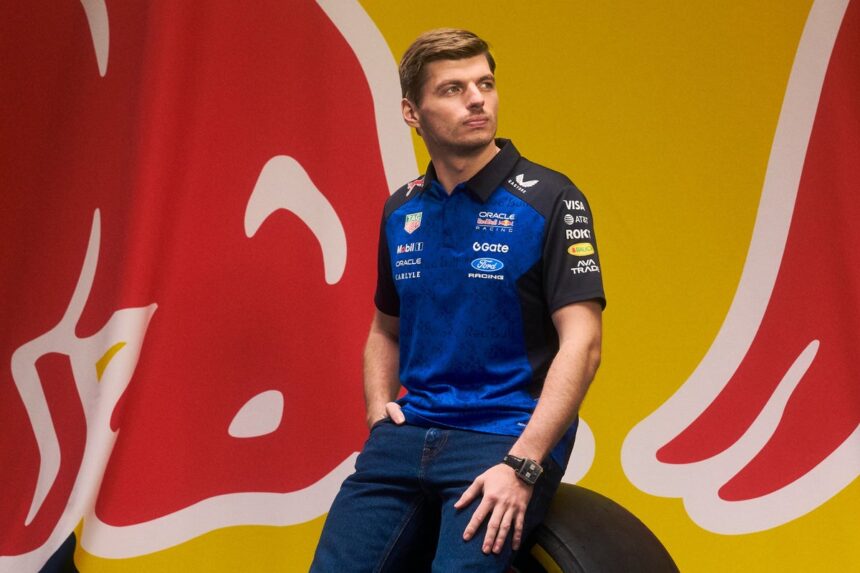
Max Verstappen’s Candid Admission: Inside Red Bull’s 2026 “Unknown”
The sleek, dark blue and red livery of the new Red Bull RB22 shimmered under the lights in Detroit, a symbol of relentless ambition. Yet, for the man tasked with driving it to glory, the prevailing sentiment was not swaggering confidence, but a rare and telling dose of uncertainty. As the 2026 Formula 1 season looms, a seismic regulatory reset has even the sport’s most dominant force, and its star driver Max Verstappen, admitting they are stepping into the great unknown.
The 2026 Revolution: More Than Just a New Look
Thursday’s car launch was about far more than aesthetics. The 2026 season represents the most profound technical overhaul in a generation, a two-pronged revolution designed to make the sport more sustainable and spectacular. The changes are so comprehensive they threaten to dismantle the established competitive hierarchy.
New Power Unit Regulations form the core of the shift. For Red Bull, this is a monumental leap into uncharted territory: for the first time, they are a full-fledged works team, building their own Red Bull Ford Powertrains engine. This ends their long and successful customer relationship with Honda. Simultaneously, the chassis rules have been rewritten. Cars are smaller, lighter, and feature radical new aerodynamic concepts.
Verstappen pinpointed the dual challenge: “It’s a very big, big change with the engine, the car, as you can see also the dimension of the car has changed a bit.” This perfect storm of variables—a brand-new, unproven power unit married to a completely different aerodynamic philosophy—creates a high-stakes engineering puzzle where past success guarantees nothing.
Verstappen’s “Unknown”: A Champion’s Pragmatism
Max Verstappen’s admission is not a sign of weakness, but the ultimate display of a champion’s pragmatism. After a titanic 2025 battle that saw him miss a fifth consecutive title by a mere two points, he understands that raw talent will be secondary to adaptation in the early phase of 2026.
“It’s all still a bit unknown,” Verstappen stated, highlighting the driver’s own learning curve. The new regulations introduce game-changing features that will alter the very feel of driving an F1 car:
- Active Aerodynamics (Active Aero): Moving front and rear wings that adjust automatically for low-drag straights and high-downforce corners, fundamentally changing braking and cornering cues.
- Overtake Mode (Replacing DRS): A manual driver-deployed system that combines electrical energy deployment with aerodynamic adjustments for a more strategic passing tool.
- Lighter, Nimbler Cars: A deliberate shift to create more dynamic and responsive machinery, demanding a recalibration of driving style.
Verstappen emphasized the critical importance of pre-season testing: “For us drivers as well initially, we’ll take a bit of time to adjust. And that’s why it’s very important during the test days that we are getting our laps, so we can optimise everything as well as possible.” Every lap in testing will be a data-gathering mission to tame the unknown.
Red Bull’s High-Wire Act: Engine Builder Overnight
While rivals like Ferrari, Mercedes, and Alpine refine existing power unit projects, Red Bull is attempting a feat not seen in the modern era: becoming a championship-winning engine manufacturer from a standing start. Their partnership with Ford provides technical and commercial support, but the core intellectual property and assembly reside in Milton Keynes.
This is the team’s single greatest strategic gamble of the hybrid era. The potential payoff is immense—total technical independence and control over their destiny. The risk, however, is a performance or reliability deficit that could see them tumble down the grid, regardless of Adrian Newey’s (or his successor’s) chassis genius.
The 2026 power units place a much greater emphasis on electrical energy, with the MGU-K producing nearly three times the power. Getting this complex energy management system right, and packaging it efficiently within the new chassis, is a Herculean task. The “unknown” Verstappen speaks of is most profoundly felt in the engine department, where dyno results meet the unforgiving reality of the track.
2026 Predictions: A Grid Shake-Up Inevitable?
The consensus among technical experts is that the 2026 regulations will compress the field. Teams that ace the new formula could leapfrog the established order. Here’s how the landscape might shift:
- The Incumbent Threat: Mercedes and Ferrari, with deep institutional engine-building experience, must be considered favorites to navigate the transition smoothly. Their challenge is evolving a winning chassis concept.
- The Wild Cards: Audi’s full factory entry with Sauber and Honda’s new partnership with Aston Martin add fascinating new dynamics. Both have invested heavily with 2026 as their true target.
- Red Bull’s Realistic Range: Given the scale of their task, a season of consolidation may be pragmatic. A scenario where Red Bull starts as a podium contender rather than a dominant force is plausible, with their championship challenge potentially building as the season and engine development progresses.
Verstappen’s role will evolve. His ability to provide precise, insightful feedback will be as valuable as his qualifying pace as the team seeks to develop the car rapidly. His patience will be tested.
Conclusion: Embracing the Uncertainty
The 2026 Formula 1 season was always destined to be a reset. Max Verstappen’s candid “unknown” admission at the Red Bull launch cuts through the usual pre-season bravado, framing the year ahead with honest clarity. It acknowledges the scale of Red Bull’s self-imposed mission and the universal challenge presented by the new rules.
For fans, this uncertainty is a gift. The sight of the sport’s most dominant driver and team facing a genuine technical mountain is the recipe for a compelling, unpredictable season. The Detroit launch showed us a stunning car, but the real story is the immense challenge it represents. The journey into the unknown has begun, and for the first time in years, no one—not even a four-time world champion—can confidently predict the destination.
Source: Based on news from Yahoo Sports.