Max Verstappen’s Blistering Critique: Is F1’s New Era “Anti-Racing”?
The dawn of a new Formula 1 technical era is meant to be filled with optimism, a reset promising closer racing and a brighter future. But as the 2024 season looms, a dissenting voice from the very pinnacle of the sport is cutting through the promotional fanfare with brutal honesty. Reigning four-time World Champion Max Verstappen, never one to mince words, has launched a scathing attack on F1’s latest generation of cars, labeling them “anti-racing” and questioning their very soul. His critique from Bahrain testing isn’t just driver grumbling; it’s a fundamental challenge to the direction of the sport’s top brass.
Verstappen’s Verdict: “Formula E on Steroids”
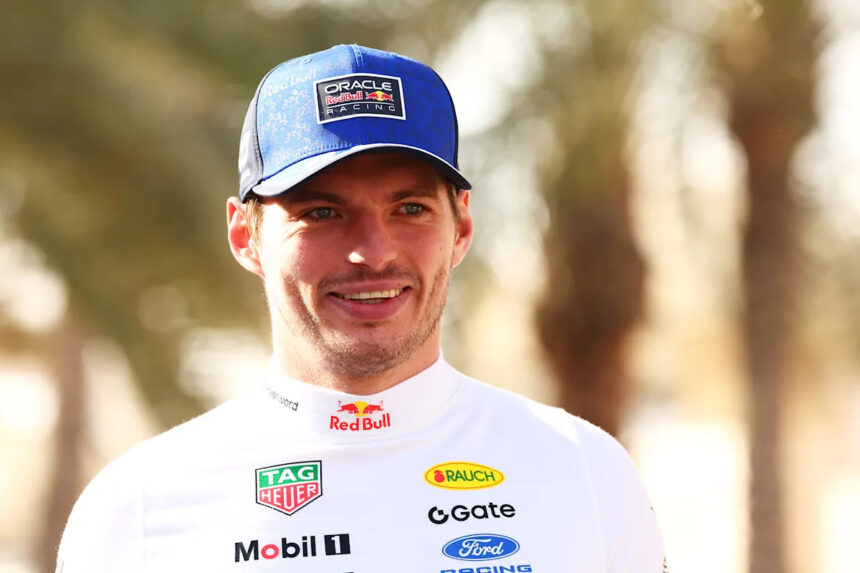
In a characteristically frank media session in Bahrain, Verstappen didn’t just express mild concern. He delivered a pointed, evocative indictment. “To drive [they are] not a lot of fun, to be honest,” he stated. The crux of his argument centers on a perceived shift from pure, unadulterated racing to a game of calculated conservation. “I would say the right word is management,” Verstappen explained. “It’s not very Formula 1-like. It feels a bit more like Formula E on steroids.”
This comparison is particularly loaded. Formula E is synonymous with energy management, where strategic deployment of battery power often trumps flat-out speed. For Verstappen, a driver whose reputation is built on relentless, aggressive, and precise attacking drives, the new F1 cars’ characteristics represent a philosophical betrayal. The heart of the issue lies in the power unit regulations. The current cars operate with a near 50/50 split between battery power from the MGU-K and the traditional Internal Combustion Engine (ICE). This complex hybrid system, while a marvel of engineering, demands extreme driver management to optimize energy deployment over a lap and throughout a race stint.
“You cannot drive flat out,” Verstappen lamented. For fans and purists, this statement strikes at the core of Formula 1’s identity. The sport’s legend is built on drivers pushing machinery to its absolute limit. If the fastest way to complete a race is to *not* push to the limit for significant portions, Verstappen argues, something vital has been lost.
The Regulatory Tightrope: Spectacle vs. Sport
Verstappen’s outburst forces a critical examination of the 2026 technical regulations, which these cars are a stepping stone towards. The FIA and Formula 1’s stated goals are noble: to improve the racing spectacle, promote sustainability, and attract new manufacturers. The 2022 ground-effect overhaul aimed to allow cars to follow more closely. The incoming 2026 rules double down on electrification and aim for fully sustainable fuels.
However, Verstappen’s criticism highlights a potential chasm between the spectacle for the viewer and the “sport” for the competitor. The questions are stark:
- Has F1 over-indexed on strategic complexity at the expense of raw driver skill? Managing tires, fuel, and now intricate electrical deployment is nothing new, but the balance may have tipped.
- Is the pursuit of “green” credentials and road-relevance diluting the extreme, visceral challenge that defines F1? The sport has always been a technological frontier, but the frontier is now pointed towards efficiency as much as outright performance.
- Could this lead to a homogenization of driving style? If the cars reward meticulous management over aggressive instinct, does it favor one type of driver over another?
It’s a classic engineering tightrope. The regulations are designed to be the same for everyone, as Verstappen conceded. But creating a level playing field and creating a formula that produces the most compelling *racing* are not always the same thing.
The Grid’s Divided Opinion and the Red Bull Paradox
Verstappen is not alone in his concerns, though he is its most prominent and eloquent critic. Other drivers have whispered about the physical and mental challenge of managing these complex systems. However, the grid is not unanimous. Drivers from teams further down the order, who are benefitting from the regulatory reset and closer racing, may be more positive. For them, the chance to fight in the midfield is a welcome trade-off.
This leads to the most intriguing paradox of all: Max Verstappen and Red Bull Racing have been the undisputed masters of this regulatory era. Since the 2022 changes, they have been historically dominant. His criticism, therefore, carries unique weight. It is not the complaint of a struggling driver seeking an excuse. It is a champion, at the peak of his powers, warning that the very tool of his dominance is making the sport less enjoyable for its premier practitioners. He is essentially arguing that winning in these cars is less satisfying than it should be—a remarkable stance in a win-at-all-costs environment.
This dichotomy presents a PR challenge for F1. How does it promote a new era when its most successful current ambassador publicly disdains the machinery? The narrative of “the best driver in the best car” is tempered by that driver’s open lack of enthusiasm for the car’s fundamental character.
The Road to 2026: Can F1 Reconcile Its Identity?
Verstappen’s comments are a cannon shot across the bow for the 2026 regulations. They serve as a crucial, real-time feedback loop from the sport’s most important stakeholders: the drivers. The fear is that if the current cars feel like management-heavy “Formula E on steroids,” the 2026 cars—with even greater electrical power and smaller, lighter engines—could amplify these traits.
Predictions for the coming era hinge on the sport’s response:
- The “Verstappen Effect” Could Force a Tweak: While major rule changes are locked in, the FIA has shown a willingness to adjust for safety and competition. Sustained criticism from top drivers may lead to mid-cycle adjustments to energy deployment rules or car weight to improve drivability.
- A Schism in Driving Philosophy: We may see a new breed of driver excel—those who are supreme system managers, perhaps with backgrounds in sim racing and data analysis, over the traditional “racer’s racer.”
- The Spectacle Test: Ultimately, the fans and broadcast numbers will be the final judge. If races become processional trains of cars managing systems, the spectacle will suffer, regardless of technical brilliance. If the cars can follow and race wheel-to-wheel, the public may forgive the behind-the-wheel complexity.
Conclusion: A Champion’s Warning for the Soul of F1
Max Verstappen’s criticism is more than a headline-grabbing soundbite. It is a passionate defense of a driving experience he feels is being eroded. In calling the cars “anti-racing,” he is arguing that the essence of racing—the do-or-die overtake, the qualifying lap on the absolute edge, the relentless chase—is being compromised by an overbearing need to manage systems. The comparison to “Formula E on steroids” is a deliberate provocation, questioning whether F1 is losing its distinct, combustion-heavy soul in a well-intentioned but potentially flawed march toward the future.
The challenge for Formula 1 is profound. It must navigate a sustainable path forward, both environmentally and commercially, without sacrificing the raw, unfiltered competition that built its global legend. Verstappen, from his champion’s perch, has issued a stark warning: in the quest to improve the show, the sport must not forget that for the drivers—the characters at the heart of the drama—the car must remain a weapon to be wielded, not a puzzle to be constantly solved. The success of this new era may depend on how well the rule-makers heed his call.
Source: Based on news from Yahoo Sports.