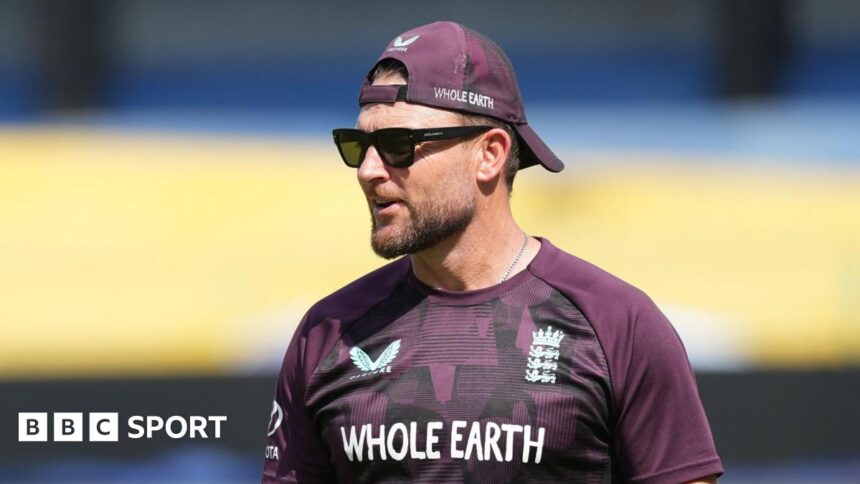
McCullum’s Unwavering Defence: Inside the Fight for England’s New Era
The sound of leather on willow in Colombo was a welcome symphony for Brendon McCullum. A 3-0 T20 series whitewash of Sri Lanka offered a moment of clear, uncontested triumph. But for England’s head coach, the victory served as more than just a result; it was a platform. From it, he launched a fierce, unapologetic defence of his players, his philosophy, and the very culture he has painstakingly built since his seismic arrival in 2022. In the face of what he bluntly labelled a “pile on,” McCullum isn’t just batting for his team—he’s doubling down on the revolution.
The “Pile On”: McCullum Draws a Line in the Sand
Since taking the reins of England’s Test team and later the white-ball sides, Brendon McCullum’s mandate has been unequivocal: liberation. Liberate the talent, liberate the mindset, and play without fear. Yet, the fallout from a challenging winter, culminating in a hard-fought but ultimately lost Ashes campaign, tested this ethos off the field as much as on it. Criticism swirled around off-field conduct, leadership, and the team’s resilience. For McCullum, enough was enough.
Speaking with the characteristic candour that defines his leadership, McCullum argued the ECB had navigated the turbulent post-Ashes period “pretty well.” His comments were less about deflecting blame and more about defining a boundary. He perceives a media and public narrative that has, in his view, escalated from scrutiny to an imbalanced attack. By naming it a “pile on,” McCullum sends a powerful message of internal solidarity. It’s a classic Bazball tactic: meet the aggressive delivery head-on, with intent.
Key points in McCullum’s defence:
- Unified Front: He publicly backed the ECB’s handling of disciplinary matters, presenting a united administrative and coaching front.
- Context Over Condemnation: He urged for perspective on player behaviour during long, high-pressure tours.
- Culture Shield: His stance acts as a protective shield for the team’s confident, sometimes brash, culture from external dilution.
Harry Brook and the Code of the Dressing Room
At the eye of this storm sits Harry Brook, England’s prodigiously talented white-ball captain and Test mainstay. The revelation that he was punched by a nightclub bouncer in New Zealand was concerning. The subsequent admission that he had initially misled authorities about being alone—that teammates were present—intensified the scrutiny. For many, it was a lapse in judgement and transparency. For Brendon McCullum, it was an act of loyalty.
McCullum’s defence of Brook was particularly revealing of his coaching psyche. He framed Brook’s initial false statement not as a deceitful act, but as a 25-year-old trying to “look after his mates.” This interpretation cuts to the core of the environment McCullum cultivates: a brotherhood where responsibility is shared, and protection of the group is a paramount instinct. In the high-performance ecosystem McCullum engineers, absolute internal trust is the currency. Brook’s instinct, however misjudged legally, demonstrated that currency in action.
This incident becomes a litmus test for McCullum’s man-management. He is betting that defending a player’s character in a moment of adversity will yield deeper loyalty and better performance in the long run. It’s a high-risk, high-reward strategy that prioritizes the human element alongside the athletic one. The message to Brook and the squad is clear: we handle our issues in-house, and the coach has your back.
Leadership Style: Unflinching Belief in the “Bazball” Ethos
The criticism of the winter wasn’t solely about nightclub incidents; it extended to the very fabric of McCullum’s leadership. Questions arose: Is the relentless positivity sustainable after defeat? Does the aggressive approach border on recklessness? McCullum’s response in Sri Lanka was to not just defend, but to reaffirm.
His leadership is not a passive, managerial style. It is evangelical. It requires complete buy-in and projects an unshakeable belief that can seem alien in the nuanced, often pessimistic world of professional sport. By defending his squad so vehemently, he is also defending the ecosystem that allows his brand of cricket to thrive. Player confidence is the most precious commodity in Bazball, and McCullum sees public criticism as a direct threat to its reserves.
This approach has profound implications:
- Psychological Safety: Players are encouraged to take risks on the field, knowing errors will be met with support, not scorn.
- Unified Identity: The “us against the world” narrative, when carefully managed, can forge a formidable team spirit.
- Long-Term Vision: McCullum is playing a long game, accepting short-term PR hits to build an indestructible core culture for future campaigns, like the next Ashes down under.
Analysis & Predictions: What This Means for England’s Future
Expert analysis suggests McCullum’s very public defence is a calculated gambit. He understands modern sport is played as much in the column inches as on the field. By controlling the narrative and absorbing the pressure himself, he frees his players to perform. The resounding T20 victory in Sri Lanka, achieved with a mix of experience and new faces, immediately vindicated his focus on the internal sanctum.
However, the strategy carries inherent risks. There is a fine line between protective and permissive. The ECB will need to ensure that the team’s cultural strength does not become insularity. Furthermore, this unwavering defence sets a high bar: continued success is now the essential requirement to justify the method. The pressure hasn’t dissipated; it has been redirected onto results.
Predictions for the road ahead:
- Consolidated Power: McCullum’s authority within the dressing room will be absolute. His players will run through walls for a coach who defends them so publicly.
- Brook’s Crucible: Harry Brook will either mature rapidly into a leadership figure hardened by the experience, or the weight of the incident and captaincy could impact his world-class batting. The bet is on the former.
- The Ultimate Test: The true judgement will come in the marquee series. The next Ashes in Australia will be the definitive audit of whether this culture of fierce loyalty and aggressive freedom translates into the ultimate prize.
Conclusion: More Than a Defence, A Declaration
Brendon McCullum’s forceful defence of Harry Brook, his Ashes squad, and his own leadership is far more than reactive PR. It is a declaration of principles. It reaffirms that the ‘Bazball’ project—a term he may dislike but a reality he embodies—is not just a tactical shift but a cultural overhaul. It is built on an unbreakable pact between coach and player: total commitment for total support.
In the rugged landscape of international cricket, where tours are long and scrutiny intense, McCullum is building a fortress of belief. The walls of that fortress are the players themselves, and he has just demonstrated he will be the first to defend them. The coming years will reveal if this fortress becomes a dynasty’s palace or an isolated citadel. But one thing is certain: under Brendon McCullum, England will go down swinging, together, and on their own terms.
Source: Based on news from BBC Sport.