Lennon’s Verdict: Why John McGlynn Belongs in Celtic’s Managerial Conversation
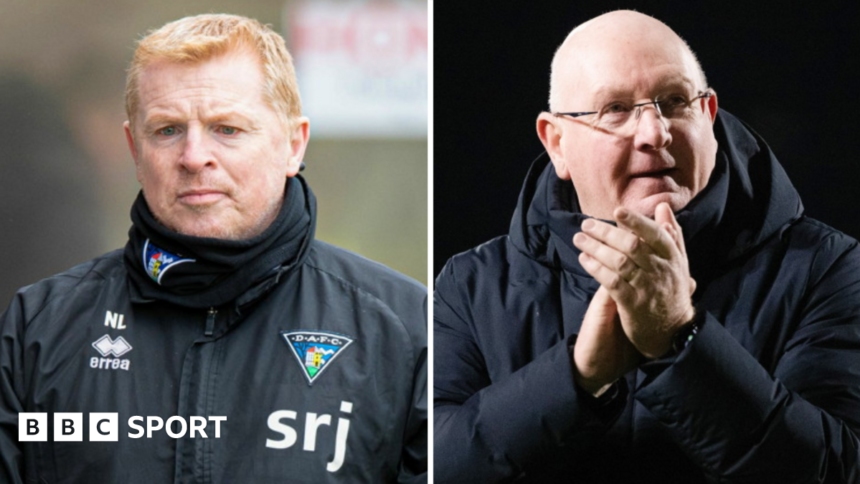
The Scottish Cup semi-final stage is a theatre of dreams, a place where legends are forged and narratives are rewritten. This Saturday at Hampden Park, a classic Championship rivalry between Dunfermline Athletic and Falkirk takes centre stage. Yet, swirling around the hallowed turf is a subplot of national significance, ignited by a bold proclamation from a man who knows the pressure of the Celtic Park dugout better than most. Neil Lennon, the Dunfermline boss, has declared that his opposite number, Falkirk’s John McGlynn, should be “in the conversation” for the Celtic job. It’s a statement that reframes this cup clash not just as a battle for a final berth, but as a live audition on the grandest stage.
More Than a Semi-Final: A Collision of Philosophies and Futures
When the teams walk out at 12:30 BST on Saturday, it will be the first managerial meeting between Neil Lennon and John McGlynn. Lennon, the Celtic icon with trophies galore and intense scrutiny etched into his career, now seeks to revive a historic club in Dunfermline. Across the technical area stands McGlynn, the architect of a Falkirk side that has been nothing short of dominant in Scotland’s second tier. Their clash is a fascinating study in contrasts. Lennon’s passion is volcanic, his experience top-tier. McGlynn’s strength lies in meticulous construction, player development, and a cohesive footballing identity—qualities that have now, remarkably, been linked with the reigning Scottish champions.
Lennon’s comments are far from casual cup-final week flattery. They are a pointed recognition of a body of work. “He’s done a brilliant job at Falkirk,” Lennon stated, highlighting the “really good style of football” and the impressive points tally. To suggest a manager from the Championship, albeit a supremely successful one, for the Celtic post is to challenge the often myopic focus on big names and recycled appointments. It shifts the Celtic manager conversation towards fundamentals: coaching, philosophy, and the ability to build a winning machine from the training ground up.
Deconstructing the McGlynn Methodology: Why He’s on the Radar
So, what is the John McGlynn methodology that has earned such unexpected endorsement? His work at Falkirk, and previously at Raith Rovers, reveals a consistent blueprint:
- Systematic Coaching: McGlynn’s teams are renowned for their clear, attacking identity. They play with structure, purpose, and a fluidity that belies their league status.
- Player Development: He has a proven track record of improving players, both young prospects and seasoned professionals, increasing their value and performance levels.
- Building Cohesive Units: Falkirk’s success is built on collective strength over individual stardom. This focus on team spirit and tactical discipline is a cornerstone of his management.
- Sustained Success: This is no flash-in-the-pan season. McGlynn has built a relentless winning mentality at Falkirk, crafting a side that expects to triumph every week.
In an era where Celtic’s model relies heavily on player trading and development, McGlynn’s skillset aligns intriguingly with the club’s operational needs. The question posed by Lennon’s comments is profound: should Celtic’s next manager be a glamorous import, or a proven domestic builder who understands the Scottish game’s unique contours and can maximise potential?
Hampden Showdown: Tactical Keys and Predictions
This Scottish Cup semi-final is now imbued with an extra layer of intrigue. All eyes will be on the two managers as much as the players. Falkirk, under McGlynn, will look to impose their possession-based, attacking style, likely through the creative hub of Aidan Nesbitt and the goal threat of top scorer John McGlynn’s men. Dunfermline, with Lennon’s cup pedigree and big-game experience, will aim to be organised, resilient, and explosive on the counter-attack, potentially through the pace of their wide players.
The key battles will be psychological as much as tactical. Can McGlynn’s well-drilled machine handle the Hampden occasion and the weight of newfound expectation? Can Lennon’s Pars, the underdogs, use their veteran manager’s know-how to disrupt Falkirk’s rhythm? With live coverage on BBC One Scotland, the BBC Sport website & iPlayer, and radio commentary on BBC Radio Scotland, the nation will get a close look at the managerial duel that has sparked a wider debate.
Prediction: This will be a tight, nervy affair. Falkirk’s consistency makes them slight favourites, but Lennon’s cup magic is a tangible factor. Expect a game settled by a single goal, or even extra time, with McGlynn’s Falkirk possessing the slight edge in rhythm and cohesion to potentially edge through.
A Conversation Started, A Legacy to Be Defined
Regardless of Saturday’s outcome at Hampden, Neil Lennon has successfully reshaped the narrative. By placing John McGlynn’s name in the Celtic discourse, he has performed a service to Scottish football. It champions the virtues of coaching excellence over mere profile. For McGlynn, this semi-final is no longer just about reaching a final; it is an unprecedented opportunity to showcase his philosophy under a glaring spotlight, against a manager of Celtic pedigree.
The Celtic manager succession will be decided by a complex matrix of factors—availability, budget, and boardroom vision. Yet, Lennon has thrown a compelling, homegrown option into the mix. A resounding Falkirk victory, achieved with the style and intelligence that defines their campaign, would only amplify the conversation. This Scottish Cup clash has transformed into a compelling parable about recognition, merit, and the pathways for Scottish managers. When the final whistle blows, one man’s journey to the final will be complete. But, thanks to a rival’s stunning endorsement, the other may find his career trajectory pointed towards a conversation he never expected to be in.
Source: Based on news from BBC Sport.