McLaren Grapples with ‘Porpoising Concern’ During Disastrous Las Vegas GP
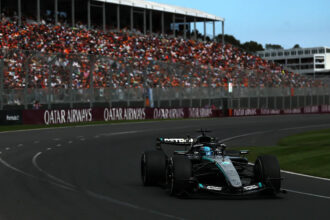
The glitz and glamour of the Las Vegas Grand Prix turned into a nightmare for McLaren, as both Lando Norris and Oscar Piastri were disqualified from the race after seemingly strong performances. Norris, who crossed the line in a well-deserved second place, and Piastri, who finished fourth, saw their results nullified due to excessive wear on their cars’ skid blocks. While the disqualification sent shockwaves through the paddock, McLaren has revealed the root cause of their woes: a resurfacing “porpoising concern” that plagued them throughout the race.
Skid Block Wear Leads to Post-Race Disqualification
The FIA’s technical regulations stipulate strict limits on skid block wear, a measure designed to prevent teams from running their cars too low to the ground, potentially gaining an aerodynamic advantage that could compromise safety. Post-race inspections revealed that both McLaren cars had exceeded these wear limits, leading to their immediate disqualification. This decision not only robbed Norris of a podium finish and Piastri of valuable points but also cast a shadow over what had initially appeared to be a promising weekend for the Woking-based team.
The official statement from the FIA was clear: both cars were found to be in violation of Article 3.5.9 e) of the FIA Formula One Technical Regulations. This article pertains to the maximum permitted wear of the plank assembly, also known as the skid block. Failure to comply with this regulation automatically results in disqualification.
- Lando Norris initially finished second.
- Oscar Piastri initially finished fourth.
- Both drivers were disqualified post-race.
- Excessive skid block wear was the cause.
McLaren’s Admission: Porpoising as a Culprit
In the aftermath of the disqualification, McLaren team principal Andrea Stella addressed the situation, revealing that the team had been aware of potential issues from the early stages of the race. According to Stella, the team noticed a resurgence of the aerodynamic phenomenon known as “porpoising”, where the car bounces violently up and down, impacting the ground repeatedly. This relentless bouncing contributed significantly to the accelerated wear on the skid blocks.
Stella stated, “We noticed porpoising from the early laps of the race. We did not believe we took excessive risk with the ride-height. We actually added a safety margin to what we thought would be the limit of wear in qualifying and the race. So it’s fair to say that the reality was different from what we were expecting.”
Porpoising, which had been a major concern for many teams in the early part of the 2022 season with the introduction of ground-effect aerodynamics, was seemingly under control for most of the year. Its unexpected return in Las Vegas raises questions about the unique characteristics of the new street circuit and its impact on car behavior.
The team’s data analysis is currently focused on understanding why the “safety margin” they implemented proved insufficient. They are investigating the specific track conditions, the impact of tire degradation on ride height, and the complex interplay between aerodynamic forces and suspension behavior. The challenge lies in accurately predicting these factors in advance, especially on a brand-new circuit where limited data is available.
Expert Analysis and Predictions
The McLaren disqualification serves as a stark reminder of the fine margins in Formula 1. Even with sophisticated simulations and data analysis, unexpected variables can throw meticulously planned strategies into disarray. The resurgence of porpoising highlights the sensitivity of these ground-effect cars to track surface irregularities and aerodynamic fluctuations.
Several factors could have contributed to the re-emergence of porpoising in Las Vegas:
- New Track Surface: The freshly laid asphalt may have possessed unique characteristics, such as unevenness or specific grip levels, that exacerbated porpoising.
- Low Downforce Configuration: The long straights in Las Vegas likely required teams to run lower downforce configurations, which can make cars more susceptible to porpoising.
- Tire Degradation: As tires degraded, the ride height of the cars would have changed, potentially triggering or amplifying porpoising.
- Track Temperature: The cooler night-time temperatures in Las Vegas could have affected tire performance and aerodynamic efficiency.
Looking ahead, McLaren will need to thoroughly analyze the data from Las Vegas to prevent a recurrence of this issue. This will involve:
- Refining Simulation Models: Improving the accuracy of their simulations to better predict car behavior on different track surfaces and in varying conditions.
- Optimizing Suspension Setup: Fine-tuning the suspension to mitigate the effects of porpoising without compromising performance.
- Developing Real-Time Monitoring Systems: Implementing systems to monitor skid block wear and ride height in real-time, allowing for adjustments during the race.
The incident underscores the importance of adaptability and quick thinking in Formula 1. Teams must be prepared to react to unexpected challenges and make adjustments on the fly. For McLaren, the Las Vegas Grand Prix was a painful lesson in the complexities of ground-effect aerodynamics and the unforgiving nature of motorsport regulations.
Looking to the future, it’s likely that McLaren will implement more conservative ride height strategies in the short term to ensure compliance with the regulations. However, they will also be working diligently behind the scenes to develop more sophisticated solutions that allow them to run their cars lower to the ground without risking disqualification. This could involve advancements in suspension technology, aerodynamic design, and real-time monitoring systems.
Conclusion: A Costly Lesson for McLaren
The disqualification of both McLaren cars from the Las Vegas Grand Prix was a devastating blow, wiping away valuable points and denting team morale. The unexpected resurgence of porpoising, coupled with the strict enforcement of skid block wear regulations, exposed a vulnerability in the team’s pre-race calculations. While Andrea Stella emphasized that McLaren did not intentionally take excessive risks, the reality is that their safety margin proved insufficient in the unique conditions of the Las Vegas street circuit. This incident serves as a costly but valuable lesson for McLaren. Expect the team to come back stronger, armed with a deeper understanding of their car and a renewed determination to avoid similar setbacks in the future. The focus will undoubtedly be on refining their simulation models, optimizing their suspension setup, and developing real-time monitoring systems to ensure that they remain within the boundaries of the regulations while maximizing performance.
Source: Based on news from BBC Sport.
Image: CC licensed via commons.wikimedia.org