McNair’s Despair: Northern Ireland’s World Cup Dream Crushed in Bergamo
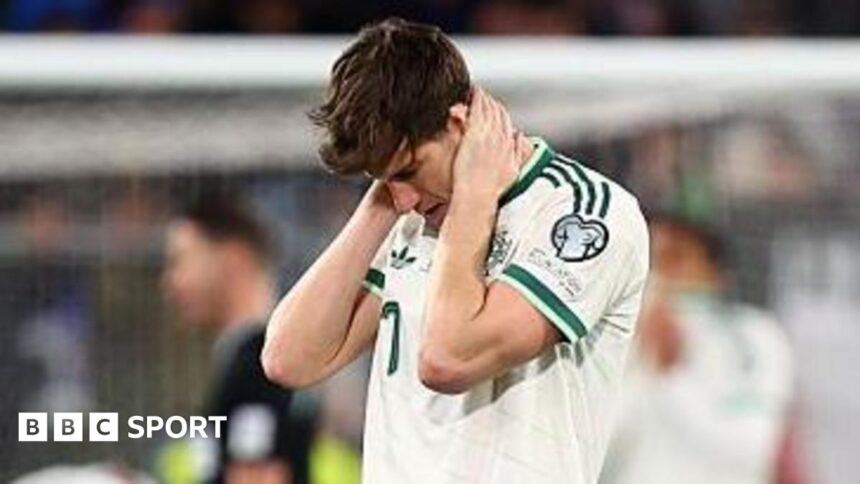
The final whistle in Bergamo’s Gewiss Stadium didn’t just signal the end of a match; it extinguished a nation’s dream. As the Italian players celebrated their 2-0 victory, a scene of profound dejection unfolded for Northern Ireland. At its heart was Paddy McNair, the Middlesbrough defender whose post-match assessment was laced with the bitter taste of a monumental opportunity lost. His words, “they were there for the taking,” will haunt the Green and White Army long after the dust settles on a World Cup qualifying campaign that promised so much more.
A Tactical Masterclass Unraveled in Forty-Five Minutes
For one glorious half, Michael O’Neill’s game plan was executed to perfection. Northern Ireland, written off by many before a ball was kicked, transformed into a disciplined, impenetrable unit. The famed Italian attacking trio of Lorenzo Insigne, Ciro Immobile, and Domenico Berardi were shackled, reduced to speculative efforts from distance. The midfield, marshalled by the indefatigable Steven Davis, choked the supply lines. Every Italian pass was harried, every run tracked. It was a tactical masterclass in defensive organization and collective spirit, a testament to O’Neill’s ability to prepare a team for the grandest of stages.
The frustration in the stands was palpable. The Azurri, so fluent in their Euro 2020 triumph, looked disjointed and bereft of ideas. Northern Ireland’s discipline was so complete that they nearly stole a priceless lead, with Conor Washington’s industry causing moments of panic. The interval arrived with the scoreline pristine, a moral victory in itself and a platform from which to launch a historic result. The belief, as McNair later confirmed, was growing.
The Cruel Pivot: Where the Dream Slipped Away
Football, however, is a game of fine margins and punishing transitions. The second half began with a subtle shift in momentum, a slight increase in Italian pressure that found a decisive crack. The opening goal, when it came in the 53rd minute, was a dagger to Northern Irish hearts. It wasn’t a moment of breathtaking, tiki-taka brilliance, but a reward for persistent pressure. A recycled corner found its way to Sandro Tonali on the edge of the box, and his driven, deflected shot wrong-footed Bailey Peacock-Farrell. The deflected effort was cruel, a symbol of the luck that had abandoned O’Neill’s men.
The strategic consequence was immediate and devastating. Forced to abandon their compact shape in search of an equalizer, Northern Ireland left spaces that a team of Italy’s caliber was born to exploit. The introduction of the powerful Moise Kean proved a masterstroke from Roberto Mancini. His 66th-minute goal, a close-range finish after more sustained pressure, was the killer blow. The missed opportunity McNair spoke of was now quantified on the scoreboard. The game plan, so effective for 45 minutes, was dismantled in a ruthless thirteen-minute spell.
- First Half Fortitude: Impeccable defensive shape, nullification of Italy’s stars, and growing belief.
- The Turning Point: Tonali’s deflected strike forcing Northern Ireland to fundamentally alter their approach.
- Strategic Collapse: Chasing the game opened fatal spaces, expertly exploited by Italy’s substitutes.
- Psychological Blow: The timing of the goals shattered Northern Ireland’s resilient mindset.
Analysis: The Legacy of a Near-Miss and a Crossroads for Italian Football
For Northern Ireland, this defeat represents more than just a failed qualification. It is the end of a golden generation’s last, best shot at the World Cup. The core of this squad—Jonny Evans, Steven Davis, Craig Cathcart—have been the architects of the nation’s finest modern era, reaching Euro 2016 and now consecutive play-offs. The question of succession is now urgent. O’Neill’s second tenure must pivot towards rebuilding, integrating the next wave of talent while honoring the legacy of those who came so agonizingly close.
For Italy, the relief was visible. This was a performance that exposed lingering fragilities despite the result. Their play-off final against Bosnia-Herzegovina will be approached with caution rather than arrogance. The Azzurri’s failure to automatically qualify, followed by a stuttering display here, confirms that the post-European Championship hangover is real. They remain favorites to advance to Qatar, but this night in Bergamo proved they are a team in transition, vulnerable to well-drilled, passionate opponents. The victory papers over cracks that Bosnia will be eager to pry open.
Looking Ahead: Futures Forged in the Fire of Defeat
The immediate future is clear-cut. Italy travels to Palermo for a high-stakes final where anything less than victory will be deemed a national catastrophe. The quality in their squad should see them through, but the pressure is immense. Bosnia, buoyed by their penalty-shootout win in Wales, will embody the same fearless underdog spirit Northern Ireland displayed for one half. It promises to be a tense, tactical battle.
For Northern Ireland, the path forward is one of introspection and renewal. The despair in McNair’s voice must fuel the next cycle. The emergence of young talents like Conor Bradley and Alfie McCalmont offers hope. The challenge is to harness the defensive grit that defined this era and blend it with a more progressive attacking identity. The World Cup dreams may be crushed for 2022, but the foundation of pride and resilience remains unbroken.
In the cold light of day, the statistics will show a 2-0 Italy win. But the story of this night in Bergamo is one of a brave, defiant performance that ultimately fell short. Paddy McNair’s despair is the despair of a nation that saw the promised land, only to have the door slammed shut. For Italy, the job is half-done; for Northern Ireland, an era ends not with a bang, but with the haunting whisper of what might have been. The World Cup caravan moves on, leaving behind a lesson in both the cruelty and the captivating drama of football’s highest-stakes theater.
Source: Based on news from BBC Sport.