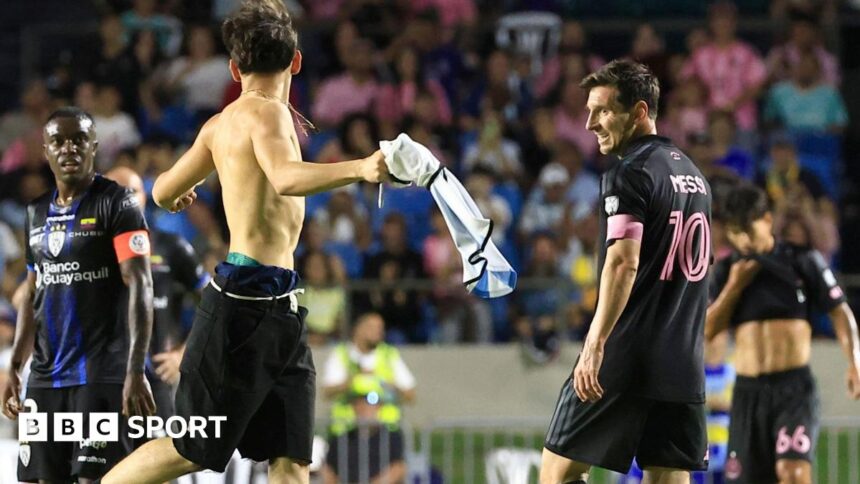
Messi Tackled by Pitch Invader: When Adoration Crosses the Line in Puerto Rico
The image of Lionel Messi, the world’s greatest footballer, being wrestled to the turf is a familiar one. For nearly two decades, defenders from Seville to Manchester have tried—and largely failed—to halt his progress with a well-timed challenge. But on a balmy night in Puerto Rico, it wasn’t a professional opponent who brought the Argentine icon down. It was a fan, armed not with malice, but with an Argentina shirt and an overwhelming, dangerous desire to touch a god. The startling pitch invasion during Inter Miami’s friendly against Independiente del Valle has sparked a urgent conversation about security, fan culture, and the immense, sometimes suffocating, weight of Messi’s global stardom.
The Incident: A Selfie Moment Turns Sour
Coming on as a halftime substitute in what was ultimately a 3-1 Inter Miami victory, Messi’s presence electrified the Estadio Juan Ramón Loubriel. As the clock ticked into the 88th minute, the match’s friendly nature seemed to invite a lax atmosphere. Several fans had already breached security to get close to their hero. In a moment that initially reflected modern fandom, Messi was calmly taking a selfie with one invader. The scene appeared under control, a brief, illicit celebrity encounter.
But then, chaos erupted. A second pitch invader, sprinting onto the field, targeted Messi. This individual didn’t want a photo; he wanted a piece of the legend. He wrapped his arms around Messi’s waist from behind, using his momentum to haul the 36-year-old playmaker to the ground. In an instant, the benign scene turned alarming. Security personnel swarmed, resulting in a tangle of bodies—Messi, the fan, and a security guard all hit the turf in a clumsy, dangerous heap. The game was halted, the crowd’s cheers turned to gasps, and Messi was left visibly annoyed, brushing himself off as the intruder was forcibly removed.
Expert Analysis: Beyond the Tackle – A Systemic Security Failure
While the immediate reaction focuses on the fan’s reckless actions, sports security experts point to this incident as a predictable failure. Pre-season friendlies, especially those played in non-MLS venues during global tours, often operate under a different security protocol than high-stakes league matches. The atmosphere is marketed as more accessible, but the target—Lionel Messi—remains the most recognizable athlete on the planet.
“This wasn’t a spontaneous, one-off event,” notes a veteran stadium security consultant. “The fact that multiple fans accessed the pitch prior to the tackle indicates a clear breakdown in perimeter control and personnel readiness. When Messi is involved, the threat assessment must be at its highest level, regardless of the match’s competitive significance. The pitch invasion protocol clearly failed here.”
The incident also highlights the unique challenge Messi presents. His every move is a magnet. The initial invader getting a selfie may have inadvertently signaled to others that the field was open for business. This creates a copycat effect, where the reward of proximity to Messi vastly outweighs the perceived risk of ejection.
- Player Vulnerability: Unlike during active play, players in slowed or stopped game situations are mentally and physically unprepared for a full-force collision from an unknown assailant.
- Liability Nightmare: A serious injury to Messi from such an incident would have monumental financial and sporting repercussions for Inter Miami, MLS, and the event organizers.
- Normalization of Intrusion: Each successful breach makes the next one more likely, eroding the sacred boundary between spectator and performer.
The Global Messi Phenomenon: When Fandom Becomes Physical Possession
To understand the “why,” one must understand the Messi effect. He transcends sport. For millions, he is not just a footballer; he is a cultural touchstone, a national symbol for Argentina, and for many, a childhood hero made flesh. This generates a level of fervor that goes beyond cheering. It manifests as a desperate, physical need for connection—to touch the jersey, to get the photo, to prove the encounter was real.
The invader carrying an Argentina shirt is a critical detail. It symbolizes a fan claiming their hero, the one who delivered the World Cup, for themselves. This isn’t a hooligan seeking confrontation; it’s an overzealous admirer whose actions cross from adoration into assault. The psychology is complex, blending love, entitlement, and a complete disregard for the player’s personal safety and autonomy. In the fan’s mind, the tackle might have been an embrace. In reality, it was a dangerous violation.
This event is a stark reminder that Messi’s move to Inter Miami and his subsequent tours have placed him in markets where his presence is a once-in-a-lifetime event. The frenzy in Puerto Rico was a microcosm of the mania that follows him everywhere, demanding unprecedented security planning tailored to a level of global stardom North American sports are still learning to manage.
Predictions and Repercussions: Tighter Security and a Lasting Impact
The fallout from this incident will be immediate and far-reaching. We can expect the following developments:
1. A Security Overhaul for MLS and Friendlies: MLS and Inter Miami will undoubtedly conduct a rigorous review. Expect increased stadium security personnel for all remaining pre-season matches and a tightening of access control around the pitch, especially in non-MLS venues. Protocols for handling invaders will be rehearsed with a new emphasis on speed and isolation of the player.
2. A Change in Messi’s On-Field Demeanor: Messi is famously accommodating to fans, but this physical violation may force a shift. We may see him become more reticent to engage with pitch invaders, even those with phones raised. His personal security detail will likely insist on a more rigid, arms-length policy during games to prevent any repeat.
3. Legal Action as a Deterrent: While charges against the fan are unclear, there is a strong possibility Inter Miami and event organizers will pursue maximum legal penalties. Making a public example is a powerful tool to deter future invasions. The era of the pitch invader expecting a slap on the wrist is over when a billion-dollar asset is put at risk.
4. A Wake-Up Call for the Entire Sport: This incident is not unique to Messi, though he is the highest-profile target. It serves as a warning to all clubs and leagues about the evolving nature of fan interaction in the social media age, where the currency of a viral selfie can motivate dangerous behavior.
Conclusion: Protecting the Magic While Preserving Safety
The pitch invader’s tackle on Lionel Messi is a jarring metaphor for the double-edged sword of unimaginable fame. The very adoration that fuels the sport can, in an unchecked moment, threaten its brightest star. The magic of football lies in the connection between player and fan, but that connection must exist within boundaries that guarantee safety. The incident in Puerto Rico was a system failure, a cultural moment gone wrong, and a serious warning. Moving forward, the challenge for Inter Miami, MLS, and the global football community is clear: to engineer environments where appreciation can be expressed rapturously from the stands, but never, ever, with a flying tackle on the hallowed turf. The beautiful game must protect its artists, lest the very love it inspires becomes its greatest threat.
Source: Based on news from BBC Sport.