Mexican Open Defies Cartel Turmoil: Tennis and Tension Collide in Acapulco
The sun-drenched courts of Acapulco are set for a serve, but a shadow looms over the Mexican Open. As the world’s top tennis players prepare for the ATP 500 event, a wave of violence stemming from the death of the country’s most notorious drug lord has ignited security fears and a stark travel warning from the United States. Tournament organizers, however, are holding firm: the show will go on. This decision sets the stage for a high-stakes tournament where athletic prowess meets geopolitical tension, testing the resilience of sport in the face of real-world danger.
A Nation on Edge: The “El Mencho” Fallout and Acapulco’s Reality
The seismic event rocking Mexico occurred just days before the first ball was to be struck. Nemesio Oseguera Cervantes, the mythic leader of the Jalisco New Generation Cartel (CJNG) known as “El Mencho,” died in custody following a violent confrontation with Mexican special forces. His capture and subsequent death represent a monumental shift in Mexico’s cartel landscape, potentially triggering a brutal power vacuum. The CJNG is known for its extreme violence and significant presence in the Pacific region, which includes Acapulco.
Acapulco itself resides in the state of Guerrero, one of five Mexican states where the U.S. Embassy issued a stark “shelter in place” advisory for its citizens, citing “violence and security incidents.” This is not a generic travel warning; it is a direct response to the immediate, volatile aftermath of El Mencho’s demise. For a glamorous international sporting event built on tourism and global visibility, this context is undeniably fraught.
Tournament director Álvaro Falla has been unequivocal in his response to cancellation rumors. “The tournament has not been canceled,” he stated firmly. “We are working hand-in-hand with authorities at all three levels of government to guarantee the safety of everyone involved.” This commitment underscores a significant financial and reputational investment, but also a gamble on the ability of the state to insulate a high-profile event from the chaos beyond its gates.
Security in the Spotlight: The Invisible Match Behind the Scenes
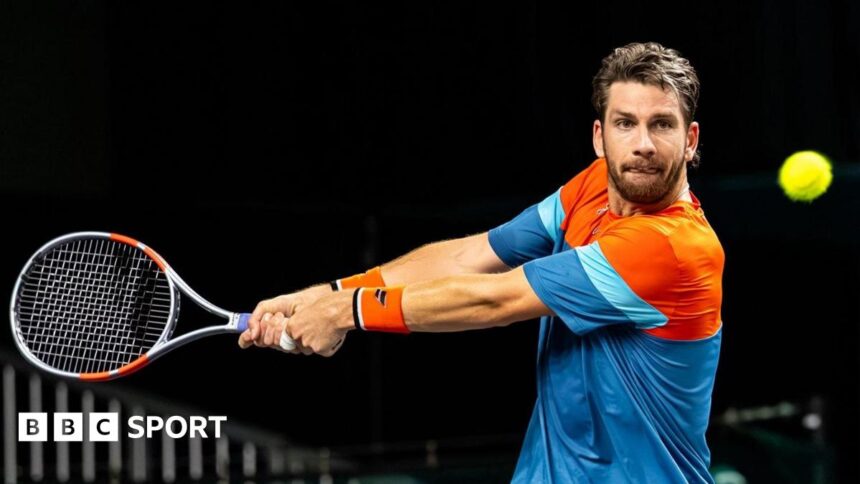
While fans will watch Cameron Norrie (ranked 26th in the world) and other stars compete for titles, the most critical contest will be unseen. The success of the Mexican Open now hinges entirely on a massive, multi-layered security operation. Expect an unprecedented deployment, likely including:
- Heavily increased federal police and military presence around the Arena GNP Seguros tournament venue and official hotels.
- Strict, fortified transportation corridors for players and staff moving between zones.
- Advanced surveillance and intelligence monitoring to preempt any potential threats.
- A stark, visible divide between the secured “bubble” of the tournament and the city beyond.
This creates a surreal atmosphere. Players, accustomed to focusing solely on their craft, may find themselves navigating a fortress-like environment. The psychological impact cannot be ignored. Will players feel safe enough to deliver their best performance? For lower-ranked athletes traveling without extensive entourages, the concerns are magnified. The tournament’s legacy may well be defined not by a championship point, but by its ability to execute a flawless security strategy under extreme pressure.
Expert Analysis: Sport, Sovereignty, and Signal-Sending
From a geopolitical and sporting perspective, the decision to proceed is loaded with symbolism. “Canceling the event would have been read as a victory for chaos and a sign of state incapacity,” notes Dr. Elena Ruiz, a professor of Latin American studies specializing in security. “By proceeding, the Mexican government and tournament organizers are attempting to project normalcy, control, and a commitment to international engagement. It’s a high-risk signal of resilience.”
For the ATP, the calculus involves duty of care, contractual obligations, and the precedent it sets for tournaments in complex regions. The tour has operated in politically tense environments before, but the immediacy of this cartel-related violence is exceptional. Their silent endorsement by allowing play to continue places significant trust in local assurances.
The situation also highlights the enduring, complicated relationship between global sport and local reality. Acapulco has worked for years to rebuild its image as a tourist paradise, distancing itself from its reputation for violence. The Mexican Open has been a cornerstone of that rebirth. Halting it would be a devastating economic and symbolic blow. Thus, the tournament becomes a battleground of perception, where maintaining schedule is equated with maintaining sovereignty and stability.
Predictions and Implications: What Comes After the Final Point?
The immediate future hinges on the next seven days. A safe, incident-free tournament will be hailed as a triumph of planning and a testament to sport’s unifying power. We can expect:
- Cautious, subdued celebrations from players and fans, with an unspoken awareness of the context.
- Intense media scrutiny on any minor security lapse or player comment regarding safety.
- A potential dip in walk-up crowd attendance from local residents who may choose caution.
However, the long-term implications are more profound. If successful, the 2024 Mexican Open may be remembered as one of the most resilient editions in history. It could set a controversial blueprint for operating major events in unstable conditions. If security fails, the repercussions would be catastrophic, affecting future ATP calendars and Mexico’s ability to host international events for a generation.
For players like Cameron Norrie, navigating this goes beyond the draw. A strong performance under these circumstances would carry a different weight, speaking to mental fortitude as much as technical skill. The champion’s name will forever be linked to this pivotal moment in Mexico’s ongoing struggle.
Conclusion: More Than a Game
The 2024 Mexican Open has been irrevocably transformed. It is no longer just a tennis tournament; it is a statement, a gamble, and a litmus test. The death of El Mencho has created a national moment of peril, and Acapulco finds itself hosting a world-class sporting event in the eye of the storm. Organizers are betting everything on a security cordon and an unwavering front of normalcy.
As the players walk onto the court, they carry the hopes of a tournament desperate to prove its viability. The fans in attendance, and those watching globally, will witness a competition where the stakes extend far beyond rankings and prize money. This is about the tense, often uncomfortable, intersection of sport and society, where a backhand winner echoes against a backdrop of national turmoil. The Mexican Open will proceed, but its ultimate victory will be measured not in aces, but in a safe and peaceful conclusion, allowing the final applause to ring out without an undertone of fear.
Source: Based on news from BBC Sport.