Rumors Swirled in Ann Arbor Long Before Sherrone Moore’s Shocking Firing
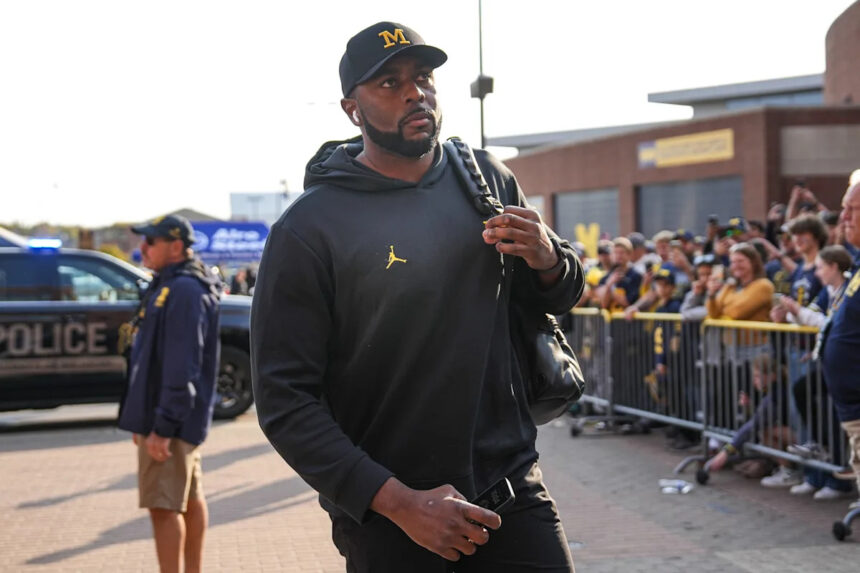
The news broke on a quiet Wednesday afternoon in mid-December, a seismic shockwave during the serene study period of finals week. For many University of Michigan students, the ESPN alert about head football coach Sherrone Moore’s firing was a bolt from the blue. But for others, the official confirmation merely gave a name to the whispers that had been snaking through campus for weeks. The story wasn’t just about a coaching change; it was about the unsettling space where campus rumor meets harsh reality.
A Study Break Shattered: The Moment the News Went Public
Aiden Wolfson, a 19-year-old student, was deep in the trenches of finals preparation when he took a brief, distraction-seeking scroll through his Instagram feed. What he saw stopped him cold. “I was taking a study break from finals when I saw the breaking news,” Wolfson recounted. The notification detailed Moore’s firing for cause, his subsequent arrest, and his booking into the Washtenaw County Jail on allegations of an “inappropriate relationship” with a university staffer.
Wolfson’s initial reaction was one of pure football logic. “Initially I thought, wow, we’re too late to fire our coach. If we’re going to fire him for performance, we should have done this a couple of weeks ago,” he said. The Wolverines’ season had ended with disappointment, but the timing felt bizarrely off-cycle in the high-stakes calendar of college football. It was only upon digging deeper that the grim picture came into focus. “And then I read what he actually did, and it all made sense,” Wolfson stated, echoing the dawning realization for countless students and fans.
From Sideline Whispers to Front-Page Headlines
What Wolfson and many others experienced was the final, public collapse of a dam holding back a reservoir of campus gossip. In the weeks leading up to December 10th, a palpable unease had settled around the football program. Students in certain circles, particularly those with ties to athletic department adjacent jobs or Greek life, reported hearing vague but persistent murmurs.
The rumors about Sherrone Moore were rarely specific, but they pointed toward serious off-field trouble. They were the kind of stories passed in hushed tones at libraries like the Shapiro Undergraduate Library or over late-night meals at South University Avenue eateries:
- Talk of unexpected administrative investigations that seemed to extend beyond typical season reviews.
- Unusual absences or a strained demeanor from Moore in his limited public appearances post-season.
- A sudden wall of silence from normally chatty program insiders, a vacuum that campus gossip eagerly filled.
This environment created a two-tiered information system: the official, quiet stance from the university, and the vibrant, speculative underworld of student discourse. The university’s terse statement citing an “inappropriate relationship” and the stark legal outcome—Moore arrested and held in Washtenaw County jail awaiting arraignment—validated the gravest of those whispers, transforming them from salacious rumor into a sobering scandal.
Expert Analysis: The Anatomy of a Modern Campus Scandal
“This situation is a textbook case of how institutional crises unfold in the digital age,” explains Dr. Lena Torres, a sociologist who studies sports culture. “The official channels move slowly, bound by legalities and HR protocols. But the student body operates on a hyper-connected rumor network—GroupMe, Snapchat, Instagram DMs. The gap between what ‘everyone knows’ and what is officially confirmed can be days or weeks, creating immense distrust and anxiety.”
The firing for cause is a critical legal distinction. It means the University of Michigan believes it had grounds to terminate Moore’s lucrative contract without the multi-million dollar buyout typically owed to a fired coach. This action, combined with the simultaneous arrest, signals the administration possessed compelling evidence of a serious breach of conduct policies, likely presented to them by a formal investigation.
Legal experts watching the case note that the speed from firing to arrest is unusual. “It suggests law enforcement and the university were likely working in tandem once the evidence reached a certain threshold,” says attorney Michael Chen. “An ‘inappropriate relationship’ in a workplace, especially one with a power imbalance like a head coach and staffer, can cross into criminal territory depending on the nature and circumstances. The jail booking isn’t a minor detail; it’s the clearest indicator this goes far beyond a simple HR violation.”
Predictions: Fallout for the Michigan Football Program
The immediate and long-term repercussions for one of college football’s most storied programs will be severe and multifaceted. The damage extends far beyond the loss of a head coach.
Recruiting is now in a state of emergency. Committed players for the upcoming cycles are already reconsidering their options, and rival coaches are aggressively using the scandal as a recruiting tool. The promise of stability under Moore has evaporated.
The transfer portal will beckon current players. In an era where athletes can change schools with ease, key Wolverines may seek an exit from a program now associated with national scandal and uncertainty. Holding onto the core of the roster will be the first and most difficult task for the interim leadership.
National perception has taken a massive hit. After years of building a brand under Jim Harbaugh focused on toughness and integrity, the program is now headline news for the worst reasons. This stain will linger for years and will be a hurdle in hiring a top-tier, clean-slate successor.
The search for a new coach will be unlike any other. The university must find a leader who is not only a tactical football mind but also a unequivocal culture-resetter—a figure of unquestioned character who can navigate the program through the inevitable NCAA scrutiny and public relations nightmare.
Conclusion: The High Cost of Silence
The story of Sherrone Moore’s fall is more than a sports scandal. It is a case study in institutional transparency, the power of campus networks, and the devastating speed at which a legacy can crumble. For students like Aiden Wolfson, the episode is a jarring lesson in how the hidden realities of a massive, beloved institution can suddenly erupt into public view.
The University of Michigan now faces the monumental task of rebuilding trust—with its students, its fanbase, its athletes, and the broader college sports world. The rumors have been confirmed, and the price of that truth is astronomically high. The path forward requires more than just a new coach; it demands a rigorous examination of the culture that allowed whispers to become a reality long before the official announcement ever hit the news feeds. In Ann Arbor, the work of rebuilding a tarnished identity has just begun, and it will be a harder fight than any on the football field.
Source: Based on news from Yahoo Sports.