Mikaela Shiffrin Reclaims the Throne: A Slalom Masterclass for the Ages at Cortina 2026
The roar that erupted from the finish corral in Cortina d’Ampezzo was more than applause; it was a collective exhale, a thunderous affirmation of a champion’s resilience. After a journey marked by unprecedented triumph and profound adversity, Mikaela Shiffrin is back on top of the Olympic mountain. With a blistering, technically sublime performance in the women’s slalom on Wednesday, Shiffrin didn’t just win a gold medal—she authored a defining chapter in her legendary career, silencing doubts and reasserting her dominion over the discipline she owns.
The Weight of the Wait: A Champion’s Crucible
The path to this podium was unlike any other for Shiffrin. Coming into the 2026 Winter Games, the narrative was complex. She is the greatest slalom skier of all time, yet the ghost of previous Olympic campaigns lingered. In Cortina, the pressure was a tangible force, a mixture of global expectation and personal pursuit. As she stood in the start gate for her second run, holding a narrow lead, the moment was immense. It was then that her coach, Mike Day, cut through the noise with a simple, powerful directive: “Rip this thing.” The instruction wasn’t about technique—it was a call to freedom, to unshackle from the weight of history and simply ski like Mikaela Shiffrin.
And rip it she did. What followed was not merely a fast run, but a clinic in alpine precision. Shiffrin attacked the Rumerlo slope with a ferocity that blurred the gates into a single, fluid ribbon of motion. Her trademark early, clean edge sets carved arcs of certainty into the Italian ice. Where others skidded and fought for survival, Shiffrin danced, her movements a harmonious blend of power and poetry. The interval board flashed green, and the victory was sealed—a cathartic release for the skier and her legions of fans worldwide.
Deconstructing a Masterpiece: The Anatomy of a Winning Run
To understand the brilliance of Shiffrin’s performance, one must look beyond the time. This gold medal was forged in the minutiae of her craft. Expert analysis reveals the pillars of her slalom dominance:
- Precision Timing: Shiffrin’s ability to initiate her turns at the exact millisecond the gate comes into her periphery is unparalleled. This creates a direct line down the fall line, saving precious hundredths on every turn.
- Quiet Upper Body: While her legs pump like pistons, her torso remains remarkably still and facing downhill. This stability provides a stable platform for generating immense edge pressure and allows for rapid, independent leg movement.
- Mental Fortitude: After the first run, the race is a mental game. Shiffrin’s capacity to compartmentalize pressure, to focus solely on the next gate amidst the Olympic maelstrom, is a skill as critical as her physical talent.
- Tactical Aggression: Heeding her coach’s call, Shiffrin skied the second run not to protect her lead, but to extend it. This mindset separates champions from contenders.
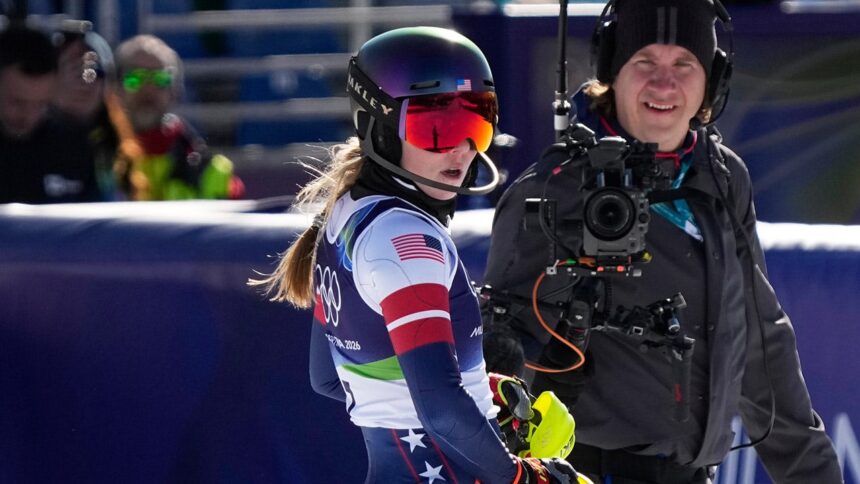
As captured in the iconic AP photo by Andy Wong at the finish area, the emotion was raw and real. It was the look of a burden lifted, of a mission accomplished. This victory stands as a testament to her technical evolution and psychological recovery, proving that her deepest reserves of greatness were still untapped.
The Legacy Secured and the Future Unwritten
With this victory, Mikaela Shiffrin’s legacy transforms from statistical supremacy to a richer tale of human resilience. She solidifies her status not just as an Olympic champion, but as the most successful alpine skier in World Cup history who conquered the pinnacle event once more on the sport’s biggest stage. This gold medal in Cortina acts as a perfect narrative bridge between the prodigious talent of her youth and the enduring, battle-tested champion she is today.
So, what comes next for the queen of slalom? Predictions point toward an evolving legacy:
- Continued World Cup Dominance: Expect Shiffrin to return to the circuit with renewed vigor, potentially extending her already untouchable records in slalom and overall titles.
- Event Expansion: This victory may free her to further explore and compete in speed events, seeking new challenges as she has done throughout her career.
- The 2030 Horizon: While far off, Shiffrin’s passion for skiing remains undimmed. The question of competing in a fifth Olympics is no longer a fantasy but a plausible next goal, offering the potential for a glorious farewell tour.
Her influence is also generational. Young skiers worldwide will study her Cortina runs for decades, just as previous generations studied Tomba or Stenmark. She has redefined the technical standard of the sport.
Conclusion: More Than Gold, A Testament to the Journey
Mikaela Shiffrin’s gold medal performance in the Cortina slalom transcends the metal hanging around her neck. It is a story of triumphant return, of answering the bell when it mattered most. In a sport measured in hundredths of a second, she found a second that felt like an eternity—the moment between her coach’s challenge and her explosive response. She didn’t just ski for gold; she skied for every setback, every moment of doubt, and every hour of grueling work that brought her back to this peak.
In the crisp Italian air, Mikaela Shiffrin didn’t just “rip this thing.” She ripped up the script of expectation and wrote her own. She reminded the world that class is permanent, that resilience is the ultimate currency of a champion, and that the greatest victories often come after the hardest falls. The crown, unequivocally, is hers once again.
Source: Based on news from Fox Sports.