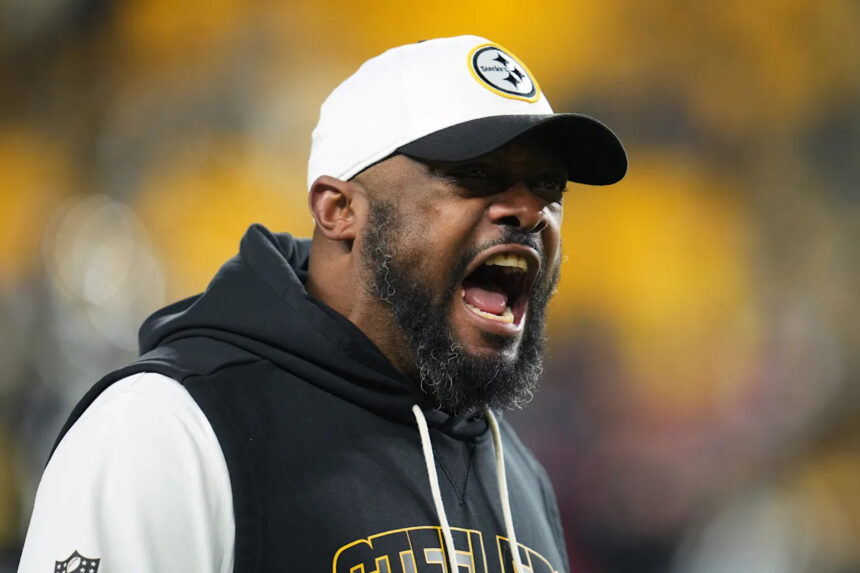
An Era of Unwavering Standard Ends: Mike Tomlin Steps Down After 19 Seasons with Steelers
The black and gold curtain has fallen on one of the most remarkable coaching tenures in modern sports history. Mike Tomlin, the stoic, resolute, and perpetually successful leader of the Pittsburgh Steelers, has stepped down as head coach, the team announced Tuesday. At just 51 years old, Tomlin leaves a legacy defined not by a sudden collapse, but by the weight of an unprecedented standard—17 seasons of non-losing football—that ultimately made the recent plateau feel untenable for both the franchise and the coach himself. His departure marks the end of an era that began with a Super Bowl trophy and sustained excellence but concluded with a growing sense of playoff stagnation.
The Tomlin Standard: A Legacy Forged in Consistency
When a 34-year-old Mike Tomlin was hired in 2007 to replace the legendary Bill Cowher, he was a relative unknown outside of defensive coaching circles. He inherited a veteran-laden team with a championship window and did the unthinkable: he not only kept it open, he expanded it. Tomlin’s coaching philosophy was built on a simple, unshakable mantra: “The Standard is the Standard.” It was a call to relentless effort and execution, regardless of circumstance. The results were immediate and historic.
His resume is a monument to sustained competitiveness:
- Super Bowl XLIII Champion (2008 season)
- Super Bowl XLV Appearance (2010 season)
- 13 Playoff Appearances in 19 Seasons
- 8 AFC North Division Titles
- A record of never having a losing season (his worst record was 8-8)
- Third-most wins by a coach with a single franchise in NFL history
As Steelers president Art Rooney II stated, this record of consistency “will likely never be duplicated.” In an age of parity and rapid coaching turnover, Tomlin’s Steelers were a fixed point on the NFL compass, always relevant, always tough, always in the hunt. He managed the transition from the Ben Roethlisberger era with grace, avoiding the total rebuild many predicted. Yet, that very strength—avoiding the valley of a losing season—became a central point of critique in recent years.
The “Tomlin Crossroads”: Playoff Success vs. Regular Season Floor
The latter half of Tomlin’s tenure created a complex and often debated narrative. While the regular-season floor remained remarkably high, the playoff ceiling seemed to lower. Following the loss in Super Bowl XLV, a pattern emerged: solid regular-season work, often overcoming significant adversity, followed by a swift and frequently one-sided playoff exit.
The statistics are stark. Tomlin’s last playoff victory came in the 2016 Divisional Round. Since that win, the Steelers suffered five postseason losses, each by double digits. The most recent, a 31-17 defeat to the Buffalo Bills in this year’s Wild Card round, encapsulated the frustrations. The team looked unprepared and overmatched, a recurring theme that stood in jarring contrast to their weekly regular-season resilience. This created what analysts began to call the “Tomlin Crossroads”—the tension between the incredible achievement of never sinking below .500 and the growing distance from genuine championship contention.
For a franchise with the Steelers’ history, where the only standard is a Lombardi Trophy, years of playoff irrelevance became a heavy burden. The Steelers culture, which Tomlin so fiercely protected, began to be questioned from within and without. Did “The Standard” now merely mean avoiding a losing record, rather than competing for championships?
Why Now? Decoding the Timing of a Stunning Departure
Tomlin’s departure is stunning not because the speculation didn’t exist, but because he was entering the final year of his contract—a scenario that typically leads to an extension or a lame-duck season. His decision to step away suggests a mutual understanding that a change was needed for all parties.
Several key factors likely converged:
- Organizational Stagnation: The cycle of late-season scrambles to reach the playoffs, followed by immediate exits, had grown stale. A new voice and vision may be seen as necessary to jumpstart a true title pursuit.
- Quarterback Uncertainty: With Kenny Pickett’s development stalled and the position in flux, the prospect of leading another year of transition without a long-term contract may have held little appeal for Tomlin.
- The Weight of the Standard: The immense pressure to simply avoid that first losing season may have become an exhausting burden, overshadowing the joy of coaching.
- A Clean Break: For the Rooney family, allowing Tomlin to depart with his legacy fully intact, rather than risking a fractious contract year, honors his service and provides a clear runway for a new era.
This is not a firing. This is the conclusion of a marathon, with both the runner and the race organizers agreeing the course has been fully and magnificently run.
The Steelers’ Future and the Tomlin Shadow
The search for the next Steelers head coach will be one of the most scrutinized in recent NFL memory. The successor must not only fill the shoes of a future Hall of Famer but also operate under the immense shadow of Tomlin’s consistency. The Steelers’ next coach will face immediate and immense pressure to both maintain the culture and shatter the playoff glass ceiling.
Internally, defensive coordinator Teryl Austin or senior defensive assistant Brian Flores could be candidates to provide continuity. The external market will be rich with offensive-minded candidates like Detroit Lions coordinator Ben Johnson or Houston Texans coordinator Bobby Slowik, who could be tasked with unlocking the offense and developing a quarterback. Whomever they choose, the Rooneys will be seeking a leader who can recapture the championship urgency of Tomlin’s early years.
As for Mike Tomlin, his coaching career is far from over. He will instantly become the most coveted free-agent coach in perhaps NFL history. His leadership, player management skills, and proven ability to win are undeniable. A team with an established quarterback and a “win-now” roster—think the Los Angeles Chargers, Philadelphia Eagles, or Dallas Cowboys should a vacancy arise—would see Tomlin as the final piece to a championship puzzle. He leaves Pittsburgh not with a diminished reputation, but as a refreshed and highly motivated winner ready for a new challenge.
Conclusion: A Complicated, Unrivaled Legacy
Mike Tomlin’s legacy with the Pittsburgh Steelers is one of profound, complicated greatness. He was the steady hand for nearly two decades, a leader who commanded universal respect in the locker room and navigated the NFL’s evolving landscape without ever compromising his team’s toughness. He provided stability that is priceless in professional sports.
Yet, the final chapters were marked by a frustrating dichotomy: unparalleled regular-season consistency paired with postseason disappointment. In stepping down, Tomlin leaves on his own terms, his record unblemished by a losing season, a feat that may stand as long as the NFL itself. The challenge for Pittsburgh is monumental—to find a coach who can preserve the foundational standard Tomlin set while rediscovering the playoff killer instinct that defined his brilliant beginning. The Mike Tomlin era is over. Its echo, however, will resonate through the halls of Acrisure Stadium and the entire NFL for generations to come.
Source: Based on news from Yahoo Sports.