Mine Was For Social Change, This Is Not: Billie Jean King Draws Historic Line on Modern ‘Battle of the Sexes’
The term “Battle of the Sexes” reverberates through sports history with the weight of a cultural earthquake. Today, it’s being revived for a high-profile exhibition between world-class talents Aryna Sabalenka and Nick Kyrgios. But for the woman who defined the phrase, the comparison ends at the title. In a powerful clarification, tennis legend and equality pioneer Billie Jean King has drawn a definitive line, stating her iconic 1973 match against Bobby Riggs was for social change, while the modern iteration is simply sport. This distinction isn’t just historical nitpicking; it’s a crucial lesson in context, purpose, and the enduring fight for equality.
The Unrepeatable Context: Houston, 1973, Was More Than a Match
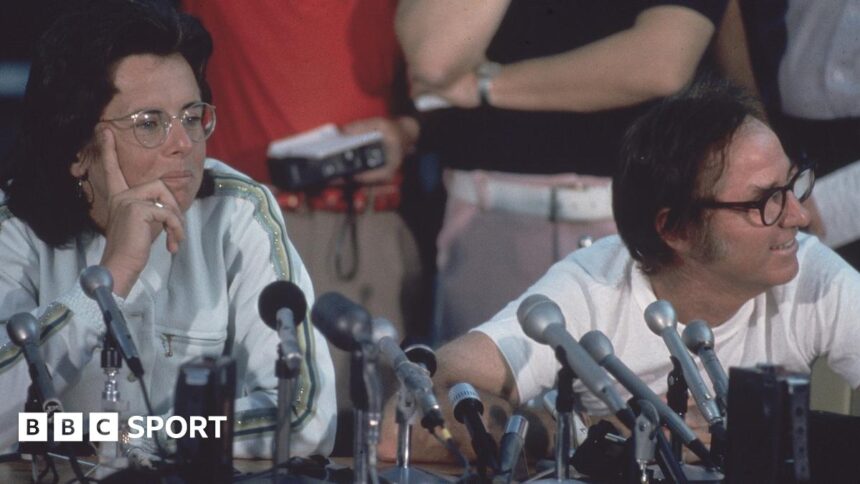
To understand King’s stance, one must first grasp the monumental pressure and symbolism of the original event. In 1973, King wasn’t just playing an opponent; she was confronting the entrenched misogyny of an era. Bobby Riggs, a 55-year-old former champion, was a self-proclaimed “male chauvinist pig” who loudly proclaimed the inferiority of women’s tennis and, by ugly extension, women’s capabilities. The match was framed not as exhibition, but as a verdict on gender.
The stakes were societal. King, a leading force in founding the women’s pro tour (the WTA), knew a loss would be weaponized to undermine the legitimacy and value of women’s sports. An estimated 90 million viewers worldwide tuned in, many understanding the subtext. Her straight-sets victory, 6-4, 6-3, 6-3, was a catalytic moment. It was a public, undeniable rebuttal to sexism, a massive boost for the women’s movement, and a watershed for the financial and professional respect afforded to female athletes.
- Purpose: To prove the competence, athleticism, and worth of female athletes in the face of widespread public doubt.
- Stakes: The future credibility and commercial viability of the nascent women’s professional tennis tour.
- Impact: A landmark event in sports and feminist history, accelerating the push for prize money equality and respect.
Exhibition vs. Revolution: Sabalenka and Kyrgios in a Different Arena
Contrast this with the upcoming match between Aryna Sabalenka, a multiple Grand Slam champion and current powerhouse, and Nick Kyrgios, a mercurial but brilliant talent. This “Battle of the Sexes” is born of a very different time. The premise is entertainment and spectacle, not social justice. Both are elite, in-prime athletes whose skills will be on display for fans’ enjoyment. The competitive format and potential for thrilling tennis are the primary selling points.
Critically, the outcome carries no burden for an entire gender. Sabalenka’s legacy as a champion is secure regardless of result. Kyrgios’s comments, while often controversial, do not carry the organized, ideological chauvinism of Riggs’s campaign. The match exists in a world King helped create—one where women’s tennis is a respected, major professional sport. As King herself implied, this is a sporting contest, not a social referendum. The very fact it can be viewed as “just an exhibition” is a testament to the success of her real battle.
King’s Lasting Legacy: The Fight Beyond the Court
Billie Jean King’s clarification is a masterclass in preserving historical truth. It protects the profound significance of her actions from being diluted by commercial or promotional comparisons. Her life’s work extends far beyond one night in Houston. She co-founded the WTA and the Women’s Sports Foundation, fought for and won landmark prize money equality at the US Open, and has been a lifelong advocate for LGBTQ+ rights.
For King, the Battle of the Sexes was a single, highly publicized battle in a long war for equity. By distinguishing it, she reminds us that the core struggle was about opportunity, respect, and pay—not merely winning a mixed-gender match. The “social change” she references is the systemic shift she helped engineer, which allows a Sabalenka to be a multi-millionaire, globally recognized athlete today. The modern match is a product of that change, not a driver of it.
Prediction: Spectacle Will Shine, History Will Stand Apart
So, what can we expect from Sabalenka vs. Kyrgios? Expect fireworks. Kyrgios’s unparalleled serving and touch shots versus Sabalenka’s relentless, crushing power from the baseline will make for captivating tennis. The competitive format—likely featuring unique rules, mixed sets, or a focus on showmanship—will prioritize fan engagement. It will be a viral highlight reel, a fun discussion topic, and a successful commercial event.
But it will not, and cannot, be 1973. The world has changed. The profound cultural tension that made King-Riggs a nerve-wracking, era-defining spectacle is absent. We predict the match will be celebrated for its athleticism and entertainment value, while King’s purposeful legacy remains untouched and in a category of its own. This is not a step back, but a sign of progress: the fight has moved from the spectacle of the court to the ongoing boardroom battles for equal pay, coverage, and investment in women’s sports globally.
Conclusion: Honoring the Past by Understanding Its Weight
“Mine was for social change, this is not.” In that simple, powerful sentence, Billie Jean King does more than correct a historical parallel. She teaches a lesson in context. The original Battle of the Sexes was a strategic, high-risk act of activism disguised as a tennis match. Today’s version is a celebration of sport made possible by the victories of that earlier struggle.
As we enjoy the formidable skills of Sabalenka and Kyrgios, we should do so with an informed appreciation for the woman who made such a spectacle possible without societal baggage. The greatest tribute to Billie Jean King is not to casually borrow the title of her defining moment, but to recognize the depth of her sacrifice and the scale of her victory—a victory that allows us to now watch a “Battle of the Sexes” and see, first and foremost, just tennis.
Source: Based on news from BBC Sport.