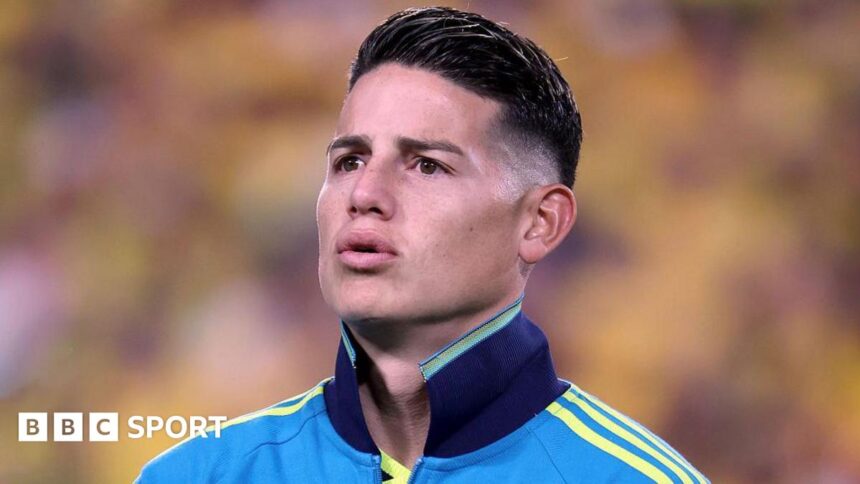
Minnesota United, Colombia Move to Quash Alarming Rumors Around James Rodriguez’s Health
The world of football was gripped by a wave of concern this week, not over a result or a transfer, but over the wellbeing of a global star. Following his hospitalization after an international friendly, a shadow of alarming and unsubstantiated rumors swirled around Minnesota United and Colombia midfielder James Rodriguez. In a firm and necessary intervention, his club has taken the extraordinary step of publicly denying sensationalist claims that the player is suffering from a life-threatening muscle-wasting condition, aiming to set the record straight and focus on the athlete’s actual recovery.
A Timeline of Concern: From Pitch to Hospital to Speculation
The sequence of events began on the pitch in Lyon on March 29th. Rodriguez, a veteran with 124 caps for Colombia since his 2011 debut, started in a 3-1 defeat to France. Observant viewers noted the playmaker appeared unwell during the match, lacking his usual dynamism. The situation escalated post-game. The Colombian Football Federation (FCF) confirmed Rodriguez was hospitalized due to severe dehydration, a serious medical event for a professional athlete, where he remained for three days.
On April 2nd, the FCF issued a statement that, while intended to provide an update, inadvertently fueled anxiety. It confirmed Rodriguez was under observation for a “non-sports-related medical condition” but crucially stated his prognosis was “favourable.” This vague terminology, in the vacuum of specific details, became a breeding ground for online speculation. Baseless rumors linking his symptoms to grave neuromuscular diseases began to proliferate on social media, causing distress among fans and family.
The turning point came on Monday, April 8th, when Rodriguez was seen returning to the Minnesota United training ground. While not participating in full training, his presence was a positive visual cue. It prompted the club to break its silence and address the elephant in the room directly.
Club Statement Cuts Through the Noise
Minnesota United’s response was swift, clear, and unequivocal. In a statement to the press, a club spokesperson explicitly addressed the damaging gossip: “Minnesota United have denied rumours that midfielder James Rodriguez is suffering from a potentially life-threatening muscle-wasting condition.” They emphasized that the 34-year-old is “recovering well” from the episode of severe dehydration and related complications, and that his care is being managed by both club and personal medical teams.
This denial is significant for several reasons:
- Protects the Player: It shields Rodriguez and his family from the emotional toll of widespread, false health diagnoses.
- Upholds Medical Privacy: It reaffirms the boundary between public interest and private medical information, stating the facts without divulging sensitive details.
- Controls the Narrative: It provides authoritative clarity to fans, media, and the football community, steering the conversation away from harmful fiction.
The club’s decision to specifically name the type of rumor they were quashing indicates how pervasive and specific the false claims had become, necessitating a targeted rebuttal.
Expert Analysis: The Intersection of Health, Speculation, and Modern Media
From a sports medicine perspective, Rodriguez’s confirmed diagnosis of severe dehydration is a serious matter in itself. For a world-class athlete to reach a point requiring hospitalization suggests an acute illness, extreme physical stress, or a combination of factors that disrupted his body’s fundamental balance. Dehydration can lead to dizziness, muscle cramps, rapid heartbeat, and in severe cases, organ dysfunction—clearly explaining his diminished on-field performance and need for care.
The leap from this to unfounded rumors about degenerative conditions highlights a dark facet of the digital age. “The modern news cycle, particularly on social platforms, abhors a vacuum,” notes Dr. Alisha Fernandez, a sports psychologist specializing in athlete welfare. “When a beloved figure like James Rodriguez has a health scare with limited immediate information, that space is often filled not with patience, but with projection and worst-case scenarios fabricated for clicks and engagement. The club’s denial, while unusual, was a necessary firewall.”
This incident also underscores the immense pressure on aging stars. At 34 years old, Rodriguez is in the latter stages of a career that has seen him scale the highest peaks—winning the Golden Boot at the 2014 World Cup and playing for European giants like Real Madrid and Bayern Munich. Every physical setback is now scrutinized through a lens of career mortality, making accurate reporting and responsible speculation paramount.
What’s Next for Rodriguez and Minnesota United?
The immediate path forward is one of cautious rehabilitation. Rodriguez’s return to the training facility is the first step in a graded return-to-play protocol. The focus will be on:
- Full Hydration and Nutritional Recovery: Replenishing fluids and electrolytes at a cellular level.
- Gradual Reconditioning: Slowly rebuilding cardiovascular fitness and muscle strength after a taxing physical ordeal.
- Underlying Assessment: While the muscle-wasting rumors are false, club doctors will undoubtedly work to fully understand the root cause of the severe dehydration to prevent any recurrence.
For Minnesota United, having their designated star and creative engine sidelined is a competitive blow. The team invested in Rodriguez for his unparalleled vision and set-piece quality to elevate their playoff ambitions. His absence tests their squad depth. However, the longer-term prediction is positive. Given the “favourable” prognosis from Colombian doctors and the club’s update, a full recovery to playing fitness is expected. The timeline remains uncertain, but a return within the next 3-6 weeks seems a plausible target, barring any setbacks.
This episode may also lead to a more guarded approach from Rodriguez’s camp regarding health updates. The backlash from vague terminology suggests future communications may be either more detailed or more tightly held, a regrettable but understandable consequence of the rumor mill’s velocity.
Conclusion: A Reaffirmation of Fact Over Fear
The saga surrounding James Rodriguez’s health has been a stark reminder of the human element at the heart of global sport. Beyond the transfer fees, highlight reels, and caps for Colombia, athletes are vulnerable to the same health challenges as anyone else. Minnesota United’s firm denial of the malicious rumors serves as a critical line in the sand, defending their player’s dignity and correcting a public narrative gone awry.
As Rodriguez continues his recovery, the football world should take two lessons from this incident. First, to treat initial medical reports with patience and context, resisting the urge to catastrophize. Second, to remember that the privilege of watching artists like James Rodriguez requires a reciprocal respect for their privacy and wellbeing. His journey back to the pitch will now be a story of professional medical care and personal resilience, not one of unfounded fear. The only condition he’s battling is the road to full fitness, and his club has made it clear they expect him to win.
Source: Based on news from BBC Sport.