Minnesota Timberwolves Pause to Honor Community Tragedy Amidst Winning Streak
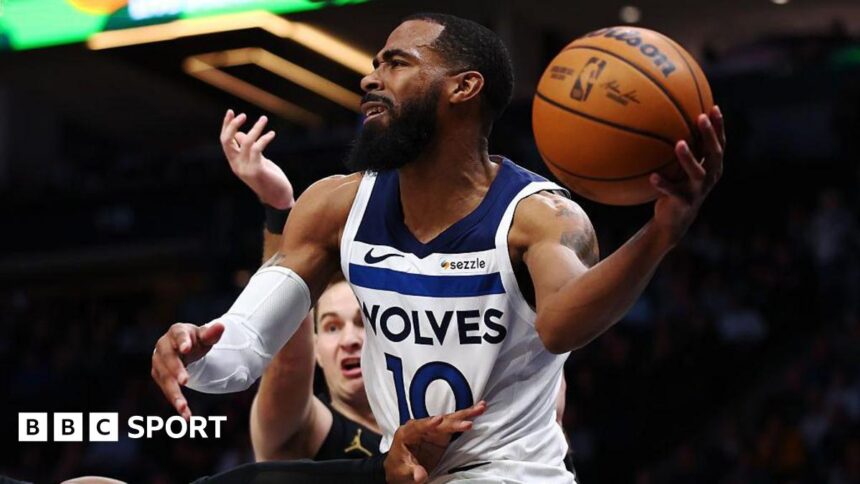
The roar of the crowd at the Target Center is a familiar soundtrack to Minnesota’s resurgent basketball season. But on Friday night, before the Timberwolves tipped off against the Cleveland Cavaliers, a profound silence spoke volumes. In a poignant and powerful gesture, the organization held a moment of silence for Renee Good, a 37-year-old woman whose life was tragically cut short less than four miles from the arena just two days prior. The somber tribute cast a shadow over the team’s on-court success, reminding everyone that the game exists within the broader, often painful, context of community.
A Court of Contrasts: Victory and Grief Collide
The Timberwolves entered the contest riding a wave of momentum, having secured five wins in their past six games at the Target Center. The buzz surrounding the team’s defensive identity and championship aspirations was palpable. Yet, the pre-game ceremony starkly juxtaposed the thrill of sport with the harsh realities of life outside the arena. The death of Renee Good, following a confrontation with a federal agent, sent shockwaves through Minneapolis, a community all too familiar with trauma.
Head coach Chris Finch, often a strategist focused on Xs and Os, addressed the tragedy with the gravity of a community leader. “As we all know, our community has suffered yet another unspeakable tragedy,” Finch stated. His words framed the night’s competition not as an escape, but as a gathering of a community in need of unity. “We want to just convey our condolences and heartfelt wishes and prayers and thoughts to the families and loved ones and all of those that are greatly affected by what happened.” This public acknowledgment from the team’s leadership underscored the franchise’s evolving role as a civic pillar, especially in times of crisis.
Beyond the Scoreboard: The Weight of a Moment of Silence
In professional sports, moments of silence are often observed, but their depth can vary. This one felt particularly heavy. The proximity of the tragedy—both geographically and temporally—made it impossible to compartmentalize. For players, coaches, and the 18,000 fans in attendance, the ritual was a shared pause, a collective breath held in honor of a neighbor. It served several critical functions:
- Community Acknowledgment: It publicly recognized a local loss, validating the community’s grief and confusion.
- Humanizing the Franchise: It moved the Timberwolves from the realm of mere entertainment to a shared entity with its city, feeling its pain.
- Perspective: It provided stark perspective, reminding all that some events transcend the importance of a regular-season win or loss.
Expert analysts note that how a sports organization responds to local tragedy is a significant marker of its culture. “The Timberwolves, by pausing their celebratory momentum to lead in a moment of mourning, demonstrated emotional intelligence and civic responsibility,” notes Dr. Elena Rodriguez, a sociologist who studies sports and community. “It’s a powerful signal that they see themselves as part of the fabric of Minneapolis, not apart from it.”
Channeling Emotion: How Tragedy Can Reshape a Team’s Season
The psychological impact of such events on a team is complex. Athletes are trained to focus, but they are not insulated from the world around them. The question becomes: how does a group process shared community grief, and can it translate onto the court? Historically, teams have responded in different ways—some have folded under the weight, while others have found a deeper sense of purpose.
For these Timberwolves, a squad built on toughness and connectivity, the event could potentially forge an even stronger bond. Playing for something larger than a playoff seed—for the healing and pride of their city—can be a potent motivator. Coach Finch’s challenge will be to help his team harness that collective emotion into their already intense style of play. Key factors to watch include:
- Elevated Defensive Intensity: Their identity is defense; expect even more communication and effort, a tangible expression of “having each other’s backs.”
- Leadership from Veterans: Players like Mike Conley and Karl-Anthony Towns, who have experienced profound personal and community loss, will be crucial in guiding the team’s emotional energy.
- Home Court as Sanctuary: The Target Center may transform from just a venue of victory to a space of communal catharsis, making their home-court advantage even more formidable.
Looking Forward: Predictions for a Team Playing with Purpose
As the season progresses, the Timberwolves’ response to this moment will be woven into their narrative. The basketball predictions remain strong—they are a legitimate contender in the Western Conference. However, the human element adds a new layer. We predict the following developments for the remainder of the season:
1. Sustained Home Dominance: The emotional connection to the city, now deepened, will likely fuel the team’s performance at home. The Target Center will be a fortress, both loud and emotionally charged. Bet on the Timberwolves to maintain one of the league’s best home records.
2. Increased Community Engagement: Look for players and the organization to deepen their outreach in the coming months, possibly establishing initiatives or partnerships in memory of Renee Good and others affected by violence. This tragedy will likely become a sustained point of connection, not a one-night observance.
3. A Matured Team Resolve: Adversity, in all its forms, either fractures or fortifies. This team, already close-knit, has the leadership to emerge more unified. This could be the intangible “x-factor” that helps them navigate the high-pressure moments of a deep playoff run.
Conclusion: More Than a Game
The final buzzer of Friday’s game signaled a return to normalcy, but the echo of the pre-game silence lingered. The Minnesota Timberwolves, in the midst of a thrilling and successful season, were abruptly reminded that their arena sits on city streets where life’s most difficult dramas unfold. By honoring Renee Good, they did more than observe a ritual; they embraced their role as a cornerstone of the community. Their season is now about more than championships. It is about resilience, representation, and the recognition that sometimes, the most important thing a team can do is not win, but simply stand with its people in silence, offering a collective heartache and hope. Their journey on the court will now be watched not just for wins and losses, but for the character and compassion they display off it, proving that the true strength of a franchise is measured in moments far beyond the box score.
Source: Based on news from BBC Sport.