MLB Writer Laments Padres’ Sad Offseason: A Franchise Stuck in Neutral
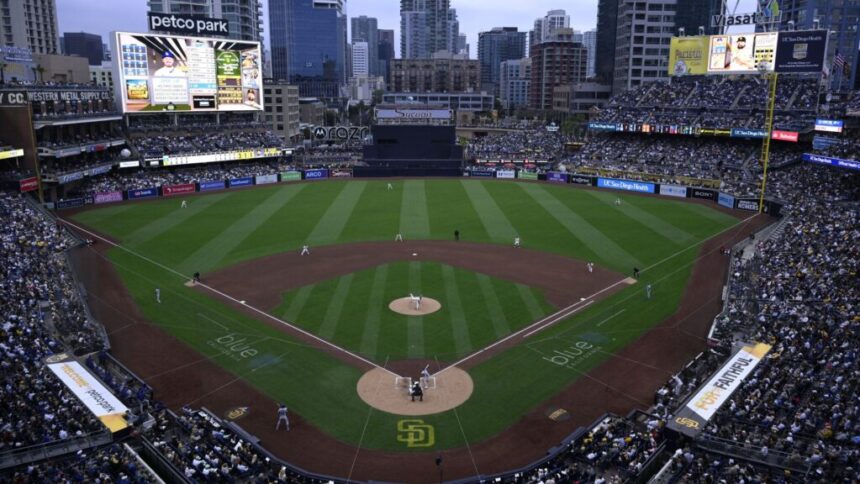
The San Diego Padres are a franchise perpetually chasing the ghost of 1998. Their recent history has been a rollercoaster of bold ambition and crushing disappointment. After a competitive 90-win season in 2025 that saw them finish a strong second in the gauntlet of the National League West, hope sprung eternal in America’s Finest City. The core was there, the fight was evident, and the path forward seemed clear: augment, improve, and finally conquer the Dodgers and Diamondbacks. Instead, as the 2026 offseason crawls toward spring training, a familiar, disquieting feeling has settled over Petco Park. Not the thunderous crash of a failed super-team, but the quiet, frustrating hum of an engine stuck in neutral. This palpable stagnation has not gone unnoticed, with analysts like Bleacher Report’s Zachary D. Rymer highlighting the Padres near the top of his list of teams with the most disappointing winters.
The Exodus of Key Contributors
To understand the current lament, one must first account for what has walked out the door. The Padres’ offseason has been defined more by subtraction than addition, creating a net deficit that their new acquisitions have yet to fill.
The departure of Dylan Cease leaves a gaping hole at the front of the rotation. Acquired mid-season in a blockbuster, Cease provided the electric, top-of-the-rotation arm the team desperately needed. Letting him walk without a clear, equivalent replacement is a monumental step back for a pitching staff that leaned on his dominance.
Perhaps more painful for the bullpen is the loss of closer Robert Suarez. The anchor of the late innings, Suarez’s reliability was a cornerstone of the Padres’ late-game identity. His exit throws the ninth inning into question and removes a pillar of stability.
Furthermore, the lineup loses a potent left-handed bat in Ryan O’Hearn, who provided crucial depth, power, and a reliable platoon option. These aren’t just role players; they were integral pieces of a 90-win puzzle. The front office’s response—re-signing a handful of depth pieces—feels akin to using duct tape on a structural beam.
Questionable Additions in a High-Stakes Market
San Diego’s activity hasn’t been nil, but the yield has been underwhelming and fraught with question marks. Their two notable moves have done little to inspire confidence that they’ve closed the gap with their division rivals.
- Sung Mun Song: The Korean import is the classic high-risk, high-reward play. While his talent is undeniable, transitioning from the KBO to the majors is a notoriously difficult leap. Projecting him as an immediate impact player in a win-now window is a gamble of enormous proportions.
- Michael King: The signing of pitcher Michael King is a solid, back-of-the-rotation move. He is a reliable innings-eater, but he is not Dylan Cease. Framing this as a replacement for the ace-caliber production they lost is a misrepresentation of the team’s glaring need for a true number one starter.
Contrast this with the landscape around them. The Los Angeles Dodgers, never satisfied, continue to add star talent to a constellation of stars. The Arizona Diamondbacks, a team that has recently beaten the Padres in the postseason chase, have made savvy, targeted additions to address weaknesses. Even the San Francisco Giants, slow out of the gate, have found a winter rhythm that San Diego conspicuously lacks. In the relentless NL West, standing still is a recipe for regression.
The Ripple Effect of Past “All-In” Moves
To diagnose the present, we must examine the past. The Padres’ current inertia is a direct consequence of the franchise’s previous “all-in” philosophy. The monumental contracts for Manny Machado and Fernando Tatis Jr., coupled with the costly trades for Juan Soto (since departed) and others, have stretched the payroll to its limits and depleted the farm system’s upper-tier talent.
This has created a perfect storm of constraints: limited financial flexibility to chase top-tier free agents and a weakened prospect capital that hinders significant trades. The front office is now operating with its hands partially tied, forced to shop in the bargain bin while its rivals fill their carts with premium goods. The bill for yesterday’s fireworks has come due, and it’s being paid with today’s austerity. This isn’t just a sad offseason; it’s the hangover from a spectacular party.
Predictions: A Step Back in a Ferocious Division
Based on the current roster construction, the trajectory for the 2026 Padres points downward. The analysis isn’t complicated: they have lost more proven, high-level talent than they have gained.
The rotation, outside of Joe Musgrove, is a collection of question marks and mid-rotation arms. The bullpen must be entirely reconfigured without its linchpin. The offense will rely even more heavily on the health and superproduction of Machado, Tatis, and Xander Bogaerts—a core that has shown fragility.
In a division where the Dodgers are a juggernaut, the Diamondbacks are young and ascending, and the Giants are actively retooling, the Padres’ passive winter likely consigns them to a battle for a Wild Card spot, at best. The more probable outcome is a step back to the mid-80s in wins, fighting to stay above .500 and relevant into September. The window, pried open with such fanfare just a few years ago, is unmistakably creaking shut.
Conclusion: The Price of Mismanaged Ambition
The lament for the Padres’ offseason is not merely about a quiet winter. It is a lament for a squandered opportunity and a mismanaged timeline. This is a franchise that captured the imagination of baseball by swinging for the fences. Now, it finds itself caught between cycles, unable to push forward aggressively and unwilling to take a step back to rebuild properly.
The signings of Song and King are not the moves of a contender; they are the moves of a team hoping to catch lightning in a bottle while its foundation erodes. As Zachary D. Rymer and other observers have noted, the Padres’ winter has been a profound disappointment because it signals a surrender—not a dramatic collapse, but a slow, sad deflation of ambition. For a fanbase that has endured decades of irrelevance punctuated by brief flares of hope, this offseason feels like a return to a familiar, painful purgatory: not bad enough to bottom out, but not brave enough to truly compete.
Source: Based on news from Yahoo Sports.