From Doubt to Dynasty: Fred Hoiberg’s Unlikely Journey to AP Coach of the Year
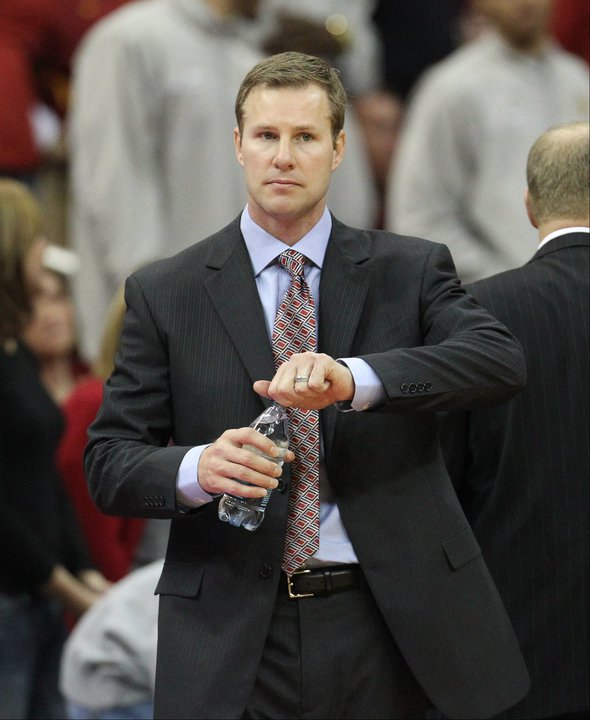
In the world of college basketball, certain awards carry the weight of a season’s narrative. When the Associated Press announced its men’s basketball Coach of the Year on Friday, it wasn’t just a coronation of a successful campaign; it was the validation of a five-year rebuild that transformed a program’s very identity. In a decision that resonated across the heartland, Nebraska’s Fred Hoiberg edged out high-profile contenders like Duke’s Jon Scheyer and Arizona’s Tommy Lloyd to claim the prestigious honor. This wasn’t merely a prize for wins and losses; it was a testament to resilience, cultural reinvention, and the fulfillment of a promise that once seemed like a distant dream in Lincoln.
The Pinnacle of a Five-Year Reclamation Project
To understand the magnitude of Hoiberg’s achievement, one must first acknowledge the depths from which he raised Nebraska basketball. When “The Mayor” arrived in 2019, hailed as a program savior after his successful stint at Iowa State, the transition was anything but smooth. His first three seasons resulted in a dismal 24-67 record. Critics were loud, and the once-bright optimism dimmed. The AP Coach of the Year award, therefore, is not just for the 23-win season and third-place Big Ten finish in 2023-24; it is for the grueling, often thankless work of laying a foundation.
Hoiberg’s vision required a complete overhaul. He shifted from an early reliance on transfers to building a core through development and strategic portal additions. This season’s squad, led by the dynamic backcourt of Keisei Tominaga and Brice Williams, embodied his philosophy: unselfish, tough, and offensively potent. They played with a joy and cohesion that had been absent for years, turning Pinnacle Bank Arena into one of the nation’s most formidable home courts, where they notched landmark victories over then-No. 1 Purdue and Wisconsin.
- Cultural Transformation: Instilled a pro-style, pace-and-space offense that maximized player strengths.
- Roster Construction Mastery: Blended high school recruits with key transfers like Rienk Mast to create perfect synergy.
- Defensive Identity: Transformed a perennial defensive liability into a tough, switch-heavy unit.
Edging Out Elite Competition: A Vote for Narrative
The AP vote, which saw Hoiberg narrowly outpace Duke’s Jon Scheyer and Arizona’s Tommy Lloyd, speaks volumes. Scheyer, in just his second year, guided Duke to a regular-season ACC title. Lloyd continued his phenomenal start at Arizona with a Pac-12 championship. Both had more talented rosters and longer-established winning traditions. Hoiberg’s win underscores that the voters valued the degree of difficulty and the program-building aspect as much as the raw results.
This award recognizes the coach who did the most with his specific circumstances. At Nebraska, the challenges are unique: no prior conference championships, a football-dominated athletic culture, and no NCAA Tournament wins in program history. Hoiberg didn’t just coach a team; he had to sell a belief system to a fanbase, to recruits, and to his own players that success at the highest level was possible in Lincoln. Beating out coaches from blue-blood and powerhouse programs makes this honor for Hoiberg and Nebraska feel even more significant—it’s a breakthrough for the entire institution.
Expert Analysis: The X’s and O’s Behind the Turnaround
From a tactical standpoint, Hoiberg’s genius this season was adaptability. Early in his tenure, his system seemed rigid. This year, he tailored his approach to his personnel. With a versatile big man in Mast who could pass and shoot, Hoiberg’s offense operated through the high post, creating driving lanes and open three-pointers. He empowered the electric Tominaga in ways that boosted his confidence and defensive effort. Defensively, he abandoned schemes that exposed his players’ weaknesses for a more aggressive, communicative style that played to their collective toughness.
Perhaps his best coaching move was managing expectations and pressure. After a strong non-conference start, the Big Ten gauntlet could have derailed the season. Instead, Hoiberg kept the team focused on incremental growth. Close losses in previous years became gritty wins this season. He fostered a player-led culture where accountability came from within the locker room, a sign of a mature, bought-in team. This player development and culture is the true hallmark of his Coach of the Year season, proving he is far more than just an “offensive guru.”
What’s Next for Hoiberg and Nebraska Basketball?
The immediate future is bright, but the landscape is shifting. The 2024 NCAA Tournament appearance—the program’s first in a decade—is now the baseline, not the pinnacle. The challenge for Hoiberg is to sustain this success in an era of relentless roster turnover. Can he reload via the transfer portal while continuing to develop high-school talent? Furthermore, with the Big Ten expanding to include national powers like UCLA and USC, the conference will only get tougher.
Predictions for Nebraska’s trajectory are now optimistic, not hopeful. The program has proven it can attract high-level talent and compete for top-four finishes in the nation’s best conference. The next goals are clear: win an NCAA Tournament game, contend for a Big Ten title, and become a consistent second-weekend tournament threat. Hoiberg has built the blueprint. The AP Coach of the Year award confirms that the college basketball world now sees Nebraska as a legitimate force, a destination, not just a feel-good story.
Conclusion: A Legacy Cemented in Lincoln
Fred Hoiberg’s AP Coach of the Year award is a story of redemption, patience, and strategic brilliance. It rewards a journey that was far from linear, honoring the steadfast commitment to a vision when few outside the program believed. By edging out giants like Scheyer and Lloyd, the award sends a powerful message: building something lasting from the ground up remains one of sports’ most impressive achievements. Nebraska basketball is no longer a footnote; it is a testament to transformative leadership. The Mayor didn’t just win games this season; he won over a state and redefined what is possible for its flagship basketball program. The foundation is poured, the structure is rising, and the future in Lincoln has never looked brighter.
Source: Based on news from ESPN.
Image: CC licensed via commons.wikimedia.org