Newcastle’s Penalty Pursuit: Seeking Clarity in the VAR Fog
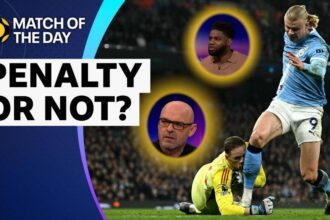
The roar at St James’ Park was one of disbelief, then fury. As Anthony Gordon tumbled under the weight of Trevoh Chalobah’s challenge, 52,000 eyes turned to referee Andy Madley. No whistle. A quick check from the video assistant referee (VAR) confirmed the on-field decision. Play on. For Newcastle United, a pivotal moment in a chaotic 2-2 draw with Chelsea had passed without sanction, leaving behind a simmering sense of injustice that has now spilled into an official complaint. The Magpies are “seeking clarification” from the game’s officials, opening a new front in the perennial debate over consistency, contact, and the very soul of a penalty.
A “Stonewall” Appeal Meets a Stony Silence
Head coach Eddie Howe did not mince his words in the aftermath. “I thought it was a stonewall penalty,” he stated, his frustration palpable. The incident, unfolding in the 56th minute with Newcastle leading 2-1, saw Gordon latch onto a through ball, only for Chelsea defender Chalobah to engage in a physical tussle. The defender’s arm wrapped across Gordon’s chest, and a clear shove in the back sent the winger sprawling. For Howe and the Geordie faithful, the decision seemed inexplicable.
The official explanation, as per the Premier League’s Match Centre, was that Chalobah was “deemed to be side-to-side in a shielding action and the ball within playing distance.” This technical phrasing is the crux of Newcastle’s grievance. The club’s pursuit of clarification from PGMOL is not merely about sour grapes; it’s a challenge to the interpretation of Law 12. Is a shove in the back, regardless of initial positioning, a legitimate “shielding action”? The visual evidence, for most neutral observers, suggests a foul anywhere else on the pitch.
This appeal is magnified by a stark seasonal statistic: Newcastle have been awarded just three penalties in the Premier League this season. In a campaign where they have consistently been among the division’s most aggressive attacking sides, this figure feels anomalously low, fueling perceptions and suspicions of an uneven application of the rules.
The VAR Paradox: More Cameras, Less Certainty?
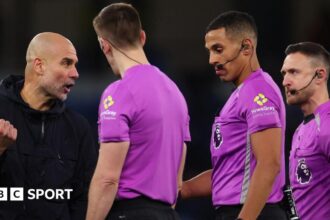
The incident is a textbook example of the VAR paradox in modern football. Designed to eradicate “clear and obvious errors,” the system has instead often bred deeper controversy through subjective interpretation. VAR did not overturn Madley’s decision because it did not deem it a clear mistake—a judgment call on a judgment call.
This raises critical questions for the game’s stakeholders:
- Consistency is King: Fans and clubs can accept subjective calls if they are applied uniformly. The burning frustration stems from seeing seemingly identical incidents awarded elsewhere.
- The “High Threshold” Problem: Has the VAR bar been set so high that only the most egregious fouls are penalized, effectively redefining what constitutes a penalty in the box?
- Contact vs. Challenge: The modern game grapples with the line between acceptable physical contact and a foul. The “side-to-side” argument suggests Chalobah had a right to his space, but did his actions exceed that right?
For Newcastle, this isn’t an isolated case. It’s a data point in a pattern that they feel disadvantages them, making their formal request a strategic move to pressure for greater accountability and, hopefully, future consistency in their matches.
Expert Analysis: The Shielding Defense Under the Microscope
From a technical standpoint, the “shielding” defense is a fascinating and often misunderstood part of the game. A player is entitled to position his body between an opponent and the ball if he is in control or can reasonably play it. The key factors are:
- Ball Playing Distance: Was the ball close enough for Chalobah to realistically play it, or was he primarily impeding Gordon?
- Arm Application: The use of the arm to feel for an opponent is permitted, but extending it to push, hold, or barge crosses a line.
- Direction of Force: A true shield involves holding ground. A forward or downward thrust of force, as appeared to happen here, transforms it into an act of aggression.
Most ex-professionals and pundits dissecting the incident concluded the on-field decision was lenient. The VAR upholding the non-penalty reflects not necessarily an agreement with the call, but an adherence to a non-interventionist protocol for borderline cases. This is the grey area where matches—and potentially seasons—are decided, and where clubs like Newcastle feel utterly exposed.
Predictions and Ramifications: A Tipping Point for Newcastle?
What happens next? The immediate PGMOL clarification is unlikely to change the Chelsea result, but it could have significant ripple effects.
- Private Admission, Public Silence: PGMOL may privately acknowledge a degree of error to Newcastle, as they have with other clubs this season, but will almost certainly not publicize it. This often does little to mollify fans.
- Psychological Impact: For Newcastle’s players, a public stance from their club can be empowering, a signal that they will fight their corner. Conversely, it could deepen a persecution complex if decisions continue to go against them.
- Refereeing Scrutiny: Andy Madley and the VAR team for that match will face intensified focus in their next appointments. Every 50/50 decision they make will be analyzed through this lens.
- The Bigger Picture: This incident adds weight to the growing argument for greater transparency in VAR decision-making, including the broadcast of live audio between officials, as seen in other sports and leagues.
Conclusion: More Than Just One Point Lost
Newcastle United’s quest for clarity over Anthony Gordon’s tangle with Trevoh Chalobah transcends two missed points in a draw. It is a symptom of a league grappling with the imperfect science of officiating in the digital age. When a manager like Eddie Howe, known for his measured demeanor, labels a decision “stonewall” and his club follows with formal action, it underscores a profound disconnect.
The non-penalty against Chelsea and the subsequent fallout is a microcosm of modern football’s tensions: speed versus scrutiny, physicality versus protection, and human error versus technological overreach. For the Magpies, this is about establishing a precedent and demanding that the margins, which are so often the difference between European qualification and mid-table obscurity, are adjudicated with the utmost clarity and consistency. Until that is achieved, the fog around the penalty box will remain, and clubs will continue to seek flashlights in the form of official clarification.
Source: Based on news from BBC Sport.