FIFA Dashes Hopes: No Iran-Italy World Cup Swap, Despite Trump Envoy’s Bold Proposal
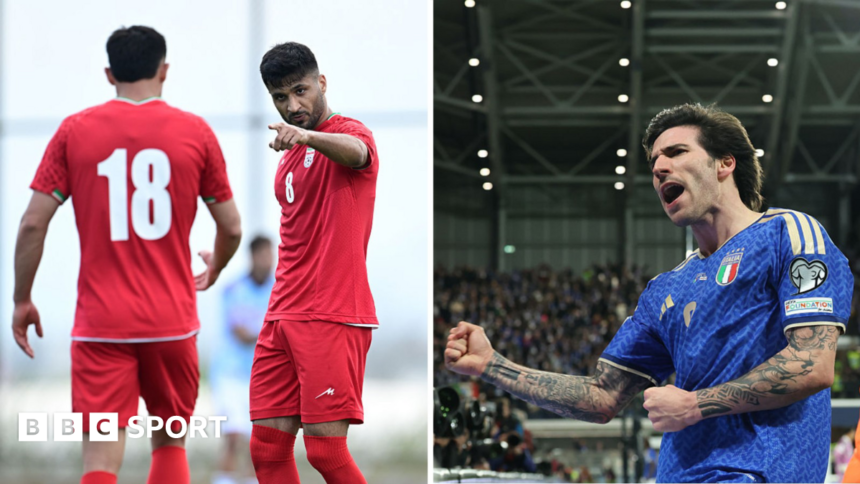
The football world was sent into a speculative frenzy this week following reports that a high-level proposal had been floated to swap Iran for Italy at the 2026 FIFA World Cup. The audacious idea, reportedly suggested by US President Donald Trump’s special envoy, Paolo Zampolli, has been met with a firm and immediate reality check: FIFA has no plans to replace Iran with Italy at the tournament, according to sources close to the governing body. While the notion of seeing the four-time world champions grace a US-hosted World Cup is tantalizing for fans, the logistical and political hurdles make it a non-starter—for now.
Italy, currently ranked 12th in the world by FIFA, stands as the highest-ranked nation not participating in the 2026 showpiece. Their absence is a glaring anomaly in a tournament that prides itself on showcasing the planet’s elite. Yet, despite the Azzurri’s undeniable pedigree and the ongoing geopolitical tensions surrounding Iran, the idea of a direct substitution remains firmly in the realm of fantasy football.
The Zampolli Bombshell: A Dream or a Diplomatic Chess Move?
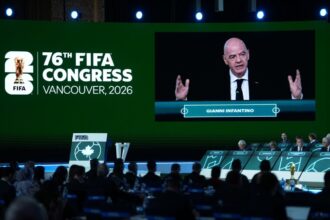
The catalyst for this global debate came from an unlikely source: Paolo Zampolli, the Italian-born US special envoy. In an interview with the Financial Times, Zampolli confirmed his direct appeal to both President Trump and FIFA President Gianni Infantino. “I confirm I have suggested to Trump and Infantino that Italy replace Iran at the World Cup,” Zampolli stated. “I’m an Italian native and it would be a dream to see the Azzurri at a US-hosted tournament. With four titles, they have the pedigree to justify inclusion.”
On the surface, the logic is seductive. Italy’s absence is a commercial and competitive black eye for the tournament. They are a global brand, a team with a rich tactical history and a fanbase that travels in droves. Replacing a team mired in geopolitical uncertainty with a footballing superpower seems, to the untrained eye, like a win-win. However, FIFA’s response has been unequivocal. Sources confirm that the governing body views the World Cup qualification process as sacrosanct, and any suggestion of a mid-cycle replacement—especially one not based on sporting merit—is a non-starter.
Zampolli’s proposal, while bold, is likely more of a diplomatic probe than a realistic sporting request. It highlights the growing intersection of geopolitics and football, but it also underscores the rigid, rules-based structure that FIFA must protect to maintain its credibility.
Iran’s Precarious Position: War, Politics, and the World Cup
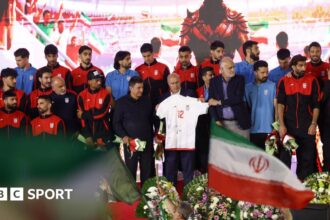
The root of this speculation lies in the ongoing uncertainty surrounding Iran’s participation. The shadow of war with the US and Israel has cast a long pall over the Islamic Republic’s sporting endeavors. While Iran has qualified for the 2026 World Cup on the pitch, the question of whether its team will actually travel to the United States remains fraught with diplomatic landmines.
Several factors contribute to this volatility:
- Travel and Visa Restrictions: The US has imposed stringent sanctions and travel restrictions on Iranian nationals. While a sports delegation would likely receive a special exemption, the political climate could make this process contentious.
- Security Concerns: Given the hostile rhetoric between the two nations, ensuring the safety of the Iranian team, staff, and fans on US soil presents a significant logistical and security challenge.
- Internal Pressure: Within Iran, there is a growing debate about whether participation in a US-hosted event legitimizes a government they view as hostile. Conversely, a boycott would be seen as a massive concession.
- FIFA’s Stance on Neutrality: FIFA has historically tried to keep politics separate from sport, but the organization has faced immense pressure to act in cases of state-sponsored aggression. However, banning a team before a tournament based on potential conflict is a step FIFA has never taken.
Despite these headwinds, FIFA’s official position remains that Iran is a qualified participant and will be treated as such unless a formal, external event prevents their participation. The “swap” proposal is not on the table.
Why Italy Can’t Just “Step In”: The Rules of Engagement
For the casual fan, the idea of swapping Italy for Iran seems simple. For anyone who understands the labyrinthine rules of FIFA World Cup qualification, it is a logistical nightmare. Here is why the swap is impossible under current regulations:
- Qualification is a Closed Process: The 48-team field was determined through 18 months of continental qualifiers. Italy failed to qualify through the European (UEFA) route, finishing second in their group and then losing a critical match. There is no “wild card” entry or replacement pool.
- The Precedent Problem: If FIFA replaces Iran with Italy, what happens when the next geopolitical crisis emerges? Would Russia be swapped in for a team from a conflict zone? The floodgates would open to political manipulation of the tournament.
- Sporting Integrity: The World Cup is the pinnacle of merit-based competition. Allowing a team that failed to qualify to enter via a backroom deal would destroy the credibility of the entire qualification cycle. Teams like Switzerland, Denmark, and Serbia earned their spots. Italy did not.
- Contractual Obligations: Broadcasters, sponsors, and host cities have contracts tied to specific teams and groups. Replacing Iran with Italy would require re-drawing group schedules, re-negotiating ticket allocations, and potentially triggering legal disputes with other qualified nations who would see their group strength altered.
Expert Analysis: The only scenario where Italy could enter is if Iran is formally expelled by FIFA’s Congress or Council—a move that would require a vote based on a clear violation of FIFA statutes, such as government interference. Even then, the replacement would likely come from the next-highest ranked team in the Asian confederation, not from Europe. Italy’s ranking is irrelevant in this context.
What This Means for the Azzurri and the Tournament
For Italy, this saga is a painful reminder of their own failings. The Azzurri missed the 2018 World Cup and then, after a brief resurgence winning Euro 2020, spectacularly failed to qualify for 2022 and now 2026. Their absence is not a conspiracy; it is a result of a generational talent gap and tactical stagnation under former managers. The Azzurri must rebuild from the ground up, focusing on the 2030 cycle.
For the 2026 World Cup, the reality is that Iran will likely be there, barring an unprecedented geopolitical event that forces a FIFA intervention. The US, as host, will have to navigate the diplomatic tightrope of welcoming an Iranian team. Security will be paramount, and the matches involving Iran will likely be treated as high-risk events.
My Prediction: The Iran-Italy swap is dead in the water. Look for FIFA to issue a formal statement in the coming weeks reaffirming Iran’s participation, while quietly working behind the scenes with the US State Department to ensure a smooth, if tense, arrival for the Iranian delegation. The story has legs only as a political talking point, not as a sporting reality.
Conclusion: A Fantasy That Stays on the Page
The idea of seeing the iconic Azzurri blue march through the streets of Los Angeles, New York, or Mexico City is a beautiful dream. Italy has the history, the style, and the star power to elevate any tournament. But the World Cup is not a fantasy league. It is a monument to sporting merit, built on the sweat and sacrifice of teams that earned their place over two years of grueling competition.
Paolo Zampolli’s suggestion, while well-intentioned from a patriotic standpoint, ignores the fundamental pillars of the sport. FIFA’s refusal to entertain the swap is not just bureaucratic stubbornness; it is a necessary defense of the game’s integrity. Iran’s path remains uncertain, but the solution is not a high-profile swap. The only way Italy returns to the World Cup is the same way every other nation does: by winning their matches when it counts. For now, the world’s 12th-ranked team will watch from home, and the world’s most prestigious tournament will soldier on with the field it has—politics, wars, and all.
Source: Based on news from BBC Sport.