Norris’s U-Turn: The “Fun” F1 Car Comment That Sparked a Firestorm
The sun beat down on the Sakhir circuit in Bahrain, baking the asphalt as Formula 1’s new generation of ground-effect cars carved their way through pre-season testing. At the top of the timing sheets, Lando Norris’s name sat proudly, a statement of intent from McLaren. But off the track, the young Briton was making an even louder statement—one that peeled back the carefully curated veneer of driver-media relations to reveal a simmering debate about the very soul of the sport. In a startling admission, Norris revealed his earlier praise for the 2026-spec cars was a deliberate provocation, a litmus test for the F1 world, directly contradicting the scathing critique from reigning champion Max Verstappen.
The Calculated Compliment and the Champion’s Rebuke
Just a week prior, the narrative was straightforward. Drivers were sampled the early prototypes of the 2026 chassis, which feature active aerodynamics and lighter, nimble designs. Norris, ever the affable character, told media the cars were “a lot of fun.” It was a positive, if generic, soundbite that fit the pre-season optimism. Meanwhile, Max Verstappen, never one to mince words, delivered a verdict that echoed through the paddock: the cars were “not F1,” criticizing their driving feel and potential racing limitations.
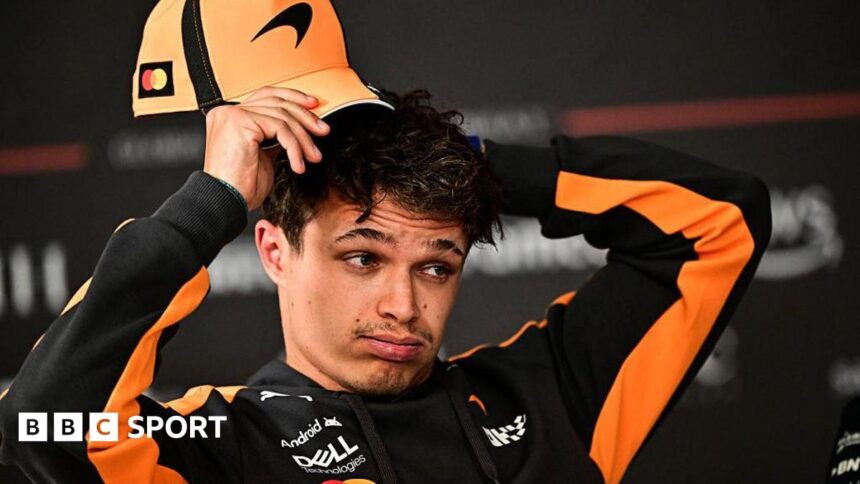
The stage was set for a classic clash of perspectives. But on Thursday in Bahrain, Norris flipped the script. He confessed his “fun” comment was a tactical media play. “I just didn’t want to come out into the media and complain to everyone on the first weekend back,” Norris explained. “I just wanted to say that and see what the reaction was of everyone.” The implication was clear: his true feelings were far less complimentary. This admission reframed Verstappen’s blunt criticism not as the outlier, but potentially as the unvarnished truth other drivers were hesitant to voice.
Verstappen, for his part, had already escalated the rhetoric. When asked about drivers who might dislike the new direction, the three-time champion suggested they could “go and find something else to do.” It was a stark, uncompromising stance from the sport’s dominant force, highlighting a fundamental tension between sporting purity and technical evolution.
Expert Analysis: The Heart of the Debate – “Not the Purest Form of Racing”
Norris’s revelation opens a Pandora’s box of questions about the future of F1. His backtracking suggests a consensus among drivers that these new machines, while potentially faster in a straight line and more agile in corners, may compromise the core tenet of racing: the driver’s ability to make a difference.
The core issue centers on “purity.” For purists, F1 is the ultimate marriage of human skill and mechanical extremity. The current ground-effect era, despite its flaws, has brought the driver more into the equation, requiring a delicate, aggressive style to manage the aerodynamic platform. The 2026 regulations, with their heavy reliance on automated active aero and a 50/50 power split between internal combustion and electric energy, threaten to tip the balance back towards system management over raw car control.
- Driver Skill vs. System Management: Will the fastest driver be the one with the bravest late-braking move, or the one who most efficiently deploys their electrical energy and manages aero modes?
- The Spectacle vs. The Sport: The FIA and FOM are chasing closer racing and more overtaking. But if the process becomes overly procedural, does the overtake lose its emotional weight?
- The Verstappen Principle: The champion’s “love it or leave it” attitude underscores a generational shift. Is he defending a driver-centric ethos, or is he resistant to change that could level the playing field?
Norris’s initial gambit and subsequent honesty have effectively given cover for other drivers to express concerns. It reveals a paddock deeply conflicted about the path forward, caught between the commercial need for spectacle and the sporting imperative of meritocratic competition.
Predictions: A Divided Grid and a Technical Arms Race
The fallout from this early controversy will shape the next two years of development. We can anticipate several key developments:
1. A Vocal Driver Divide: Norris’s comments will embolden other drivers to speak more critically. We can expect a clear faction, likely led by veterans and driving purists, to consistently question the “feel” and raceability of the new cars. This internal pressure will be a constant narrative alongside the technical development.
2. The Real Test: Racing, Not Testing. All current judgments are based on early prototypes and simulators. The true verdict will come at the first race of 2026. If the cars produce thrilling, driver-led battles, the criticism will fade. If races become processional or dictated by energy management gimmicks, Verstappen’s and Norris’s implied fears will be validated, leading to significant pressure for mid-regulation tweaks.
3. McLaren’s Moment in the Spotlight. Norris’s pace in testing, coupled with his newfound role as a de facto spokesperson for driver skepticism, puts McLaren in a fascinating position. They have a driver who is both fast enough to challenge and articulate enough to shape the conversation. This could translate into significant influence over the sport’s technical trajectory if their on-track performance matches their off-track candor.
Conclusion: More Than Just Cars – A Battle for F1’s Soul
Lando Norris’s playful media experiment did more than just generate headlines; it exposed a raw nerve at the heart of Formula 1. This is not merely an argument about suspension geometry or battery size. It is a philosophical battle for the sport’s identity. Is Formula 1 the pinnacle of motorsport, where the most skilled driver in the most advanced machine triumphs through a combination of bravery, skill, and engineering genius? Or is it evolving into a hyper-technical spec series, where the drama is engineered and the human element is secondary to system optimization?
By admitting his “fun” comment was a probe, Norris became an unlikely torchbearer for authenticity. He and Verstappen, from different angles, are demanding the same thing: that the cars must serve the racing, not the other way around. As the 2026 season draws closer, the discourse ignited in Bahrain will only intensify. The sport’s stakeholders must listen carefully. Because if the drivers—the stars who risk it all every Sunday—feel the essence of their craft is being diluted, then no amount of active aerodynamics will keep the fans firmly in their seats. The quest is not just for faster cars, but for greater racing, and the definition of that remains fiercely, and now openly, contested.
Source: Based on news from BBC Sport.