Lawrence Okolie Fight Axed: Heavyweight Clash Cancelled After Adverse Doping Test
The heavyweight boxing landscape was thrown into disarray this week as a highly anticipated cross-Channel clash collapsed at the eleventh hour. The scheduled bout between Britain’s Lawrence Okolie and France’s Tony Yoka, set for Paris this Saturday, has been officially cancelled after Okolie returned an adverse analytical finding in a pre-fight anti-doping test. The shocking news, delivered just days before fight night, has left fans disappointed, a promoter scrambling, and a former champion’s reputation under immediate scrutiny.
A Bombshell Notification: The Fight Falls Apart
The cancellation process was as clinical as it was abrupt. Promoter Queensberry Promotions released a stark statement confirming the event’s demise. The trigger was a formal notification from the Voluntary Anti-Doping Association (VADA), the independent body overseeing the fight’s drug-testing program. According to Queensberry, VADA informed them on Monday night that Okolie had “returned an adverse finding” from a test conducted in the lead-up to the Paris event.
With the headliner removed, the entire fight night was rendered unviable. Queensberry cited “circumstances outside of our control,” a phrase that barely masks the significant financial and logistical fallout for the promoter, the undercard fighters, and the Parisian venue. For Tony Yoka, the 2016 Olympic super-heavyweight gold medalist, it represents another frustrating setback in a career already punctuated by long layoffs and cancelled fights.
- Key Event: Okolie vs. Yoka, scheduled for Saturday, 25 April in Paris.
- Breaking Point: VADA notification to Queensberry on Monday night.
- Official Reason: “Adverse finding” in a pre-fight anti-doping test.
- Outcome: Complete cancellation of the fight night.
Okolie’s Defense: Injury Treatment and a Plea for Understanding
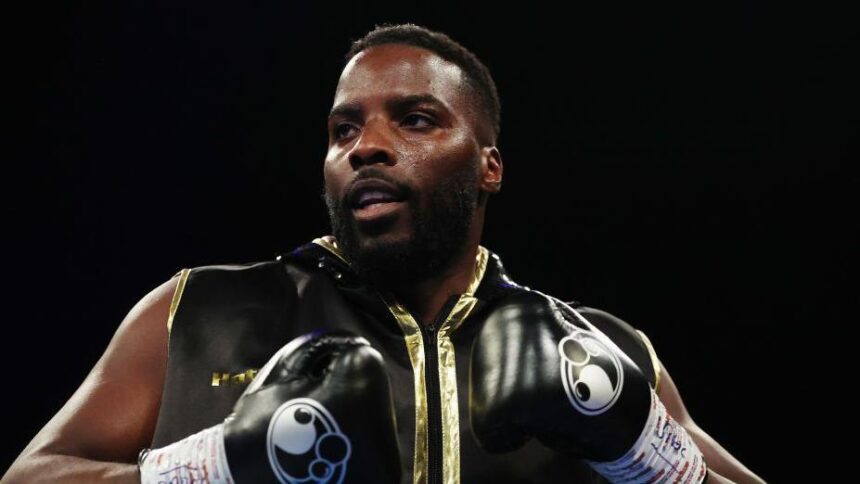
In the wake of the announcement, Lawrence Okolie, the former WBO cruiserweight world champion who was moving up to heavyweight, moved quickly to offer an explanation. The 33-year-old Londoner took to social media to contextualize the finding, linking it to treatment for an injury. While not disclosing the specific banned substance detected, Okolie framed the situation as an unfortunate medical necessity rather than a deliberate attempt to gain a competitive edge.
“I’m deeply disappointed the fight won’t be going ahead,” Okolie stated. He explained that he had been receiving treatment for an injury sustained in training, implying the medication or method used had triggered the positive test. His statement, “I hope sense prevails,” suggests he and his team will be challenging the finding or seeking to prove no intentional wrongdoing. This defense, common in such scenarios, initiates a complex legal and scientific process. The burden now falls on Okolie’s camp to provide comprehensive evidence to the relevant anti-doping authorities, detailing the therapeutic use exemption (TUE) that should have been sought, or otherwise explaining how the substance entered his system.
This incident highlights the razor-sharp line modern athletes must walk. Even legitimate medical treatment requires rigorous pre-approval in the hyper-vigilant world of anti-doping. A lapse in communication with VADA, a misprescribed supplement, or an unapproved therapeutic method can lead to catastrophic consequences, regardless of intent.
Expert Analysis: Trust, VADA, and the Heavyweight Calculus
From a sporting perspective, the cancellation is a severe blow to the momentum of both fighters. For Okolie, this is a disastrous start to his heavyweight campaign. After losing his cruiserweight title to Chris Billam-Smith, the move to the glamour division was meant to be a fresh start. Now, instead of headlines about a powerful debut, he faces a potential suspension and a lengthy battle to clear his name. The shadow of a doping violation, even if eventually overturned, can linger over a career indefinitely.
For Tony Yoka, the situation is equally galling. The French star has fought only once since May 2022, due to a previous suspension for missing tests. This fight was his meticulously planned return to relevance. Now, at 31, he is left without a payday or a platform, his career once again stuck in neutral. The heavyweight division, which is currently buzzing with high-stakes matches, moves on without him.
The role of VADA in this saga is also crucial. The organization’s “voluntary” aspect means both fighters agreed to this stringent, out-of-competition testing protocol. While it catches offenders, it also protects clean fighters from facing potentially compromised opponents. Yoka, though devastated, can at least take cold comfort in the system working to prevent him from stepping into the ring under questionable circumstances. This episode serves as a powerful advertisement for the importance of such programs in a sport where the stakes are literally life and death.
Predictions and Fallout: What Happens Next?
The immediate future is fraught with uncertainty and procedural wrangling. The path forward hinges on several key developments:
- B-Sample Analysis: Okolie has the right to have his ‘B’ sample tested to confirm the initial adverse finding. This is the standard next step.
- Legal Battle: If the B-sample confirms the result, Okolie’s team will likely enter a legal process to argue their case, presenting evidence about the injury treatment.
- Potential Suspension: Depending on the substance and the verdict, Okolie could face a ban from boxing. A standard sanction for unintentional use can be two years, though it can be reduced with sufficient evidence.
- Career Trajectories: Yoka must find a new opponent quickly to salvage his 2025. Okolie’s career is effectively on ice until the anti-doping process concludes, which could take many months.
Beyond the individuals, this cancellation damages the sport’s credibility. Casual fans see another big fight fall through, while skeptics see another doping scandal. It reinforces a perception of chaos in boxing’s governance and places even greater importance on the transparent, if brutal, efficiency of independent testers like VADA.
Conclusion: A Cautionary Tale in the Modern Fight Game
The collapse of Okolie-Yoka is more than just a cancelled main event; it is a stark reminder of the fragile ecosystem of professional boxing. A single adverse test result can dismantle months of preparation, cost millions, and derail careers. For Lawrence Okolie, the journey ahead is now a fight outside the ring—a fight for his reputation and his future in the sport. His hope that “sense prevails” will be tested in hearing rooms and legal offices, far from the roar of a Parisian crowd.
For the sport itself, the incident is a sobering lesson. It underscores the non-negotiable requirement for absolute diligence from athletes and their support teams in a world of zero tolerance. As the heavyweight division continues to capture the world’s imagination, the integrity of its competition remains paramount. The lights may be off in Paris this Saturday, but the difficult, essential work of upholding that integrity continues unabated, one test at a time.
Source: Based on news from Yahoo Sports.