Olympic Skier Gus Kenworthy’s Graphic Anti-ICE Protest Ignites Firestorm Ahead of Milan Cortina Games
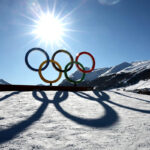
The stage was set for global unity. The opening ceremonies of the 2026 Milan Cortina Winter Olympics were just hours away, a moment meant to transcend politics in celebration of human athletic achievement. Instead, British-American freestyle skier Gus Kenworthy detonated a political grenade in the digital sphere, ensuring the volatile intersection of sports, activism, and national security would dominate early headlines of the Games.
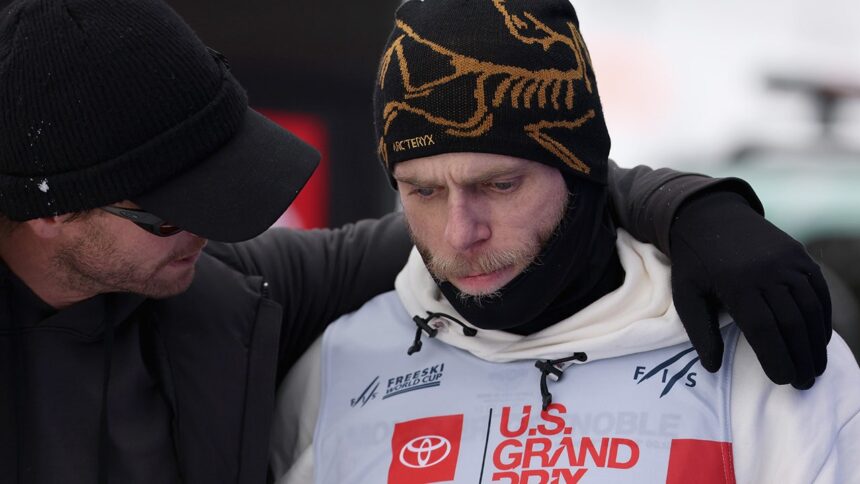
Kenworthy, an Olympic silver medalist now competing for Great Britain, posted a stark, graphic image to his Instagram: the words “f— ICE” etched into snow, allegedly with urine. The post, a direct attack on U.S. Immigration and Customs Enforcement (ICE), included a call to action urging Americans to pressure senators against DHS funding. This provocative act immediately collided with another breaking news story in the U.S., where Fox News reported the arrest of self-described Antifa member Kyle Wagner for allegedly threatening fatal violence against ICE agents. The confluence of events created a perfect storm, pulling the Olympic spectacle into a fiercely polarized American debate.
A Calculated Statement on the World’s Biggest Stage
Gus Kenworthy is no stranger to using his platform for activism. The skier, celebrated for his pioneering role as an openly gay athlete in action sports, has long been an advocate for LGBTQ+ rights. However, this pre-Games protest represents a significant and deliberate escalation. By timing his post to coincide with the global spotlight of the Olympic opening ceremonies, Kenworthy guaranteed maximum visibility and impact.
Expert analysis suggests this was a textbook example of “hashtag hijacking,” a strategy where activists insert a contentious message into an unrelated major event to capture media attention. “The Olympics are a uniquely powerful megaphone,” notes Dr. Aliyah Vance, a professor of Sports Media and Sociology. “Athletes like Kenworthy understand that a single post during this window can generate more discourse than months of standard activism. He’s leveraging the Olympic brand’s audience to amplify a domestic U.S. policy issue, which is inherently controversial under the International Olympic Committee’s rules regarding political demonstrations.”
The graphic nature of the message—specifically the implied method of its creation—was designed to shock and provoke. It moves beyond a simple statement of dissent into a performative act of visceral contempt, ensuring the story would be about the medium as much as the message.
Colliding Narratives: Fox News, Lara Trump, and the Security Angle
Simultaneously, the story broke on Fox News’ “America’s Newsroom,” where correspondent Brooke Taylor interrupted regular programming with news of Kyle Wagner’s arrest. The report detailed a series of online videos in which Wagner, identifying as Antifa, allegedly issued violent threats against ICE personnel. This created a potent and likely coincidental narrative synergy.
When “My View” host Lara Trump, a prominent political figure, weighed in on the broader context, it framed the Kenworthy protest within a more ominous lens of escalating threats against federal agents. The two stories, though legally distinct—one a protest, the other an alleged criminal threat—became intertwined in the day’s news cycle, fueling a debate about the boundaries of free speech, the safety of law enforcement, and the role of athletes as political actors.
This collision highlights the key tensions at play:
- Athlete Activism vs. IOC Rule 50: The IOC’s charter prohibits political demonstrations at Olympic venues. Kenworthy’s social media post, executed away from official sites, tests the boundaries of these rules in the digital age.
- Symbolic Protest vs. Perceived Incitement: Critics argue that such graphic anti-ICE rhetoric, when reported alongside news of alleged violent threats, can contribute to a hostile environment for federal agents.
- Global Platform for Domestic Issues: Kenworthy, competing for Great Britain, used a global event to intervene in a specifically American political funding battle, a move that some will laud and others will condemn as inappropriate.
Predictions for the Games and Beyond
The immediate fallout from Kenworthy’s post will define the early atmosphere of the Milan Cortina Games. Several outcomes are now in play.
First, the International Olympic Committee faces a fresh dilemma. While the protest occurred outside their physical jurisdiction, the intense association with the Games’ opening will pressure them to respond. A formal reprimand is possible, but strong sanctions would ignite a free-speech controversy. They will likely emphasize the separation between an athlete’s private social media and the Olympic Games, while quietly urging teams to manage their athletes’ public conduct.
Second, Kenworthy’s Olympic experience will be irrevocably altered. He will face a barrage of media questions, shifting focus from his athletic performance to his politics. He may receive both heightened adulation from progressive fans and intense scrutiny or hostility from others. His mental preparedness for competition could be impacted.
Finally, this event signals a new phase for athlete activism. It demonstrates that the “take a knee” era has evolved into more aggressive, digitally-native, and graphically confrontational tactics. Future athletes will note the overwhelming news coverage generated, setting a precedent for similar actions at mega-events. The prediction is clear: the era of athletes as purely apolitical figures is conclusively over, and the Milan Cortina Games have just become a case study in the new, unruly rules of engagement.
A Lasting Impact on Sports and Politics
Gus Kenworthy’s snow-written protest has successfully, and perhaps irrevocably, punctured the aspirational bubble of the Olympic opening ceremonies. It proves that in our hyper-connected world, there is no longer a clean separation between the field of play and the fractious political arena. The Games are not an escape, but a reflection.
The skier’s action, juxtaposed with the serious news of an arrest for alleged threats, forces a complex conversation. It challenges the public to distinguish between symbolic, even offensive, protest and genuine incitement. It tests the Olympic movement’s ability to navigate a world where athletes are increasingly unwilling to compartmentalize their identities as competitors and citizens. And it ensures that, as the world tunes in to watch feats of athleticism in Milan Cortina, discussions about borders, security, and the right to dissent will be part of the broadcast.
Whether viewed as courageous advocacy or reprehensible provocation, Kenworthy’s move is a defining moment. It confirms that the modern Olympic podium is not just made of snow and ice, but of the digital clay of social media, molded by athletes determined to be heard on their own terms, regardless of the consequence. The medals have yet to be awarded, but the first major statement of the 2026 Winter Games has already been made, not with a ski, but with a smartphone.
Source: Based on news from Fox Sports.