Parker Messick’s Near-Perfect Night: Guardians’ No-Hitter Bid Broken in 9th, But Win Streak Continues
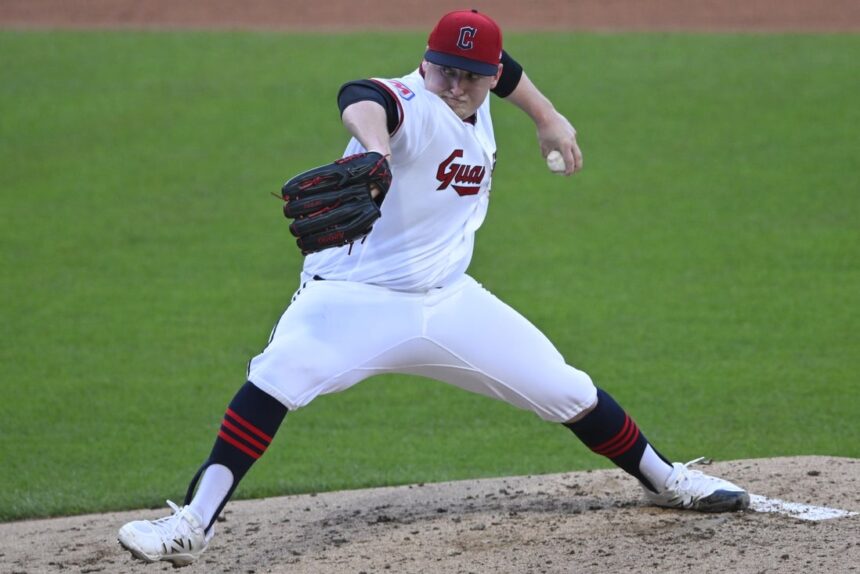
The ghosts of Cleveland’s pitching past stirred on a cool Thursday night at Progressive Field. For eight breathtaking innings, rookie left-hander Parker Messick wove a spell of dominance, inching the Cleveland Guardians closer to erasing the longest active no-hitter drought in Major League Baseball. One out away from immortality, the spell was broken, but the magic of Messick’s performance and the team’s resilient 4-2 victory over the Baltimore Orioles will resonate far longer than the box score.
A Rookie’s Masterclass and the Weight of History
Parker Messick, in just his 11th big-league appearance, wasn’t just pitching; he was authoring a potential legend. The Orioles, a potent offensive club, were rendered helpless. Mixing a deceptive fastball with a devastating changeup, Messick tied his career high with nine strikeouts and allowed only two baserunners through eight innings—both on walks. The stadium’s energy transformed with each passing frame, the collective hope of a city desperate to bury a 43-year-old statistic growing louder.
Cleveland’s no-hitter drought is a stark anomaly in a franchise rich with pitching lore. It dates to May 15, 1981, when Len Barker threw a perfect game. Since that day, every other MLB team has thrown at least one no-hitter. The tension wasn’t just about a single game; it was about lifting a historic burden from the shoulders of an entire organization.
- Parker Messick’s line through 8+ IP: 1 H, 2 ER, 2 BB, 9 K, 101 pitches.
- Historic Context: Cleveland’s 43-year no-hitter drought is the longest in MLB.
- Key to Success: Elite changeup command and pitching efficiently ahead in the count.
The Ninth-Inning Agony and Resilient Relief
As Messick took the mound for the ninth, the air was electric. Leody Taveras, who had walked in the sixth, stood in. On a 1-1 count, he hit a sharp grounder to the right side. Second baseman Juan Brito made a heroic dive, but the ball skittered just past his glove into right field. A clean single. The no-hitter was gone, the perfect game bid long vanished, but the shutout and the win were still very much in hand.
The single, however, opened a crack. Blaze Alexander followed with another single, ending Messick’s night at 101 pitches. Manager Stephen Vogt called upon flame-throwing reliever Cade Smith to extinguish the rally. Smith inherited two runners and allowed both to score on a sacrifice fly by Gunnar Henderson and a ringing double by Pete Alonso, slicing the lead to 4-2. Yet, in a display of the bullpen toughness that has defined Cleveland’s season, Smith bore down. He stranded the tying run at the plate, securing the final outs and his fourth save, preserving the victory Messick so richly deserved.
This sequence was a microcosm of modern baseball: the romantic pursuit of individual history giving way to the pragmatic, often messy, reality of a bullpen close. The win was secured, even if the storybook ending was altered.
Analyzing Messick’s Breakout and What It Means for Cleveland
Parker Messick’s near-miss is far more than a tantalizing “what-if.” It is a declaration. For the Guardians, a team consistently competing with a modest payroll, developing frontline starting pitching is not just a strategy—it is an existential necessity. Messick’s performance signals the arrival of another potential cornerstone.
His poise under immense pressure was as impressive as his stuff. Facing a lineup that feasts on fastballs, Messick used his secondary pitches, particularly his changeup, to keep hitters perpetually off-balance. He worked quickly, commanded the edges of the zone, and never showed a hint of being overwhelmed by the moment until the very end. This start moves him from “promising prospect” to a legitimate, immediate rotation fixture for a first-place team.
For the Orioles, the loss is a hiccup, but the manner of it is a reminder of baseball’s cruelty and the depth of the American League. Even on a night where their offense was silenced, they fought until the final pitch, a testament to their own championship aspirations.
Looking Ahead: Predictions for Messick and the Guardians’ Staff
So, where do we go from here? The predictions for Parker Messick have been irrevocably altered. The league now has a book on what he can do at his best, and the adjustment game begins. However, the confidence gained from dominating a World Series contender for eight innings is immeasurable.
- Prediction 1: Messick will be a mainstay in the AL Rookie of the Year conversation, with this game serving as his national introduction.
- Prediction 2: The Guardians will manage his innings carefully but will rely on him heavily in the second half as they push for the AL Central title.
- Prediction 3: This performance will act as a catalyst for the entire pitching staff. The “no-hitter” pressure, while not gone, feels lighter. The focus can return to pure dominance, inning by inning.
- Prediction 4: He will throw a complete game shutout before the 2024 season ends.
The quest for the franchise’s next no-hitter will continue. But after Thursday night, it no longer feels like a mythical pursuit. It feels inevitable. Because in Parker Messick, Cleveland has a young pitcher with the stuff, the demeanor, and now the experience of touching greatness. He came within three outs of history. The final step is always the hardest, but for the first time in a long time, the Guardians and their fans can see a clear path to getting there.
In the end, the box score will show a 4-2 win, a “W” next to Parker Messick’s name, and a save for Cade Smith. But the story told in Cleveland will be of the night a rookie announced his arrival by dancing with history for eight unforgettable innings, proving that the next Guardians no-hitter is not a matter of “if,” but “when.” And “who.” After Thursday, we have a very good idea of the answer.
Source: Based on news from Deadspin.