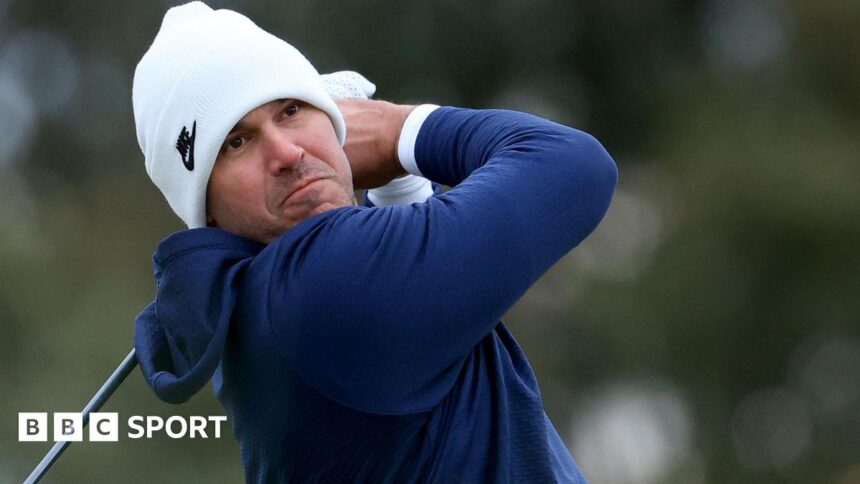
The PGA Tour’s Koepka Conundrum: Navigating the Return of a Defector
The landscape of professional golf, fractured by the seismic arrival of LIV Golf, faces a new and unprecedented test. It’s not a battle over signatures or broadcast rights, but a delicate matter of precedent, principle, and pragmatism. At its center stands Brooks Koepka, a five-time major champion whose recent actions have lobbed a grenade into the PGA Tour’s boardroom. Mere days after his departure from the breakaway LIV Golf League was confirmed, Koepka formally reapplied for PGA Tour membership on January 9. This move, signaling a desire to return to the fold he dramatically left four years ago, presents the Tour with its most profound and public dilemma since the schism began.
The Stakes of the Switch: More Than Just One Player
Brooks Koepka is not just any player seeking reinstatement. He is a brash, alpha competitor whose brand was built on a singular focus: winning majors. His defection to LIV in 2022 was a crown jewel for the Saudi-backed league, a testament to its power to lure even the most legacy-driven stars. His potential return is equally symbolic. The PGA Tour’s reaction will set a critical template for how it handles future prodigal sons, a scenario that is likely to repeat as LIV’s initial contracts expire and player ambitions evolve.
Koepka’s stated reason for leaving LIV—a desire to spend more time with his family—is a common refrain in sports. However, his immediate application to the PGA Tour suggests a competitive fire still burns. Crucially, his major championship victories, including the 2023 PGA Championship at Oak Hill, keep him eligible for the sport’s biggest stages regardless of tour affiliation. This safety net may have empowered his exit from LIV, but it also highlights his primary motivation: Koepka’s legacy is secure, but his desire to compete at the highest weekly level appears to have been rekindled.
The PGA Tour’s Thorny Dilemma: Punish or Welcome?
The Tour’s leadership, now operating under the shadow of a framework agreement with LIV’s financiers, the Public Investment Fund of Saudi Arabia (PIF), must weigh conflicting imperatives. There is no clear rulebook for this scenario, forcing a decision that balances optics, morality, and commercial interest.
- Precedent vs. Pragmatism: Denying Koepka could be seen as a necessary enforcement of consequence, a message to other players that leaving has permanent repercussions. Yet, it also means rejecting one of golf’s biggest draws, potentially pushing him into the arms of other competing tours or signaling an unwillingness to reunify the sport.
- The Morality Clause Question: The Tour has previously cited “conflicting event” and “media rights” violations to suspend players. Reinstating Koepka without some form of penalty could anger the loyal membership who turned down lucrative offers. Expect any return to come with strings attached, such as significant fines, mandatory tournament commitments, or a probationary period.
- The Fan and Sponsor Equation: From a pure business standpoint, Koepka moves the needle. His presence elevates fields, boosts television ratings, and energizes sponsors. His star power is an undeniable asset the Tour has lacked at full capacity for two years.
Complicating matters further is Koepka’s recent playing activity outside of LIV. His participation in the DP World Tour’s Alfred Dunhill Links Championship in Scotland last October was a clear signal. It was a strategic move to maintain a relationship with an allied tour and keep his options open, demonstrating a level of foresight some of his LIV peers did not exercise.
Expert Analysis: The Unwritten Rules of a Civil War
“This is the first major test of the PGA Tour’s post-framework agreement posture,” says Dr. Amanda Finch, a sports management professor and golf industry analyst. “The Tour is caught between its historical role as a punitive governing body and its likely future as part of a global commercial enterprise that needs all its stars. Koepka’s application forces them to choose which identity prevails.”
Veteran tour player manager, Mark Stevens, notes the locker room dynamics. “There will be resentment, no question. Guys who stayed will want to see him pay a price. But most players are also realists. They want the strongest fields possible, and they know the sport needs to heal. The key will be crafting a return that feels earned, not entitled.”
The situation also exposes a fascinating shift in player leverage. Koepka, with his major exemptions and global profile, does not need the PGA Tour in the way a younger player does. His application is less a plea and more a business proposal. This dynamic flips the traditional power structure on its head and may force the Tour into a more negotiable position than it would like to admit.
Predictions: The Path to a Probable Return
Given the complex factors at play, a path forward begins to emerge. The PGA Tour is unlikely to outright reject a player of Koepka’s caliber, but his reinstatement will be neither swift nor simple.
- Negotiated Penalties: Look for a confidential settlement involving a substantial fine (donations to tour charities or player programs are likely) and an agreement to play a minimum number of events, perhaps including those he previously skipped.
- Strategic Timing: The Tour may slow-walk the process, allowing time for emotions to cool and for Koepka to demonstrate his commitment by playing DP World Tour events or through other gestures of goodwill.
- The Framework Shadow: Ongoing negotiations with the PIF will loom over everything. The Tour may handle Koepka in a way that signals to the Saudis a willingness to cooperate on player movement, or conversely, to assert its own independence.
- The Floodgate Fear: The Tour’s final decision will be meticulously crafted to apply specifically to Koepka’s unique circumstances—leaving LIV early, major status, prior history—to avoid setting an automatic “free pass” precedent for others.
Ultimately, the most probable outcome is a conditional return in the latter half of the 2024 season, setting the stage for a full comeback in 2025. This allows the Tour to save face, manage internal dissent, and still capitalize on Koepka’s brand for the upcoming season’s crucial events.
Conclusion: A Defining Moment for Golf’s Future
The Brooks Koepka saga is more than a personnel issue; it is a microcosm of professional golf’s turbulent present and uncertain future. His application to rejoin the PGA Tour is the first real-world consequence of the sport’s civil war, moving the conflict from courtrooms and fairways into the nuanced realm of reconciliation. How the Tour navigates this dilemma will reveal its true priorities: Is it an institution of punishment, a pure business, or the steward of a reunified game?
For Koepka, the motivation is clear—a return to the arena where his legacy was forged. For the PGA Tour, the calculus is far more complex. Its decision will echo through locker rooms, boardrooms, and future negotiation tables. In handling the return of one of its most formidable former champions, the Tour isn’t just deciding Brooks Koepka’s fate; it is, in many ways, defining its own.
Source: Based on news from BBC Sport.