Tuchel’s Team Chemistry Conundrum: Why ‘Social Skills’ Are England’s New World Cup Currency
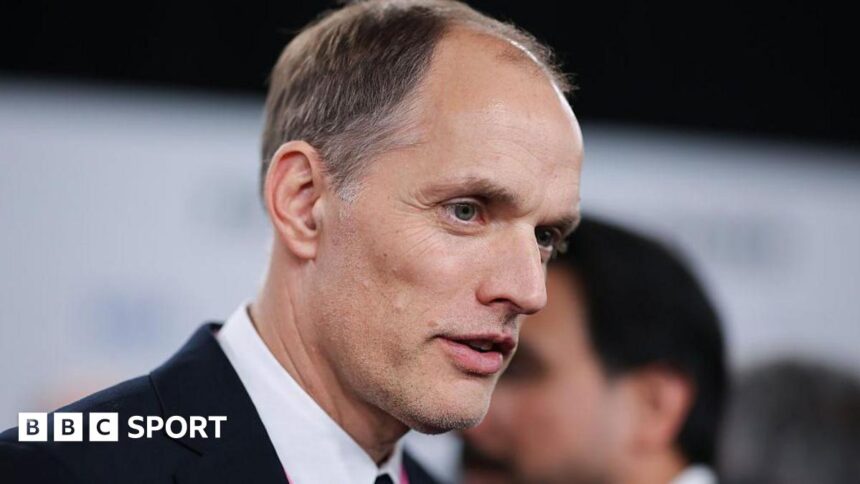
The Three Lions are on the clock. With the World Cup looming this summer, England manager Thomas Tuchel is not just scrutinising highlight reels and data dashboards; he’s peering into the very soul of his potential squad. In a revelation that shifts the selection paradigm, Tuchel has declared that technical prowess alone will not secure a seat on the plane. Instead, he places a premium on intangible assets: the right “social skills” and personality. As his contract ticks towards its post-tournament expiry, Tuchel is building not merely a team of talents, but a cohesive unit designed to survive the intense pressure cooker of a World Cup camp. This philosophical stance, underscored by his bold omissions and surprising recalls, is set to define England’s campaign.
Beyond the Boots: Deconstructing the Tuchel Doctrine
Since his arrival as Gareth Southgate’s successor, Thomas Tuchel has consistently operated with a surgeon’s precision, unafraid to make controversial calls. Leaving global stars like Jude Bellingham and Phil Foden out of recent squads sent shockwaves, while the recall of the experienced Jordan Henderson from Brentford raised eyebrows. These are not random decisions; they are calculated moves in a grand strategy of squad architecture.
Tuchel’s philosophy is forged in the fires of elite club management, where managing egos and fostering unity is as critical as any tactical plan. At a month-long tournament, players live in each other’s pockets. The friction of a disruptive personality or the vacuum of a poor communicator can fracture a group. For Tuchel, the squad balance is a chemical equation where chemistry outweighs individual atomic weight. He needs diplomats, energisers, peacemakers, and leaders as much as he needs playmakers. As he stated, it’s about “not necessarily just the best players,” but the right mix for the unique challenges ahead.
The March Audition: More Than Just Uruguay and Japan
With only two pre-tournament friendlies in March—against Uruguay and Japan—the window for players to impress is brutally narrow. These matches will be less about the scoreline and more about a live behavioural audit. Tuchel will be watching:
- Bench Dynamics: How do substitutes support teammates? Are they engaged or disengaged?
- Training Ground Influence: Who lifts the intensity? Who helps integrate younger players?
- Tactical Adaptability: Can players accept and execute shifting roles for the collective good?
- Media & Pressure Handling: How do they communicate and carry themselves under the spotlight?
This makes the upcoming camp a uniquely pressurized environment. A player’s ability to be a positive social skills asset in the hotel, the meal room, and during downtime could trump a moment of flair on the pitch. The fixtures are the final exam, but the coursework is conducted away from the public eye.
The Selection Headaches: Who Fits the Tuchel Profile?
Tuchel’s emphasis on character creates fascinating dilemmas for key positions and players:
The Henderson Recall as a Blueprint: Jordan Henderson may not be at his peak physical powers, but his leadership, vocal presence, and unselfish professionalism epitomize what Tuchel values. He is a cultural architect, a role Tuchel clearly prizes.
The Bellingham & Fodon Omission Context: While both are undeniably world-class, their absences signal Tuchel’s demand for a specific fit. It may not be a question of talent, but whether their current stylistic or personality profile slots seamlessly into the ecosystem Tuchel is engineering. Their pathway back may require demonstrating enhanced off-pitch integration.
The Forged-in-Fire Veterans: Players like Harry Kane (a lead-by-example figure) and Declan Rice (a mature, communicative presence) seem tailor-made for this criteria. Their roles are likely secure not just due to skill, but their perceived positive influence on the squad balance.
The Wildcard Selections: This philosophy opens the door for perhaps less-heralded players who are renowned as positive dressing room forces, excellent trainers, and versatile, low-maintenance professionals. They become the glue that binds the star names together.
Group Stage Crucible and Tournament Predictions
Drawn against Croatia, Ghana, and Panama, England’s group presents varied challenges: technical prowess, physical intensity, and defensive stubbornness. A squad built on Tuchel’s principles of unity and adaptability is designed for this very mix.
We predict Tuchel’s final squad will contain at least two to three surprise names—players selected for their character as much as their current form. The team’s performance will likely be characterized by:
- Resilience: A strong, unified group mentality to overcome in-game setbacks.
- Strategic Flexibility: Players comfortable in multiple roles and systems, bought into Tuchel’s plans without complaint.
- Leadership in Crisis: Multiple voices stepping up in difficult moments, not just the captain.
The ultimate test will come in the knockout stages, where the margins are finest. A cohesive, mentally robust unit can often outlast a collection of disorganized individuals. England may not always play the most flamboyant football, but under Tuchel, they will be engineered to be mentally unbreakable.
Conclusion: A Legacy Defined by Unity
Thomas Tuchel’s World Cup mission is clear: to forge a band of brothers, not a constellation of stars. By placing social skills and personality at the heart of his selection criteria, he is acknowledging a timeless football truth: talent wins matches, but character wins tournaments. As his tenure reaches its climax this summer, his legacy will not be judged solely on results, but on whether he successfully implemented his holistic vision. The coming months will reveal if England’s footballers have mastered the most crucial skill of all: the art of being the perfect teammate. In the secluded bubble of a World Cup camp, that may prove to be the greatest assist of all.
Source: Based on news from BBC Sport.