Shane Lemieux, Recent Super Bowl Champion, Retires from NFL at 28
The NFL Draft is a spectacle of hope, where young men see a lifetime of dreams crystallize into a single moment. But the league’s other, harsher reality—the physical toll that can truncate even the brightest careers—often whispers in the background. This week, it spoke loudly and clearly through the surprising retirement of Shane Lemieux. At just 28 years old, and mere months after earning a Super Bowl ring with the Seattle Seahawks, the offensive guard has decided to walk away from the game, offering a sobering counter-narrative to the unbridled optimism of draft season.
A Dream Deferred: From Oregon to the NFL’s Grind
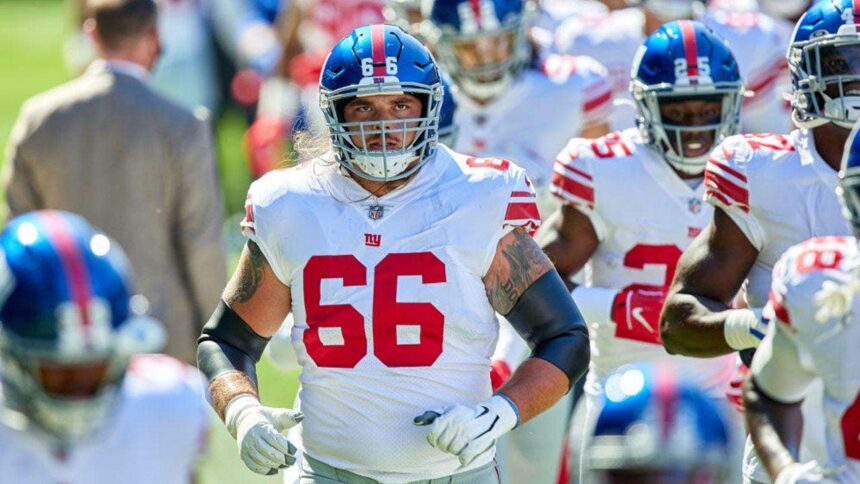
Shane Lemieux’s journey followed a classic football arc. A stalwart on the University of Oregon’s offensive line, he was selected by the New York Giants in the fifth round of the 2020 NFL Draft. He arrived with the trademark grit and physicality of a Pacific Northwest lineman, quickly earning a starting role as a rookie. His professional trajectory seemed set. In a candid post on his LinkedIn page—an unconventional but telling platform for such an announcement—Lemieux revealed the depth of his initial aspirations.
“After graduating from the University of Oregon and being drafted by the New York Giants, I had dreams of a 10+ year, All-Pro career,” Lemieux wrote. “I believed I could get there.” For a player known for his mauling run-blocking style, the goal was not far-fetched. However, the brutal physics of the NFL interior began to take their toll almost immediately. A patellar tendon injury limited his 2021 season, and a toe injury suffered in 2022 proved particularly debilitating, requiring multiple procedures and robbing him of his power base.
The Weight of the Training Room: Five Surgeries and a Shift in Perspective
The central theme of Lemieux’s retirement note wasn’t a lack of love for football, but a profound reassessment forced upon him by his body’s repeated breakdowns. He cited the accumulation of injuries as the definitive factor. “But after 5 surgeries and more time in the training room than on the field, the game started to look different to me,” he stated. This is the untold story for countless NFL players. The public sees game day; it doesn’t see the endless cycle of rehabilitation, pain management, and the mental fatigue of preparing a battered body for the next collision.
Lemieux’s career became a testament to resilience, but also to diminishing returns. After starting 14 games as a rookie, he would appear in only 12 more over the next four seasons. Traded to the Seahawks in 2024, he served as a reserve, contributing to a championship culture even if he wasn’t a primary on-field contributor. Winning Super Bowl LIX with Seattle provided a storybook ending, but it also offered a clear, healthy moment to exit stage left. His decision underscores a growing, if still rare, awareness among players: the value of long-term health can outweigh the pursuit of a prolonged career.
- Key Factor: Five major surgeries since entering the league.
- Mental Shift: Transitioning from rehab-focused to life-focused.
- Critical Timing: Retiring on a championship high, with functional health intact.
Draft Dreams vs. NFL Realities: A Stark Contrast
The irony of Lemieux’s announcement timing is poignant. As he steps away, the NFL world is hyper-focused on the 2026 NFL Draft, where thousands of prospects share the exact dream he once held. Analysts like Clay are deep in speculation: Are the Cardinals bluffing about their interest in star running back Jeremiyah Love? Which team will trade up for a quarterback? The discourse is all about potential, ceiling, and future value.
Lemieux’s story is a vital reminder of what isn’t measured at the Combine: surgical resilience, pain tolerance, and the personal cost of the grind. His career arc—from Day 3 draft pick who impressed, to a player perpetually battling back from injury, to a respected veteran who exits on his own terms—is a more common NFL story than the perennial Pro Bowl narrative. It highlights the physical sacrifice inherent to the trenches, where every snap is a violent, confined battle that accumulates a hidden ledger of damage.
Life After Football: A New Kind of Protection
In choosing LinkedIn for his announcement, Lemieux signaled a forward-looking mindset. His statement concluded with a focus on future protection: “That is why I am deciding to step away with the health that I have.” This phrase is powerful. After years of protecting quarterbacks, he is now choosing to protect his own body and future quality of life. For a 28-year-old, the decision opens a world of possibilities unencumbered by the need for a sixth surgery or the chronic pain that afflicts so many retired linemen.
The early retirement trend among NFL players, particularly those who have secured financial stability and a championship, is gaining subtle momentum. Lemieux follows a path considered by others who prioritize long-term cognitive and physical health. His move may inspire peers to conduct a similar cost-benefit analysis, especially those for whom the game has become more about maintenance than mastery.
Conclusion: A Legacy Beyond the Stat Sheet
Shane Lemieux’s career will not be remembered for Pro Bowl nods or legendary plays. Its legacy is more nuanced and arguably more important. It is a story of clear-eyed courage. In an industry that often measures worth solely by toughness and availability, he demonstrated a different kind of strength: the strength to walk away from an identity he worked his whole life to build, in order to preserve the person he will be for the next 50 years.
As the 2026 draft class celebrates their new beginnings, Lemieux’s retirement serves as a poignant bookend. It is a respectful nod to the dream they all chase, and a sobering, real-world footnote about its price. His career, though shorter than hoped, was a success—he earned the respect of teammates, started in the league, and left the sport as a Super Bowl champion. But his most impactful victory may ultimately be the one he just secured for his future self, choosing a life of health over the relentless demand of the game. In that, he leaves a playbook worth studying.
Source: Based on news from Fox Sports.